
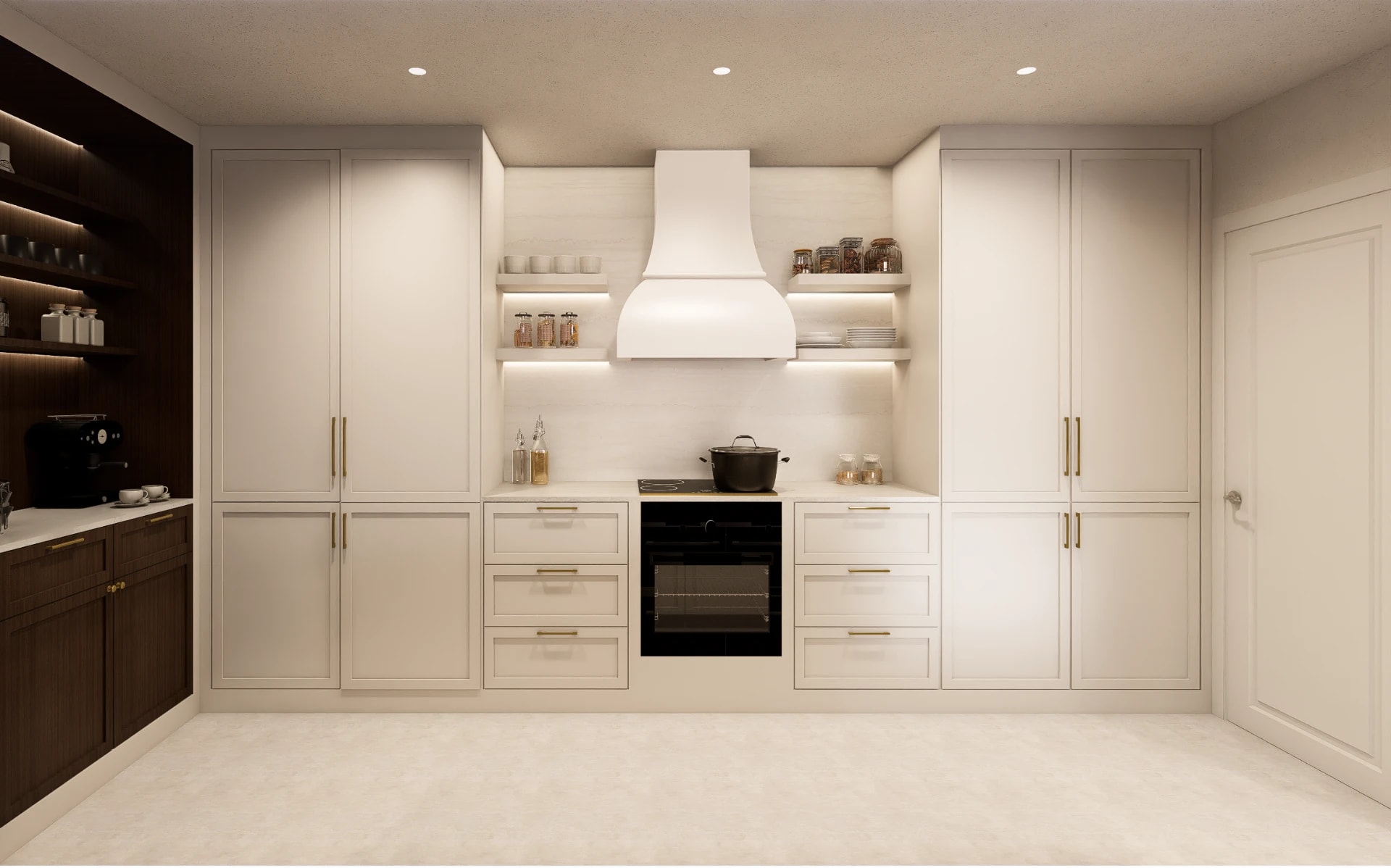
Most clients only find out what to look for once a project is already finished, by which point a flaw is far harder to put right than it would have been back on the workshop floor. Joinery quality control in the UAE is less about trusting a workshop's reputation and more about knowing what a well-made piece of cabinetry actually looks, sounds, and feels like up close. A kitchen or wardrobe that passes a proper inspection at handover tends to stay that way for years, while one that is only checked for surface appearance can reveal its problems within the first season of daily use. Knowing what to look for is also part of how a client can dubai-it, pushing a workshop to deliver at the standard the brief actually promised rather than accepting whatever arrives on installation day.
What Joinery Quality Control Means
Quality control in joinery is the set of checks applied at each stage of production and installation to confirm that a piece matches its approved design, materials, and finish specification, rather than simply looking acceptable from a distance. It covers structural soundness, such as square carcasses and secure joints, functional performance, such as doors and drawers operating smoothly, and visual consistency, such as matched grain, colour, and sheen across a run. Quality control is not the same as a final walk-through alone. The most reliable inspection happens throughout production, catching a warped panel or a mismatched veneer batch in the workshop rather than after installation, when correcting it means removing finished work from a wall.
What Bespoke Cabinetry in the UAE Demands of Quality Control
Dubai and Abu Dhabi's climate and market both raise the bar for what counts as acceptable joinery. Constant air conditioning and low indoor humidity mean panels and doors need to be produced from properly conditioned, dimensionally stable material, since a piece that looks fine on delivery day can shift within months if the timber or board was not acclimatised correctly before fabrication. Open-plan villas and majlis-style entertaining spaces put long runs of cabinetry on constant display under varied lighting, so a reveal line that drifts by even a couple of millimetres across a kitchen run is far more visible than in a smaller, more broken-up room.
Because kitchens, wardrobes, and feature joinery are rarely replaced wholesale between owners in this market, quality at handover shapes how a property presents years later at resale, one reason a disciplined, staged inspection matters more here than in markets where fitted joinery turns over more often, a sequence covered in the five-stage bespoke joinery process.
What to Look for in Bespoke Cabinetry
Flush Doors and Consistent Reveal Lines
Every door and drawer front on a run should sit in the same plane, with an even gap, or reveal, between each one. Run a hand along a closed row of doors: any that sit proud, sunken, or angled usually indicate a hinge that was not adjusted correctly or a carcass that was not built perfectly square.
Smooth, Silent Hardware Action
Hinges, drawer runners, and lift systems should open and close with even resistance and no grinding, sticking, or rattling. Soft-close mechanisms should engage the same way on every unit across a kitchen or wardrobe run, not just on the units checked first during a walkthrough.
Grain and Colour Matching Across a Run
On veneered or timber-finished joinery, grain direction and tone should be consistent, or deliberately book-matched, across adjacent panels rather than jumping between visibly different batches. A mismatch here is one of the more common signs that panels were sourced or cut without proper batch control.
Square, Solid Carcasses
A cabinet carcass should be square, with no visible bowing in the sides, back, or shelves. Pressing gently on a side panel should produce no flex or movement, and drawers should not rock or bind when opened partway.
Edge Banding and Seam Quality
Edge banding, the strip applied to the exposed edge of a board, should be flush with no visible lip, glue line, or lifting corner. Any seam between panels, particularly on a large feature wall or island, should be tight and consistent in width along its full length.
Finish Consistency Under Different Lighting
A lacquered or painted finish should look even under both daylight and artificial light, with no visible brush marks, orange peel texture, or sheen variation between panels. Checking a finish only under one lighting condition is a common way for inconsistencies to be missed until after handover.
A Practical Framework for Quality Control in Joinery Projects
- Discovery. Agree the quality standard expected at the outset, including hardware brand, finish tolerance, and any client-specific requirements.
- Survey. Confirm site conditions match the design assumptions, since an unexpected wall or floor variance affects how squarely joinery can be fitted.
- Design. Review shop drawings against the agreed standard before fabrication begins, catching specification issues on paper rather than in the workshop.
- Materials. Inspect and batch-match timber, veneer, and hardware on arrival, rejecting material that does not meet the agreed grade or moisture content.
- Fabrication. Apply quality assurance (QA) checks at each production station, not only at the end of the run, so a fault is caught before it is built into the next panel.
- Installation. Check alignment, reveals, and hardware function on site as each unit goes in, rather than deferring every check to a single final walkthrough.
- Handover. Carry out a full snagging inspection against the checks above before sign-off, documenting anything outstanding with a clear resolution plan.
Best Practices
- Inspect joinery in the room it will live in, under its actual lighting, rather than relying solely on a workshop viewing.
- Test hardware function on every unit, not a sample, since a fault on one drawer rarely predicts the condition of the rest.
- Keep a written record of the agreed finish, hardware, and tolerance standard so a snagging inspection has something concrete to check against.
- Involve quality checks at each production stage rather than treating the final walkthrough as the only inspection point.
- Ask for batch and material references on veneer or lacquer work so a repair or extension can match the original run.
Common Challenges and Solutions
Timber or board material shifting after installation due to the region's climate.
Confirm the workshop acclimatises material appropriately for the UAE's constant air conditioning and low indoor humidity before it is cut and assembled.
Faults only becoming visible after handover, once furniture and lighting are in place.
Request a walkthrough under the room's actual finished lighting, not only workshop lighting, and check every unit rather than a representative few.
Hardware feeling fine on day one but wearing unevenly within the first year.
Specify hardware rated for high-cycle daily use and confirm the brand and model in writing, since mismatched or lower-grade substitutes are difficult to catch without checking.
Disagreement over what counts as an acceptable defect versus a design choice.
Agree tolerance standards, such as maximum reveal variance, in writing at the design stage so any later disagreement has a clear reference point.
Frequently Asked Questions
What is the difference between a snagging list and ongoing quality control? A snagging list is the final check before handover, while quality control is the full set of checks applied throughout design, fabrication, and installation to prevent issues reaching that final stage.
What is the first thing to check on a new cabinet door? Whether it sits flush with an even reveal against its neighbours, since misalignment here often points to a squareness or hinge issue elsewhere in the unit.
How can grain matching be checked without expert knowledge? Stand back from a run of veneered panels and look for any panel where the wood tone or grain direction visibly jumps compared with its neighbours.
Should hardware be tested during a walkthrough? Yes. Open and close every door and drawer rather than a sample, checking for even resistance and a consistent soft-close action.
Does climate affect how joinery should be inspected in the UAE? Yes. Material that was not properly conditioned for constant air conditioning and low humidity can shift after installation, so it is worth revisiting an inspection within the first few months of use.
Who should carry out a quality inspection before sign-off? Ideally the same team responsible for design and fabrication, since they can check the finished work directly against the original specification rather than a general impression of quality.
What Passes and What Doesn't
Good joinery rarely announces itself. It is the cabinetry nobody notices because every door closes the same way, every reveal lines up, and every finish looks consistent from across the room. Joinery quality control in the UAE is what keeps that standard from being left to chance, built into every stage from material selection through to the final snagging walkthrough rather than assessed only once a project is finished. Hammer Group applies quality assurance checks throughout its in-house joinery capability and wider interior design and build service, a standard reflected in projects such as a recent bespoke kitchen project. Anyone unsure what to check before signing off a joinery installation is welcome to get in touch and talk it through.