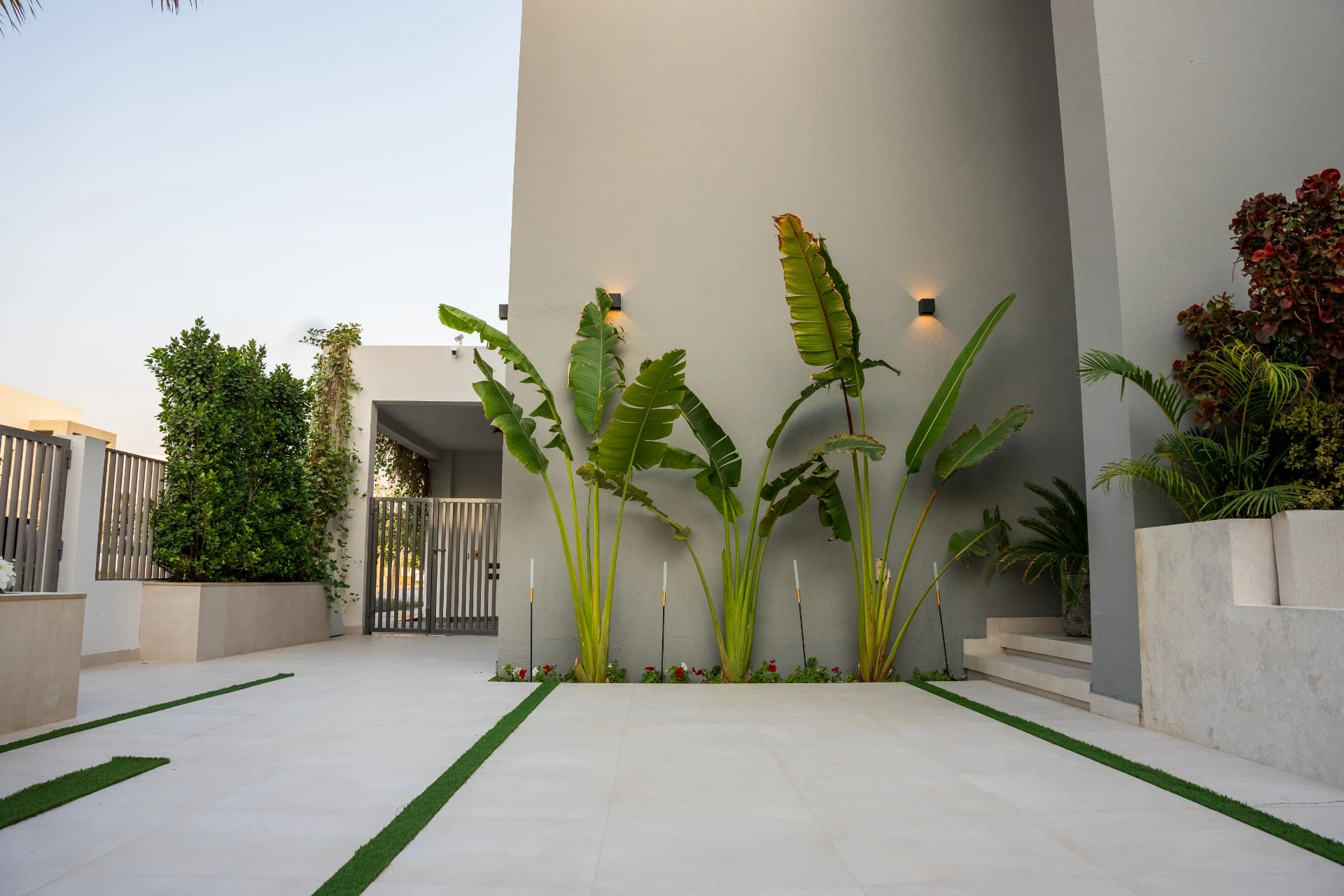
Creating a well-designed landscape environment goes far beyond planting greenery around a building. In commercial developments across Dubai and Abu Dhabi, landscape design shapes first impressions, enhances user experience, supports sustainability goals, and increases long-term asset value.
For developers, business owners, and decision-makers, understanding the structure behind successful outdoor environments is essential. This guide explores the core commercial landscape design principles, strategic planning frameworks, and best practices that define high-performing landscapes in the UAE context.
What Defines a Well-Designed Landscape Environment?
A successful landscape environment is:
- Visually cohesive
- Functionally efficient
- Environmentally responsive
- Easy to maintain
- Aligned with architectural intent
In commercial settings, landscape is not decoration—it is infrastructure. It manages movement, creates comfort, strengthens brand identity, and improves environmental performance.
Projects that integrate landscape architecture for commercial developments from the earliest stages consistently achieve stronger long-term outcomes.
1. Strategic Site Analysis & Integrated Planning
Every effective outdoor environment begins with understanding the site.
Key Considerations in the UAE:
- Solar exposure and shading requirements
- Wind patterns and dust control
- Soil quality and salinity levels
- Pedestrian and vehicle circulation
- Authority regulations
Through integrated landscape planning UAE, designers ensure the outdoor space complements building orientation and functionality.
This approach aligns naturally with outdoor and building design integration as a related topic.
2. Clear Functional Zoning
A well-designed landscape environment must serve practical purposes.
Functional zones in commercial projects may include:
- Arrival and drop-off areas
- Pedestrian pathways
- Social and seating spaces
- Outdoor meeting zones
- Buffer zones for privacy
- Service and maintenance access routes
Thoughtful zoning supports intuitive navigation and enhances user comfort.
Effective functional outdoor space design ensures the landscape works as efficiently as the interior.
3. Cohesion Between Hardscape and Softscape
Balance between built and planted elements is central to strong design.
Hardscape Elements:
- Paving materials
- Pergolas and shading structures
- Water features
- Lighting systems
- Retaining walls
Softscape Elements:
- Trees and shrubs
- Groundcovers
- Seasonal planting
- Lawn or alternative turf solutions
In UAE commercial developments, excessive lawn areas often increase maintenance demands. A balanced palette improves durability and sustainability.
For deeper strategy alignment, this connects naturally to commercial landscape design strategy.
4. Climate-Responsive Plant Selection
Climate adaptation is non-negotiable in the UAE.
Best practices include:
- Selecting native or drought-tolerant species
- Grouping plants by water requirements
- Reducing high-maintenance ornamental varieties
- Designing shade to protect pedestrian areas
This strengthens sustainability performance while reducing operational strain.
Integrating these principles supports long-term resilience and aligns with sustainable landscaping solutions in UAE.
5. Water Management & Irrigation Efficiency
Water efficiency is central to responsible landscape design in Dubai and Abu Dhabi.
Effective strategies include:
- Zoned irrigation systems
- Drip irrigation for planting beds
- Smart controllers with climate sensors
- Proper drainage systems
Water-sensitive planning protects plant health while meeting environmental expectations.
6. Lighting & Safety Integration
Outdoor lighting defines both safety and atmosphere.
Key considerations:
- Pathway illumination
- Accent lighting for architectural features
- Glare control
- Energy-efficient LED systems
Well-planned lighting enhances nighttime usability while maintaining visual harmony.
7. Maintenance-Oriented Design Thinking
A truly well-designed landscape environment anticipates long-term upkeep.
Maintenance-focused planning involves:
- Accessible planting beds
- Clear service routes
- Durable materials
- Defined irrigation zones
- Realistic planting density
This proactive approach prevents operational challenges after project completion.
Step-by-Step Framework for Commercial Landscape Success
Step 1: Define Project Objectives
Establish:
- Branding goals
- User experience priorities
- Sustainability targets
- Long-term operational expectations
Clear objectives guide all subsequent design decisions.
Step 2: Align with Architecture
Landscape must complement building scale, façade materials, and circulation patterns.
Integrated coordination between architectural and landscape teams improves spatial cohesion.
Organizations often achieve this through integrated design and build landscaping services.
Step 3: Develop Concept & Master Plan
The master plan should illustrate:
- Circulation paths
- Gathering spaces
- Planting zones
- Shade strategies
- Lighting concepts
A strong concept ensures alignment across stakeholders.
Step 4: Technical Coordination & Documentation
Detailed documentation includes:
- Irrigation layouts
- Drainage plans
- Material specifications
- Plant schedules
This phase ensures feasibility and compliance with local authorities.
Step 5: Implementation & Quality Oversight
During construction, attention to detail preserves design integrity.
Proper soil preparation, plant installation, and irrigation calibration are critical for long-term performance.
Common Challenges & Professional Solutions
Challenge 1: Overemphasis on Aesthetics
Solution: Balance visual appeal with functional and environmental performance.
Challenge 2: Water Overconsumption
Solution: Adopt drought-tolerant planting and smart irrigation systems.
Challenge 3: Poor Integration with Architecture
Solution: Coordinate early between architects and landscape designers.
Challenge 4: High Maintenance Burden
Solution: Implement maintenance-focused design strategies during planning stages.
Measuring Landscape Performance
A high-performing commercial landscape delivers:
- Positive visitor experience
- Efficient pedestrian circulation
- Reduced water consumption
- Consistent visual quality
- Enhanced asset value
Performance should be evaluated over time—not just at project completion.
Frequently Asked Questions
1. What makes a landscape environment well-designed?
A balance of aesthetics, functionality, sustainability, and maintainability.
2. Why is integration with architecture important?
It ensures cohesive spatial planning and consistent brand presentation.
3. How does climate impact landscape design in the UAE?
Extreme heat and water constraints require adaptive plant selection and efficient irrigation.
4. What role does zoning play in commercial landscapes?
It organizes movement and improves usability.
5. How can businesses reduce long-term landscape maintenance?
By selecting appropriate plants, durable materials, and efficient irrigation systems.
6. Is sustainability mandatory in modern commercial landscapes?
Increasingly, yes—environmental responsibility is both a regulatory and strategic priority.