
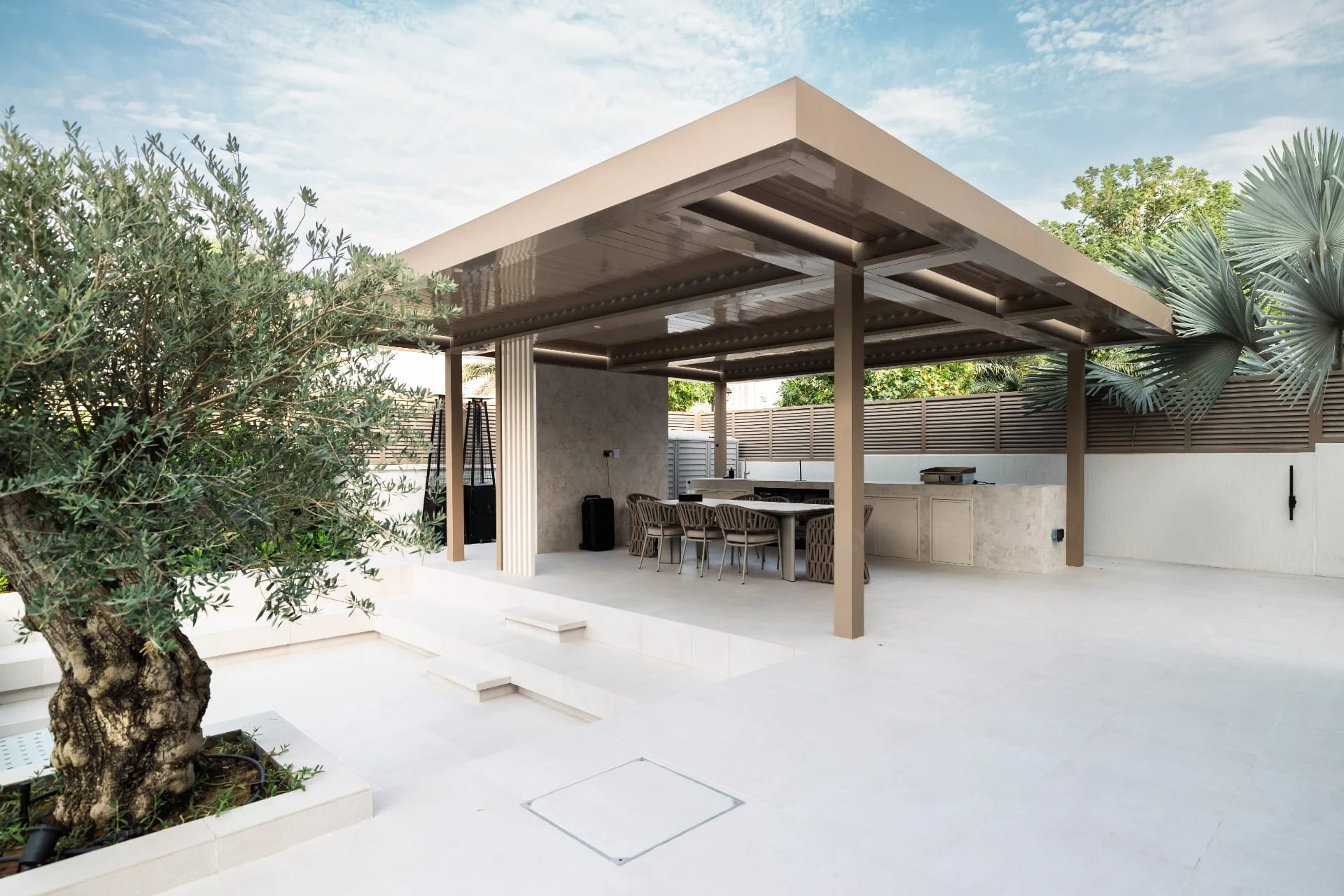
Designing expansive outdoor spaces in Dubai requires more than aesthetic vision—it demands structured planning, functionality, and environmental awareness. Landscape zoning strategies Dubai are essential for transforming large residential plots into cohesive, usable, and visually compelling environments that align with both lifestyle needs and regional conditions.
This guide outlines how to approach zoning for large-scale villas and estates, offering practical frameworks, best practices, and insights tailored to the UAE context.
Understanding Landscape Zoning in Large Residential Plots
Landscape zoning refers to the strategic division of outdoor space into distinct functional areas. For large villas and estates, this approach ensures that every part of the plot serves a clear purpose while maintaining a unified design language.
In the context of residential landscape zoning UAE, zoning must account for:
• Climate conditions (heat, sun exposure, wind)
• Privacy requirements
• Cultural preferences
• Indoor-outdoor living integration
Without proper zoning, large plots can feel disconnected, underutilized, or difficult to maintain.
Core Principles of Effective Landscape Zoning
1. Function-First Planning
Start by identifying how the space will be used. Common zones in large plot landscape design Dubai include:
• Entertainment areas (majlis, outdoor dining)
• Leisure zones (pools, lounges)
• Private retreats (gardens, courtyards)
• Service areas (parking, utilities)
Each zone should have a defined purpose aligned with the client’s lifestyle.
2. Spatial Hierarchy and Flow
A successful zoning plan establishes a logical flow between spaces. Public areas should transition smoothly into semi-private and private zones.
Key considerations:
• Clear pathways and circulation routes
• Visual connections between zones
• Gradual transitions using landscaping elements
For deeper insight, consider linking to outdoor space planning and master design.
3. Climate-Responsive Design
Dubai’s climate plays a critical role in villa landscape planning Dubai. Zoning should incorporate:
• Shaded areas for daytime usability
• Wind corridors for natural cooling
• Strategic planting for heat reduction
Hardscape materials and plant selection must also support durability and comfort.
4. Integration with Architecture
Outdoor zoning should complement the villa’s architectural layout. Seamless transitions between indoor and outdoor spaces enhance usability and value.
This is where a coordinated design & build approach for outdoor environments becomes essential.
Step-by-Step Landscape Zoning Framework
Step 1: Site Analysis
Before zoning begins, conduct a thorough assessment:
• Plot size and shape
• Sun path and shading patterns
• Existing structures and access points
• Soil and drainage conditions
This forms the foundation of effective landscape master planning UAE.
Step 2: Define Primary Zones
Divide the plot into major zones based on function:
• Front-of-house (public-facing)
• Backyard (private living)
• Side zones (service or transitional)
Each area should support a distinct use while contributing to the overall layout.
Step 3: Sub-Zoning for Detail
Within each primary zone, create sub-zones. For example:
Backyard zoning may include:
• Pool and deck area
• Outdoor dining space
• Garden or lawn
• Children’s play area
These refined outdoor space zoning techniques improve usability and organization.
Step 4: Circulation Planning
Design pathways that connect zones efficiently:
• Primary routes for frequent movement
• Secondary paths for access and maintenance
• Discreet service routes
Materials and widths should reflect the importance of each pathway.
Step 5: Softscape and Hardscape Balance
Balance built elements with greenery to create a cohesive environment:
• Use planting to define boundaries
• Incorporate hardscape for durability and structure
• Layer vegetation for depth and privacy
Explore more in landscape design process for large properties.
Best Practices for Large Plot Zoning in Dubai
Prioritize Privacy Without Isolation
Use landscaping elements such as hedges, screens, and level changes to create privacy while maintaining openness.
Design for Year-Round Use
Incorporate shaded structures, pergolas, and water features to ensure outdoor spaces remain usable despite high temperatures.
Maintain Visual Cohesion
Even with multiple zones, the overall design should feel unified through:
• Consistent material palette
• Repeating plant species
• Coordinated lighting design
Plan for Scalability
Large plots often evolve over time. Zoning should allow for future additions without disrupting the overall layout.
Common Challenges and Professional Solutions
Challenge 1: Oversized, Underutilized Spaces
Solution: Break down large areas into smaller, purposeful zones to increase usability.
Challenge 2: Harsh Climate Impact
Solution: Use climate-adaptive planting, shaded structures, and orientation-based zoning.
Challenge 3: Lack of Cohesion
Solution: Develop a unified master plan before execution to align all elements.
Challenge 4: Inefficient Circulation
Solution: Map movement patterns early and design pathways accordingly.
Challenge 5: Maintenance Complexity
Solution: Select low-maintenance materials and plants suited to UAE conditions.
Integrating Landscape Zoning with Overall Project Delivery
Effective zoning is not a standalone task—it must be integrated into the broader project lifecycle. A coordinated approach ensures alignment between architecture, landscaping, and construction.
Consider exploring commercial and residential landscaping solutions for a more holistic perspective.
Frequently Asked Questions
1. What is landscape zoning in residential projects?
It is the process of dividing outdoor space into functional areas to improve usability, organization, and design coherence.
2. Why is zoning important for large plots in Dubai?
Large plots require structured planning to avoid wasted space and to address climate, privacy, and usability challenges.
3. How many zones should a large villa landscape have?
This depends on the plot size and requirements, but typically includes public, private, leisure, and service zones.
4. What factors influence zoning decisions?
Climate, lifestyle needs, plot layout, architectural design, and maintenance considerations all play a role.
5. Can landscape zoning improve property value?
Yes, well-planned outdoor spaces enhance usability, aesthetics, and overall property appeal.
6. Is zoning done before or after architectural design?
Ideally, it is developed alongside architectural planning to ensure seamless integration.
Strategic zoning is the backbone of successful large-scale landscape design. By applying structured landscape zoning strategies Dubai, property owners and developers can transform expansive plots into functional, elegant, and climate-responsive environments.
A well-executed zoning plan not only enhances usability but also ensures long-term adaptability and design coherence.