
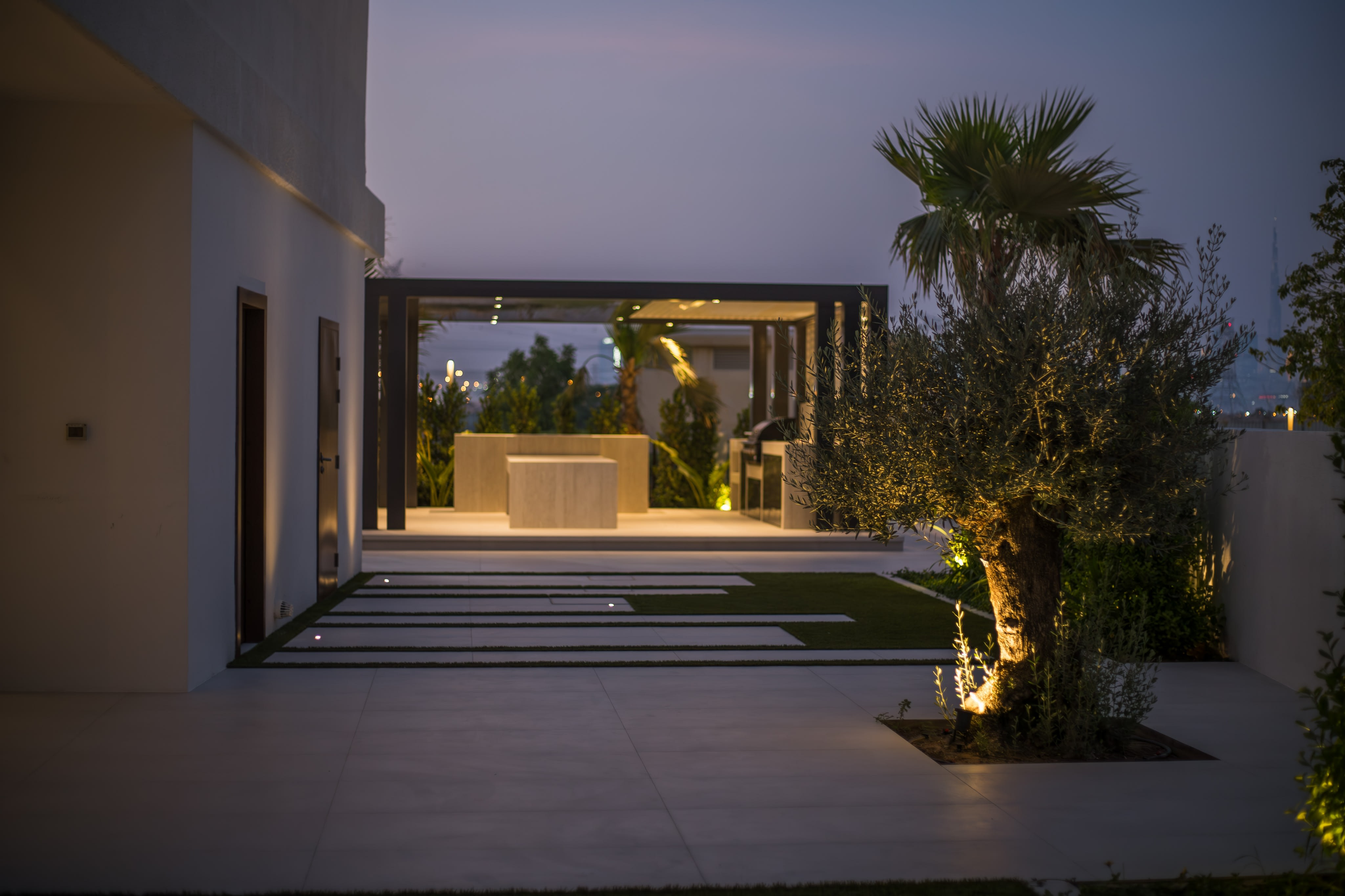
Understanding landscaping design basics is essential for developers, business owners, and decision-makers planning outdoor environments in Dubai, Abu Dhabi, and across the UAE. Whether for commercial complexes, hospitality projects, retail destinations, or corporate headquarters, landscaping is more than planting greenery—it is a structured design discipline that integrates function, aesthetics, sustainability, and long-term performance.
This pillar guide explains the foundational framework behind professional landscape design, including planning strategies, spatial organization, material selection, and regional considerations specific to the UAE climate.
What Are Landscaping Design Basics?
At its core, landscaping design combines technical planning and creative vision to shape outdoor spaces that are functional, visually cohesive, and environmentally responsive.
The fundamentals include:
- Understanding site conditions
- Applying core landscape design principles
- Structuring effective landscape layout planning
- Integrating appropriate landscaping elements and features
- Balancing hardscape and softscape design
For commercial developments in the UAE, these basics must also account for heat resilience, irrigation efficiency, regulatory requirements, and long-term maintenance feasibility.
Core Landscape Design Principles
Professional landscape design is guided by established principles that ensure harmony and usability.
1. Balance
Balance creates visual stability in a landscape. It may be:
- Symmetrical (formal layouts, common in corporate and institutional settings)
- Asymmetrical (dynamic layouts, often used in hospitality or mixed-use developments)
2. Proportion and Scale
Landscape elements must relate correctly to:
- Building massing
- Human scale
- Surrounding context
Oversized features can overwhelm a space, while undersized planting may feel disconnected in large commercial plots.
3. Unity and Cohesion
Materials, planting palettes, and architectural elements should work together to create a consistent identity across the property.
4. Rhythm and Repetition
Repetition of trees, lighting fixtures, or paving patterns helps guide movement and strengthens visual continuity.
For a deeper understanding, consider linking to: underline landscape design principles explained
Step 1: Site Analysis and Commercial Landscape Planning
Effective commercial landscape planning begins with detailed site analysis. This stage influences every design decision that follows.
Key Site Considerations in the UAE
- Solar exposure and heat intensity
- Wind patterns
- Soil conditions
- Existing infrastructure
- Access and circulation routes
- Municipality regulations
In Dubai and Abu Dhabi, sustainability regulations increasingly influence plant selection and irrigation strategies. Early coordination with architects and MEP consultants is critical in integrated developments.
A comprehensive site assessment ensures the landscape supports operational needs while enhancing asset value.
Step 2: Landscape Layout Planning
Landscape layout planning translates strategy into spatial organization. This stage defines how people move, interact, and experience the outdoor environment.
Core Layout Components
- Entry and focal points
- Circulation pathways
- Activity zones
- Seating and gathering areas
- Green buffers
- Service and maintenance access
In commercial settings, circulation is especially important. Pathways must accommodate foot traffic flow, accessibility standards, and safety considerations.
Well-planned layouts improve:
- Visitor navigation
- Outdoor usability
- Tenant satisfaction
- Property branding
For related insights, internal linking can be added here: underline outdoor space design guidelines
Step 3: Landscaping Elements and Features
The success of a landscape lies in selecting the right landscaping elements and features to support both functionality and aesthetics.
Structural Elements
- Pergolas and shade structures
- Boundary walls and screening
- Water features
- Outdoor furniture
- Lighting systems
Natural Elements
- Trees and shrubs
- Groundcover and turf
- Planters
- Feature planting
In the UAE, shade creation is not optional—it is fundamental. Thoughtful placement of trees and structures significantly improves comfort levels in outdoor commercial areas.
Step 4: Hardscape and Softscape Design
A well-balanced landscape integrates both hardscape and softscape design.
Hardscape
Hardscape refers to non-living elements, including:
- Paving and walkways
- Decking
- Retaining walls
- Steps and ramps
- Outdoor plazas
Materials must withstand extreme temperatures and sand exposure while maintaining aesthetic appeal.
Softscape
Softscape includes all living components:
- Trees
- Shrubs
- Turf
- Seasonal planting
In UAE climates, softscape selection prioritizes:
- Drought-tolerant species
- Native or adaptive planting
- Efficient irrigation compatibility
An imbalance—too much hardscape or excessive planting without maintenance planning—can reduce functionality and long-term performance.
For additional reading, consider linking to: underline hardscape and softscape planning guide
Sustainability as a Foundational Principle
Modern landscaping design basics increasingly incorporate sustainable strategies, particularly in the UAE’s arid environment.
Best Practices Include:
- Drip irrigation systems
- Soil moisture monitoring
- Native and adaptive plant palettes
- Shaded microclimates
- Permeable paving systems
Sustainability enhances not only environmental performance but also operational efficiency and long-term asset value.
For broader regional insights, a relevant cluster link could be: underline sustainable landscape design in UAE
Common Challenges in Commercial Landscaping
Even well-planned projects can face challenges. Recognizing them early ensures smoother project delivery.
1. Heat and Climate Stress
High temperatures affect both plant health and material durability. Professional plant selection and proper irrigation zoning are essential.
2. Poor Drainage Planning
Improper grading can cause water pooling and surface damage. Drainage must be integrated into early design stages.
3. Overdesigning Without Maintenance Strategy
Complex planting schemes may look impressive initially but can become difficult to manage. Practicality should guide design decisions.
4. Disconnected Design and Architecture
Landscaping should complement building architecture, not compete with it. Coordinated design & build teams help maintain alignment.
For integrated solutions, internal linking can reference: underline commercial landscaping services in Dubai underline turnkey design and build solutions
A Step-by-Step Framework for Landscaping Design Basics
For commercial clients, the process typically follows:
- Initial consultation and briefing
- Site analysis and feasibility review
- Concept design development
- Detailed landscape layout planning
- Material and plant selection
- Technical documentation
- Coordination with architecture and MEP
- Implementation and supervision
Each phase builds upon the previous one to ensure clarity, efficiency, and design integrity.
Frequently Asked Questions
1. What are the most important landscaping design basics for commercial projects?
The most important fundamentals include site analysis, spatial layout planning, applying landscape design principles, and balancing hardscape and softscape elements.
2. How does climate impact landscaping design in the UAE?
Extreme heat and limited rainfall require drought-tolerant plants, efficient irrigation systems, and strong shade strategies.
3. What is the difference between hardscape and softscape?
Hardscape includes structural, non-living elements like paving and walls, while softscape refers to living components such as trees and shrubs.
4. Why is landscape layout planning important?
It determines circulation, usability, accessibility, and overall experience within the outdoor environment.
5. When should landscaping be integrated into a development project?
Ideally, landscape planning should begin during early architectural design stages to ensure full coordination and avoid retrofitting challenges.
6. How does landscaping add value to commercial properties?
Strategic landscaping enhances curb appeal, improves user comfort, strengthens brand perception, and supports sustainability goals.