
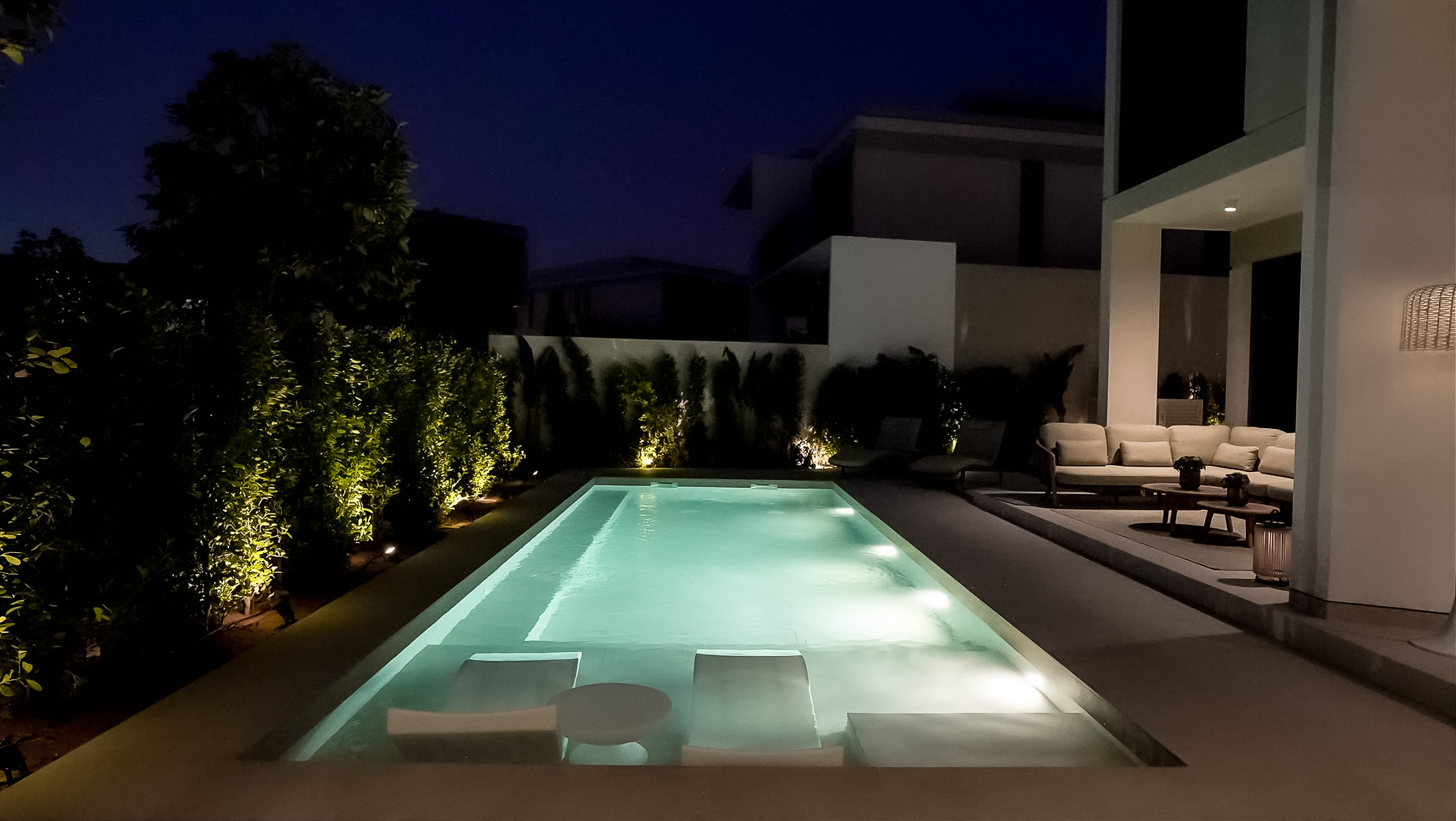
Outdoor Landscape Lighting Design
Outdoor spaces in commercial and residential developments are no longer just functional—they are an extension of architectural aesthetics and user experience. Outdoor Landscape Lighting Design plays a pivotal role in enhancing safety, ambiance, and usability while complementing the broader spatial layout. For developers, business owners, and decision-makers in Dubai and Abu Dhabi, understanding the intersection of lighting and spatial planning is essential for creating standout, functional outdoor environments.
Understanding the Role of Lighting in Landscape Design
Lighting is more than illumination—it shapes perception, guides movement, and enhances the atmosphere. Effective lighting planning in landscapes requires a balance between aesthetic appeal and practical functionality.
Key Objectives of Outdoor Lighting
• Safety and Security – Pathways, entrances, and communal areas should be well-lit to prevent accidents and deter unwanted activity.
• Visual Appeal – Highlighting architectural features, gardens, water elements, or art installations.
• Functional Zoning – Lighting can define outdoor zones, such as seating, dining, or circulation spaces.
• Sustainability – Using energy-efficient solutions like LED fixtures reduces operational costs and environmental impact.
Pro Tip: For commercial developments in the UAE, consider lighting that withstands high temperatures, humidity, and occasional sandstorms while maintaining consistent brightness. This approach aligns with planning functional outdoor spaces to ensure usability and comfort.
Integrating Spatial Planning with Lighting
Spatial planning ensures that outdoor areas are not only visually appealing but also practical and navigable. Effective landscape spatial planning complements lighting by defining how people move through and interact with the space.
Step-by-Step Spatial Planning Framework
1. Assess the Site – Analyze terrain, sunlight exposure, and existing vegetation.
2. Define Functional Zones – Seating areas, walkways, recreational spaces, and service zones.
3. Plan Circulation Paths – Use lighting to subtly guide movement while avoiding glare.
4. Layer Lighting Strategically – Combine ambient, accent, and task lighting for a cohesive effect.
5. Account for Scale and Perspective – Lighting should enhance spatial depth without overwhelming the landscape.
Example: In Dubai commercial plazas, integrating pathway lights with soft accent lighting around greenery improves both orientation and visual comfort during evening hours. This is consistent with commercial landscape design Dubai best practices.
Best Practices in Outdoor Landscape Lighting Design
Implementing garden lighting ideas and structured layouts requires careful planning. Consider these best practices:
• Layered Lighting: Combine ambient, accent, and task lighting to create depth and functionality.
• Highlight Key Features: Use focused lighting on fountains, sculptures, or architectural details.
• Energy Efficiency: Choose LED or solar-powered fixtures suitable for the UAE climate.
• Minimize Light Pollution: Avoid over-illumination that could impact nearby properties or wildlife.
• Flexibility: Incorporate dimmers or smart lighting systems for customizable experiences.
Integrating these principles with garden lighting solutions guide techniques ensures long-term performance and visual appeal.
Designing Exterior Lighting Layouts
A structured exterior lighting layout is essential for both aesthetic cohesion and operational efficiency.
Key Considerations
• Fixture Placement: Align lighting with walkways, entrances, and focal points.
• Height and Angle: Adjust for glare control and desired shadow effects.
• Consistency: Maintain uniform illumination to prevent disorienting dark spots.
• Integration with Hardscape: Fixtures should complement materials like stone, timber, or concrete.
Pro Tip: Commercial properties in Abu Dhabi benefit from reflective surfaces to amplify soft lighting in outdoor lounges or pedestrian zones, especially when combined with landscape architecture expertise in the UAE.
Common Challenges and Professional Solutions
Challenge 1 – Over-Illumination
Solution: Implement layered lighting and dimming controls to balance brightness.
Challenge 2 – Harsh Shadows and Glare
Solution: Position fixtures strategically, and use shielded or recessed lighting to soften shadows.
Challenge 3 – Maintenance in Harsh Climates
Solution: Select corrosion-resistant materials, weatherproof fixtures, and easily replaceable bulbs.
Challenge 4 – Integrating with Existing Structures
Solution: Use flexible layouts and modular lighting elements that complement existing architecture.
Outdoor Environment Design Considerations in the UAE
Designing for the UAE market requires attention to local climate, cultural preferences, and regulatory standards:
• Climate Adaptation: Use fixtures that withstand heat, UV exposure, and occasional sandstorms.
• Cultural Sensitivity: Avoid direct lighting into neighboring residences or mosques; consider softer tones.
• Regulations: Comply with local safety standards for electrical installations in public and commercial spaces.
These strategies are part of a holistic approach to planning functional outdoor spaces in the UAE.
FAQ
1. What is the difference between ambient and accent lighting in landscapes?
• Ambient lighting provides general illumination, while accent lighting highlights specific features like trees, sculptures, or pathways.
2. How can lighting improve safety in commercial landscapes?
• Well-lit pathways, entrances, and staircases reduce trip hazards and deter unauthorized access.
3. Are solar-powered lights effective in UAE landscapes?
• Yes, solar LED fixtures are energy-efficient and ideal for sunny climates, though backup power may be required for cloudy days.
4. How does spatial planning impact outdoor lighting design?
• Proper spatial planning defines zones, traffic flow, and focal points, which guides lighting placement and intensity.
5. Can lighting be integrated with water features in landscapes?
• Absolutely; submersible LED lights or uplighting techniques enhance aesthetic appeal while maintaining safety.
6. How often should outdoor lighting layouts be reviewed?
• Ideally every 2–3 years, or after any significant landscape or architectural changes.
Implementing thoughtful Outdoor Landscape Lighting Design ensures that commercial landscapes in Dubai and Abu Dhabi are safe, functional, and visually striking. By integrating spatial planning, layered lighting, and climate-conscious solutions, developers and business owners can create environments that leave a lasting impression.
For guidance on customized solutions, explore our commercial landscape design services or landscape architecture expertise in the UAE to elevate your outdoor projects.