In modern UAE developments, outdoor spaces are no longer secondary—they are integral to how properties function and feel. Within this context, outdoor pathway design UAE plays a crucial role in connecting spaces, guiding movement, and enhancing the overall landscape experience.
Whether in residential villas or large-scale commercial environments, well-designed pathways and walkways contribute to both aesthetics and usability. This guide explores key design principles, material strategies, and practical solutions tailored to UAE landscape projects.
Why Pathway and Walkway Design Matters
Pathways are more than circulation routes—they shape how users interact with a space. In the UAE, where outdoor environments must respond to climate and lifestyle needs, thoughtful design is essential.
Key Functions of Walkways
- Direct pedestrian movement efficiently
- Define zones within landscapes
- Enhance visual appeal and structure
- Improve accessibility and safety
- Connect indoor and outdoor living areas
Effective walkway design for landscapes UAE balances functionality with visual coherence.
Core Design Principles for Outdoor Pathways
1. Clear Circulation Planning
A pathway should feel intuitive. Users should naturally understand where to walk without confusion.
Best practices:
- Align paths with key entry and exit points
- Avoid unnecessary complexity
- Ensure logical flow between spaces
2. Proportion and Scale
The width and layout of pathways must suit the project type.
- Narrow paths for private villa gardens
- Wider walkways for commercial or public spaces
- Adequate spacing for accessibility compliance
3. Integration with Landscape Design
Pathways should complement surrounding elements such as:
- Planting schemes
- Water features
- Architectural structures
This ensures a cohesive landscape walkway design Dubai.
4. Climate-Responsive Design
Given the UAE’s extreme heat, materials and layouts must be carefully selected.
- Use heat-resistant surfaces
- Incorporate shaded sections where possible
- Avoid glare-heavy finishes
Popular Pathway Design Ideas in UAE Projects
1. Natural Stone Walkways
Natural stone remains a preferred choice in outdoor paving design UAE due to its durability and timeless appeal.
Advantages:
- heat resistant
- Long-lasting performance
- Premium aesthetic
2. Stepping Stone Paths
Common in garden pathway ideas Dubai, stepping stones create a relaxed, informal look.
Best suited for:
- Private gardens
- Transitional outdoor spaces
- Low-traffic areas
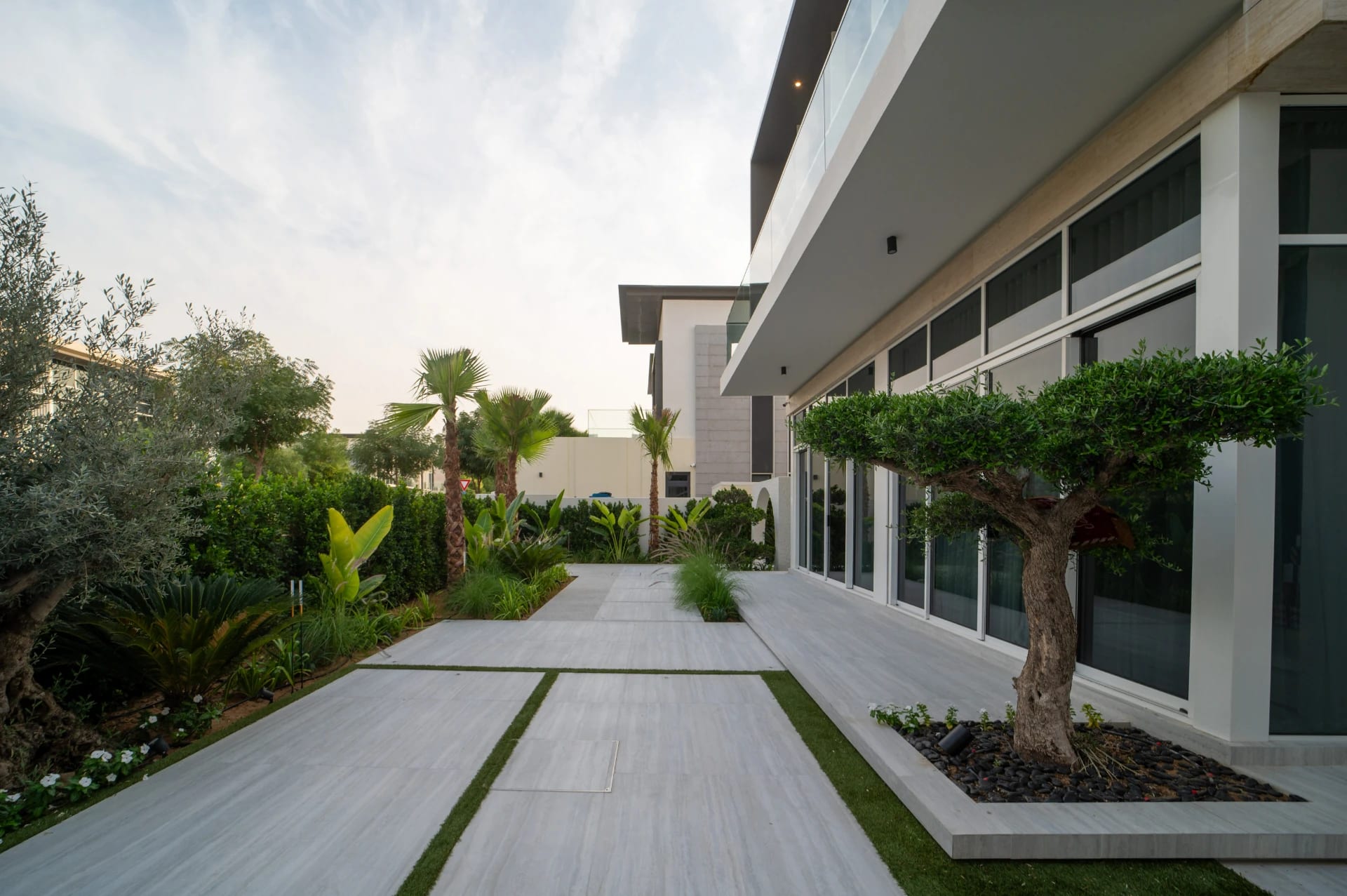
3. Concrete and Minimalist Paths
Modern developments often favor clean, geometric pathways.
Features:
- Smooth finishes
- Straight lines and defined edges
- Integration with minimalist landscapes
4. Wooden Deck Walkways
Used selectively, timber pathways add warmth and contrast.
Considerations:
- Use treated or composite materials
- Ensure durability in high temperatures
5. Integrated Lighting Pathways
Lighting enhances both safety and ambiance.
- Ground lights for subtle illumination
- Edge lighting for definition
- Smart lighting systems for efficiency
Pathway Design for Villas vs Commercial Projects
Villa Walkway Landscaping UAE
Residential pathways prioritize:
- Aesthetic appeal
- Privacy and comfort
- Seamless indoor-outdoor transitions
Designs often incorporate:
- Curved pathways
- Soft landscaping integration
- Decorative materials
Commercial Walkway Design
Commercial spaces require:
- High durability
- Clear navigation
- Accessibility compliance
Typical features include:
- Straight, wide walkways
- Non-slip surfaces
- Structured layouts
Step-by-Step Framework for Designing Outdoor Pathways
Step 1: Site Analysis
- Assess terrain, layout, and user flow
- Identify key connection points
Step 2: Define Functional Requirements
- Residential vs commercial use
- Expected foot traffic
- Accessibility needs
Step 3: Concept Development
- Choose pathway style (formal, informal, modern)
- Define shapes (linear vs curved)
Step 4: Material Selection
- Evaluate durability and maintenance needs
- Ensure compatibility with UAE climate
Step 5: Integration with Overall Landscape
Coordinate with planting, lighting, and architectural elements.
Step 6: Execution Strategy
Proper implementation ensures design intent is achieved. → Suggested link: landscaping design and build services
Common Challenges and Solutions
1. Heat Retention in Materials
Certain materials can become too hot for comfortable use.
Solution: Use light-colored, heat-reflective materials or shaded pathways.
2. Poor Drainage Design
Water accumulation can damage pathways and reduce usability.
Solution: Incorporate proper grading and drainage systems.
3. Overcomplicated Layouts
Complex designs can confuse users and reduce functionality.
Solution: Keep layouts simple and intuitive.
4. Material Wear and Tear
Heavy usage can degrade low-quality materials.
Solution: Select durable materials suited for high-traffic areas.
Best Practices for High-Quality Pathway Design
- Maintain consistency in materials and design language
- Prioritize user comfort and accessibility
- Integrate lighting and shading elements
- Plan for long-term maintenance and durability
- Align pathways with overall landscape vision
A well-designed pathway enhances both the usability and visual appeal of any outdoor space.
FAQ: Outdoor Pathway Design in UAE
1. What materials are best for outdoor pathways in the UAE?
Natural stone, concrete, and composite materials are commonly used due to their durability and heat resistance.
2. How wide should a pathway be?
It depends on usage—residential paths are typically narrower, while commercial walkways require wider dimensions for accessibility.
3. Are curved or straight pathways better?
Curved paths suit residential landscapes, while straight paths are more efficient for commercial spaces.
4. Is lighting necessary for pathways?
Yes, lighting improves safety, usability, and enhances the overall landscape design.
5. How can pathways be integrated with landscaping?
By aligning them with planting layouts, water features, and architectural elements.
6. What is the role of pathways in landscape design?
They guide movement, define spaces, and connect different areas within a property.