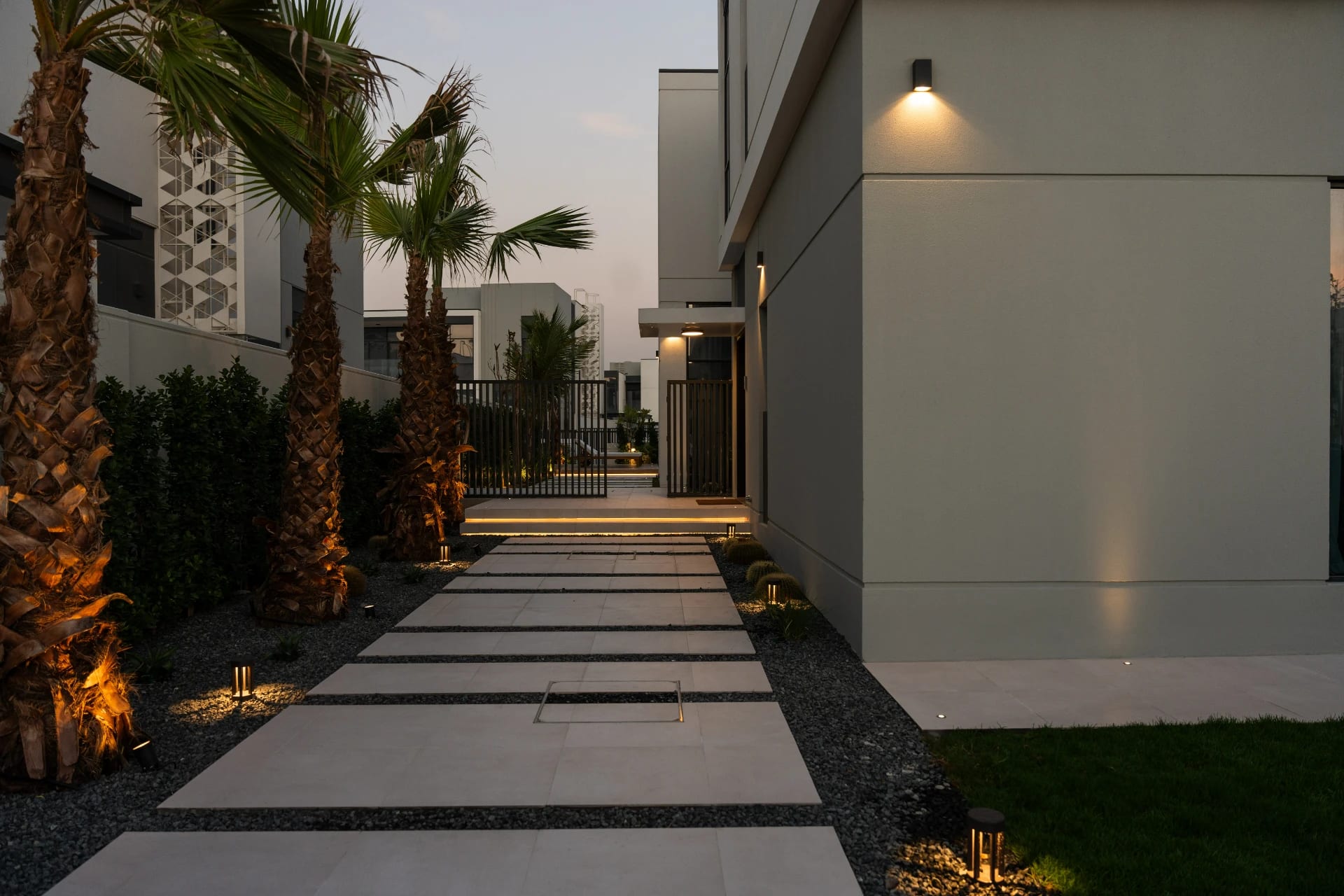
In contemporary commercial development across Dubai and Abu Dhabi, buildings are no longer judged solely by their façade or interior design. The spaces surrounding them—entry plazas, shaded walkways, courtyards, and green buffers—play an equally critical role in shaping perception and usability. This is why landscaping as extension of architecture should be treated as a core design principle, not a secondary enhancement.
For developers, business owners, and decision-makers, understanding how landscape integrates with architecture leads to stronger brand identity, better user experience, and more sustainable performance.
Understanding Landscaping as an Architectural Extension
When we speak about landscaping as extension of architecture, we refer to the seamless alignment between built form and outdoor environment. The landscape is not decorative. It:
- Frames the building
- Guides circulation
- Enhances environmental performance
- Reinforces architectural language
- Supports commercial functionality
Rather than being added at the end of a project, landscaping should evolve alongside architectural planning from the earliest stages.
The Shift Toward Integrated Architectural and Landscape Design
Historically, landscaping was often addressed after architectural design was finalized. Today, integrated architectural and landscape design is increasingly recognized as best practice—especially in the UAE, where climate and public realm expectations demand thoughtful coordination.
In commercial developments, early collaboration between architects and landscape specialists ensures:
- Consistent material palettes
- Unified geometry and spatial rhythm
- Coordinated drainage and grading
- Efficient irrigation integration
- Seamless transitions between indoor and outdoor spaces
For further insights into structured coordination, an internal link can be added here: underline integrated design and build landscaping
Why This Approach Matters in the UAE
The UAE presents unique environmental and regulatory considerations:
- Extreme heat and sun exposure
- Water efficiency requirements
- Municipality landscaping standards
- High aesthetic expectations for commercial developments
Without outdoor and building design integration, projects risk:
- Poor shading performance
- Inconsistent material finishes
- Disconnected pedestrian pathways
- Inefficient irrigation layouts
Treating landscaping as an architectural extension allows climate-responsive solutions to be embedded into the design rather than retrofitted later.
Landscape Architecture for Commercial Projects: More Than Greenery
Professional landscape architecture for commercial projects extends far beyond planting.
It involves:
- Site master planning
- Grading and drainage design
- Pedestrian flow strategy
- Outdoor lighting coordination
- Hardscape material specification
- Sustainability planning
For office campuses, hospitality destinations, and retail environments in Dubai and Abu Dhabi, landscape defines how users arrive, move, and gather.
A cohesive landscape improves:
- Tenant experience
- Customer perception
- Brand strength
- Long-term asset value
A Step-by-Step Framework for Cohesive Exterior and Architectural Planning
Step 1: Joint Vision Development
Architects and landscape specialists should collaborate during concept development. This ensures:
- Shared design language
- Consistent geometry
- Harmonized material selection
This is the foundation of cohesive exterior and architectural planning.
Step 2: Site Analysis and Environmental Strategy
Understanding site orientation, prevailing winds, and sun paths is essential in the UAE.
Landscape strategies may include:
- Shaded pedestrian corridors
- Strategic tree placement
- Reflective paving materials
- Water-efficient irrigation systems
Early environmental planning enhances long-term comfort and sustainability.
For more on structured planning, consider linking to: underline landscape design planning process
Step 3: Circulation and Spatial Hierarchy
Landscape helps define:
- Primary and secondary entry points
- Gathering zones
- Transitional spaces
- Private versus public areas
Clear circulation planning supports both functionality and compliance with local regulations.
Step 4: Technical Coordination
Successful outdoor and building design integration requires coordination between:
- Structural engineers
- MEP consultants
- Irrigation specialists
- Lighting designers
This avoids conflicts between underground services, tree root systems, and hardscape installation.
Commercial Landscape Design Strategy: Aligning with Business Goals
A strong commercial landscape design strategy aligns aesthetic vision with operational objectives.
Key considerations include:
- Accessibility and inclusivity
- Brand identity expression
- Sustainability targets
- Maintenance feasibility
- Long-term adaptability
For example, a corporate headquarters may prioritize formal entry plazas and shaded courtyards, while a retail development may emphasize open gathering areas and visual focal points.
Best Practices for Integrated Design
1. Early Collaboration
Landscape should be involved during architectural concept development—not post-construction.
2. Material Continuity
Hardscape materials should reflect façade finishes and interior tones for visual consistency.
3. Climate Responsiveness
Plant palettes must prioritize drought-tolerant species suitable for UAE conditions.
4. Maintenance Planning
Design decisions should consider long-term operational practicality.
5. Authority Compliance Integration
Municipality guidelines must be addressed early to avoid redesign complications.
Common Challenges and Professional Solutions
Challenge 1: Landscaping Added Too Late
Late integration often results in mismatched materials and compromised shading strategies.
Solution: Involve landscape teams during master planning.
Challenge 2: Inconsistent Design Language
When architecture and landscape are designed separately, visual cohesion suffers.
Solution: Adopt integrated architectural and landscape design frameworks.
Challenge 3: Irrigation and Drainage Conflicts
Improper coordination can lead to inefficient systems.
Solution: Embed technical consultants within early planning stages.
Challenge 4: Overemphasis on Aesthetics Without Function
A visually appealing landscape that lacks circulation clarity or shading performance reduces usability.
Solution: Prioritize functionality alongside design expression.
The Long-Term Impact on Commercial Developments
Viewing landscaping as an architectural extension improves:
- Environmental performance
- Visitor comfort
- Brand perception
- Asset durability
- Sustainability outcomes
In the UAE’s competitive commercial market, these factors directly influence property positioning and long-term value.
Landscape becomes the first and last impression of a development—framing the building and defining user experience.
Frequently Asked Questions
1. What does landscaping as extension of architecture mean?
It means designing outdoor spaces as a seamless continuation of the building’s form, function, and identity.
2. Why is integrated design important for commercial projects?
Integrated planning ensures visual cohesion, regulatory compliance, and environmental performance.
3. How does landscaping improve architectural impact?
Landscape frames views, enhances entry sequences, and creates meaningful spatial transitions.
4. When should landscape design begin in a project?
Ideally during the concept stage alongside architectural development.
5. Does this approach support sustainability goals?
Yes. Early integration enables water efficiency, shading strategies, and climate-responsive planting.
6. Is this model suitable for all commercial developments?
Yes. Offices, retail, hospitality, and mixed-use projects all benefit from coordinated planning.