
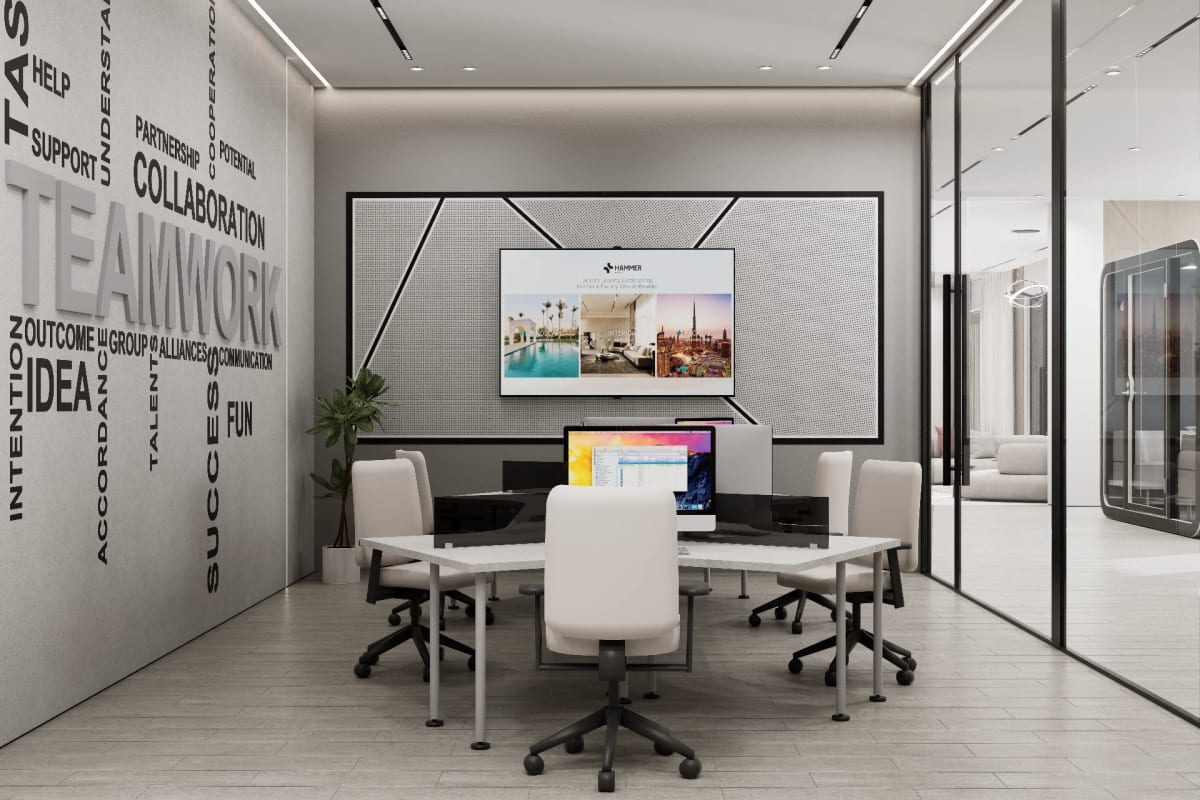
Every commercial building in Dubai carries two inventories. One is visible to tenants: the reception, the meeting rooms, the finishes. The other sits behind ceilings and on the roof, and decides whether the first stays comfortable, safe and presentable. Commercial building asset lifecycle management is the discipline of keeping both inventories in step, so that inspections, repairs and replacements become planned decisions rather than reactions to the latest breakdown. Owners who dubai-it with a showpiece lobby soon learn that the bolder move is a plant room that keeps that lobby cool through every summer without an unplanned shutdown.
What Commercial Building Asset Lifecycle Management Means
An asset, in this context, is any component of a building that has a working life, a condition that can be measured and a consequence if it fails. That covers the obvious mechanical, electrical, and plumbing (MEP) plant: chillers, air handling units (AHUs), pumps, switchgear, lifts and fire systems. It also covers the building fabric, from roofing membranes and facade sealants to ceilings, doors and fitted furniture.
As the planning layer of professional facility management, lifecycle management follows each of those assets from installation to eventual replacement. It records what is installed and where, tracks condition through planned inspections, guides repair decisions with evidence and identifies the point at which repair stops making sense. The aim is to replace the right things at the right moment, with the least disruption to occupants. Interior elements belong in this picture as firmly as plant does: reception counters, built-in storage and wall panelling made as bespoke joinery wear, loosen and fade too, and they shape how a building is judged far more visibly than any pump.
What the UAE Climate Asks of a Commercial Building
Cooling systems in Dubai and Abu Dhabi run for most of the calendar at high duty, which places constant demand on compressors, fans, bearings and controls. Outside, sun, dust and salt-laden coastal air work on sealants, coatings and rooftop units. Inside, the gap between conditioned air and outdoor humidity creates condensation risk wherever cold meets warm.
The commercial context adds its own pressure. Offices, retail podiums, clinics and showrooms trade on presentation, and tenants notice a tired reception or a noisy fan coil long before they read a maintenance report. A well-run asset plan gives owners evidence for those conversations, and lets refurbishment work, such as the reception and lounge delivered in a recent commercial office project in Jebel Ali, follow the same logic as the plant behind it.
Asset Lifecycle Planning Ideas for Commercial Buildings
Start From a Living Asset Register
Every decision downstream depends on knowing what is installed. A strong register lists each asset with its location, make, model, serial number, installation date, warranty details and the manufacturer's maintenance requirements. It should live in a computerised maintenance management system (CMMS) rather than a spreadsheet, so every work order updates the record. A register that changes with every visit becomes the building's memory.
Rank Assets by Criticality
A chiller serving an entire tower, a fire pump and a main low-voltage panel sit at the top of any ranking, because their failure stops occupation or compromises safety. Scoring each asset on safety, business impact, compliance and ease of replacement gives the team a clear order of priority for inspections, spare parts and replacement planning.
Shift Inspections From Calendar to Condition
Fixed-interval checklists are a sensible baseline, but they treat a lightly used AHU and a heavily loaded one as identical. Condition-based inspection adds measurement: vibration readings on rotating plant, thermal imaging on electrical panels, refrigerant pressures, filter differential pressures and water treatment results. When those readings trend in the wrong direction, the team intervenes early; when they hold steady, intervals can be relaxed with confidence. The building management system (BMS) helps too, since run hours and alarm logs reveal stress a visual check would miss.
Make Repair Decisions With the Whole Life in View
A repair is never just a repair: it is a choice to keep an asset in service rather than replace it. A pump that needs a new seal once is routine. A pump whose seals, bearings and impeller have all been replaced in quick succession is telling the team something.
Plan Replacements Around Occupied Floors
Replacing equipment in an operating building is as much a logistics exercise as a technical one. Rigging routes, temporary cooling, shutdown windows and tenant notices all need settling first. Grouping replacements so that one ceiling opening serves several tasks (ductwork, lighting, sprinkler heads, data cabling) reduces disruption and avoids opening the same finishes twice.
Treat Interiors and Fit-Out as Assets Too
Fitted elements are often left out of asset registers. Reception counters, pantry cabinetry, washroom vanities and acoustic wall panels have finishes, hinges and substrates that age at different rates. Recording materials such as moisture-resistant medium-density fibreboard (MR-MDF) carcasses, high-pressure laminate (HPL) worktops or veneered panels lets the team source matching replacements. When a full refresh is due, an interior design and build approach can renew these areas in step with the MEP work above the ceiling.
A Practical Framework for Planning Inspections, Repairs and Replacement
A structured sequence keeps the work consistent, building on routine tasks like those in this preventive maintenance checklist for Dubai villas and commercial spaces.
- Discovery. Agree the owner's priorities, the building's operating pattern, warranty obligations and compliance requirements set by Dubai Civil Defence and other authorities.
- Survey. Walk every floor, riser, plant room and roof to verify the register, grade each asset's condition on a consistent scale and flag safety or compliance risks.
- Design. Build the lifecycle plan itself: inspection routines by asset class, criticality rankings, repair thresholds and a replacement sequence that groups related works and respects how the building is used.
- Materials. Specify replacement equipment and finishes for performance in heat, humidity and dust, favouring higher-efficiency plant, corrosion-resistant fixings and ultraviolet-stable coatings.
- Fabrication. Prepare as much as possible away from site. Pre-assembled pipework and electrical modules, computer numerical control (CNC) cut joinery components and pre-finished panels reduce noise, dust and work inside occupied areas.
- Installation. Carry out works under permits to work, with isolation procedures, protection of finishes and clear communication with tenants.
- Handover. Test and recommission each system, update the CMMS register, issue as-built drawings and operation manuals, and reset inspection routines for the new equipment.
Common Challenges and Solutions
Incomplete or missing as-built information.
Treat the first survey as a baseline exercise, tagging each asset with a unique identifier and rebuilding the register from what is actually installed.
Humidity and condensation damage around cooling systems.
Inspect insulation, vapour barriers and drain pans as part of routine heating, ventilation, and air conditioning (HVAC) checks, track indoor humidity through the BMS
Dust and sand reducing equipment performance.
Add filter checks on rooftop and fresh-air plant after sandstorms, clean condenser coils regularly and seal penetrations in the building envelope.
Works disrupting tenants.
Agree shutdown windows in advance, phase works floor by floor and keep tenants informed at every stage.
Interior finishes degrading unevenly.
Record the specification of every fitted element so replacements match, and plan joinery and surface refreshes alongside planned ceiling and MEP access.
Frequently Asked Questions
What is the difference between preventive maintenance and asset lifecycle management?
Preventive maintenance is the routine servicing that keeps equipment running. Lifecycle management sits above it, using records and condition data to decide when to repair, refurbish or replace.
Which assets should a commercial building prioritise first?
Those whose failure would affect safety, compliance or occupation: fire systems, main electrical distribution, central cooling plant, lifts and water systems. Tenant-facing areas follow closely.
How do you decide whether to repair or replace equipment?
By reviewing the asset's full record: condition readings, failure history, spare parts availability and the consequence of a further breakdown. When repairs grow frequent and performance keeps declining, replacement is usually the sounder choice.
Do interior fit-out elements belong in an asset register?
Yes. Reception counters, cabinetry, wall panelling, washroom fittings and flooring all wear, and recording their materials makes like-for-like repairs far simpler.
What role does a CMMS play?
It holds the asset register, issues planned work orders, records every repair and stores condition data, giving owners a single, auditable view of each asset's history.
A Building That Ages on Your Terms
Equipment will wear and finishes will fade; what owners control is whether those moments arrive as surprises or as planned steps. Commercial building asset lifecycle management turns inspection data, repair history and replacement planning into one coherent view of the building, so the plant room and the reception are cared for with the same intent. Hammer Group brings facility management, MEP capability, interior design and in-house joinery together for commercial owners across Dubai and Abu Dhabi, and a conversation about your building's asset register is a sensible place to begin.