
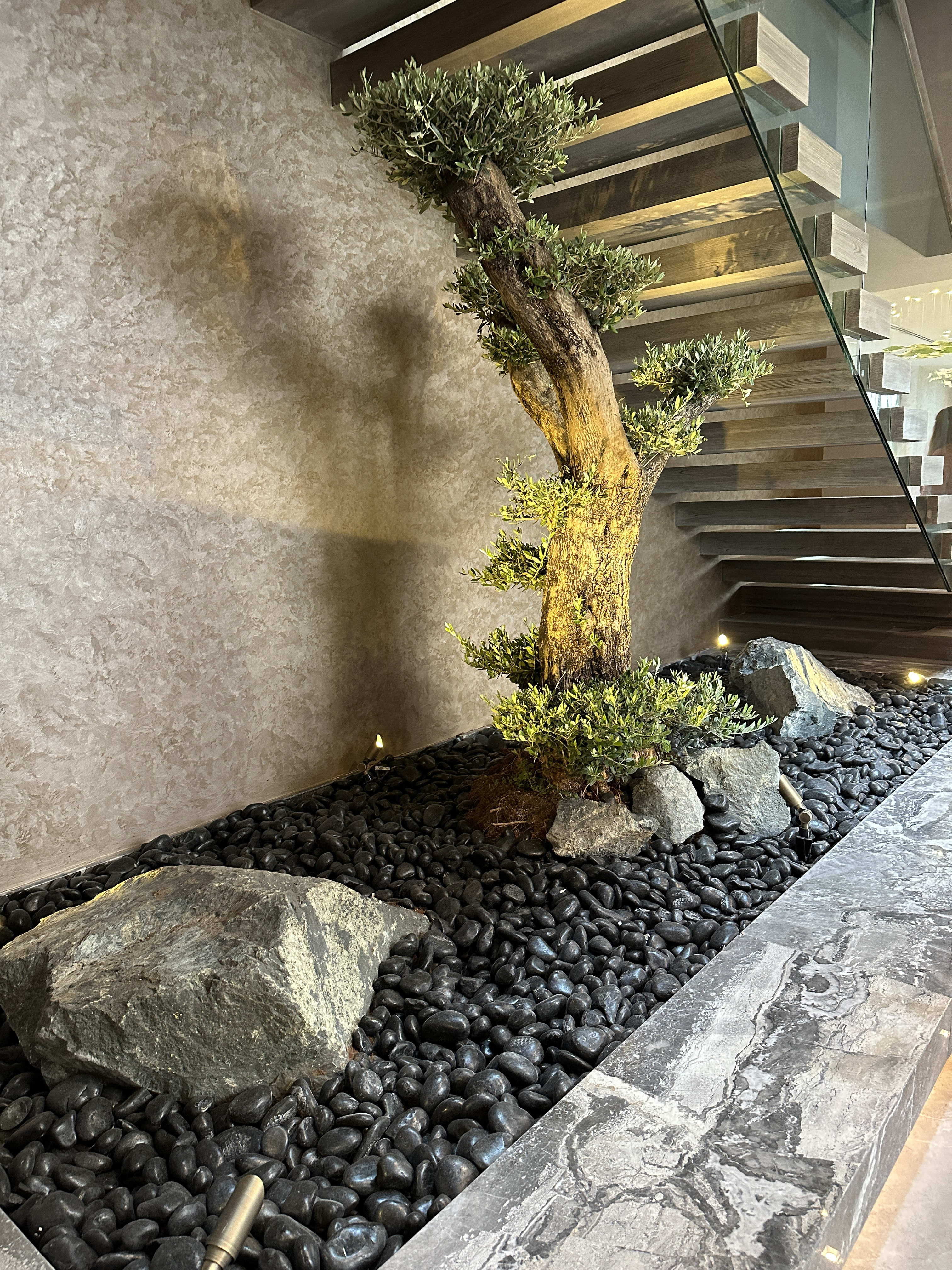
The Rise of Indoor Zen Garden Design
In a world dominated by screens, noise, and constant movement, homeowners are increasingly turning inward—literally. Indoor Zen garden design has emerged as a powerful way to bring tranquility, mindfulness, and natural beauty into modern living spaces.
Inspired by traditional Japanese gardens, an indoor Zen garden uses stone, gravel, wood, and carefully curated greenery to create a peaceful environment that promotes relaxation and balance. Whether integrated beneath a staircase, along a corridor, or as a central design feature, Zen gardens are now a hallmark of luxury interior design.
In this guide, we’ll explore how to design an indoor Zen garden, the principles behind it, and actionable tips to help you create a serene, timeless space.
What Is an Indoor Zen Garden?
An indoor Zen garden is a minimalist interior landscape inspired by Japanese dry gardens (Karesansui). These gardens focus on simplicity, symbolism, and harmony rather than decorative excess.
Core Elements of Zen Garden Design
A traditional Zen garden design includes:
- Natural stone and rocks
- Gravel or pebbles (often raked for texture)
- Carefully pruned trees or bonsai
- Neutral color palettes
- Soft, indirect lighting
Featured Snippet Answer: An indoor Zen garden is a minimalist interior space using natural materials like stone, gravel, and plants to promote calm and mindfulness.
Why Indoor Zen Gardens Are Perfect for Luxury Homes
Luxury today is no longer defined solely by size or cost—it’s defined by experience. Luxury interior landscaping like Zen gardens offers both aesthetic and emotional value.
Key Benefits:
- Enhances mental well-being and stress reduction
- Creates a strong architectural focal point
- Improves indoor air quality with natural greenery
- Adds unique design character to modern homes
Unlike traditional décor, a Zen garden indoors engages the senses while remaining visually understated.
Ideal Locations for an Indoor Zen Garden
Choosing the right location is essential for effective indoor Zen garden design.
Best Placement Ideas:
- Under staircases (as shown in the image)
- Entryway or foyer feature areas
- Along interior corridors
- Near large glass walls or skylights
- Adjacent to meditation or reading spaces
Each location offers a different emotional experience, from welcoming calm to private reflection.
Materials Used in Zen Garden Interior Design
Material selection defines the authenticity and longevity of a Zen garden design.
Stones and Pebbles
Natural stones symbolize mountains and stability.
Recommended choices include:
- River stones
- Basalt or granite rocks
- Black or gray polished pebbles
Pebbles help anchor the design visually while reinforcing minimalism.
Plants and Trees
Plants in an indoor Zen garden are intentionally sparse.
Popular choices:
- Olive trees
- Bonsai trees
- Ficus or dwarf trees
- Moss accents
These plants represent life, resilience, and growth.
Walls and Backdrops
Textured plaster, stone walls, or concrete finishes complement Japanese interior design principles by keeping the focus on nature.
Lighting Techniques for Indoor Zen Gardens
Lighting plays a subtle but critical role in indoor Zen garden design.
Effective Lighting Strategies:
- Warm LED spotlights aimed at trees or rocks
- Floor-mounted lights for dramatic shadows
- Hidden strip lighting for ambient glow
Quick Tip: Soft, indirect lighting enhances texture without overwhelming the space.
Zen Garden Design Principles You Should Follow
To maintain authenticity, follow these essential principles:
- Simplicity: Less is always more
- Balance: Asymmetry feels more natural than symmetry
- Natural Flow: Avoid rigid layouts
- Mindful Spacing: Empty space is part of the design
These principles ensure your indoor Zen garden remains calming rather than cluttered.
Common Mistakes to Avoid
Even luxury interiors can miss the mark if Zen principles are ignored.
Avoid the Following:
- Overusing decorative elements
- Bright or artificial colors
- Too many plant varieties
- Poor lighting placement
Remember, Zen garden design is about intention, not decoration.
Frequently Asked Questions (FAQ)
Q1: Are indoor Zen gardens expensive to build?
Costs vary depending on materials, but a basic indoor Zen garden can be scaled to suit different budgets.
Q2: Do Zen gardens require a lot of maintenance?
No. Occasional cleaning, plant care, and stone arrangement are usually sufficient.
Q3: Can Zen gardens work in small homes?
Absolutely. Even compact spaces can accommodate minimalist Zen garden interiors.
Q4: Are indoor Zen gardens culturally appropriate outside Japan?
Yes, when designed respectfully and inspired by core principles rather than imitation.
Links:
https://www.hammer-services.com/services/interior-design-build/
https://www.hammer-services.com/case-studies/houssam-tilal-al-ghaf/