
A faulty tap in a Dubai office tower is a small thing until nobody knows who reported it, who owns it or whether it was ever fixed. Multiply that by hundreds of requests across lifts, cooling, lighting, washrooms and access control, and the real challenge of running a commercial building comes into view. Managing building maintenance requests well means every issue enters one system, is ranked by urgency, reaches the right technician and leaves a record behind. Buildings that want to dubai-it on tenant experience usually find that the most persuasive upgrade is not a new lobby but a request process occupants can actually trust.
What Managing Building Maintenance Requests Means
A maintenance request is any reported fault, service need or minor job inside a building, from a warm meeting room to a broken door closer. Managing those requests covers the whole journey: how occupants raise them, how they are logged and prioritised, how work is assigned, how progress is communicated and how completion is verified and recorded.
Three tools hold that journey together. A service level agreement (SLA) defines what "good" looks like, setting response and resolution targets for each priority level. A helpdesk gives occupants a single front door for every request and gives the maintenance team a single queue. Digital reporting, usually through a computer-aided facility management (CAFM) platform or a computerised maintenance management system (CMMS), turns individual jobs into data that owners can review, question and act on. Run together as part of professional facility management, they replace phone calls and memory with a process that can be measured.
Where a Structured Helpdesk Pays Off in the UAE
UAE commercial buildings place unusual weight on reactive service. Cooling runs almost constantly, so any fault in heating, ventilation, and air conditioning (HVAC) is felt immediately and generates complaints quickly. Dust, heat and humidity accelerate wear on fans, filters, seals and door hardware. Multi-tenant towers and mixed-use developments add complexity, with landlords, tenants and operators each expecting clear answers about who is responsible for what.
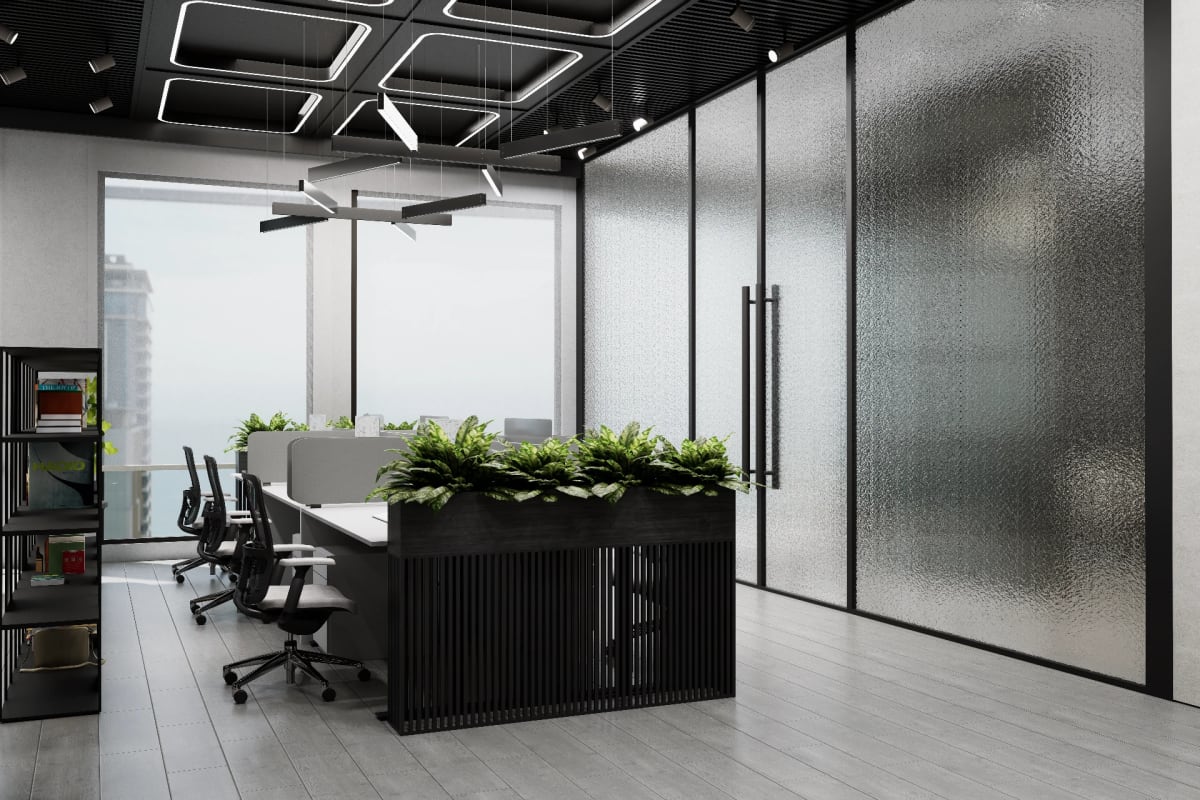
Expectations are high too. Occupiers in premium offices and retail spaces are used to hotel-level service and judge a building by how quickly and politely issues are resolved. Regulators expect safety-critical systems, such as fire alarms and life safety equipment, to be maintained and documented properly. A building whose interiors were delivered through a considered interior design and build process, like this commercial office fit-out in Abu Dhabi, deserves a request process that keeps its finishes, joinery and systems performing as designed. Good handover documentation from the fit-out team, including finish schedules and supplier details, makes later repairs faster to diagnose and easier to match.
Maintenance Request Management Ideas
Write SLAs Around Priority, Not Just Speed
The strongest SLAs start with a clear priority matrix. Emergencies that threaten safety or stop the business sit at the top, followed by urgent faults affecting comfort or operations, then routine requests and planned jobs. Each tier carries its own response and resolution targets, escalation route and communication rule. Defining categories precisely matters: "no cooling on a whole floor" and "one office slightly warm" should never compete for the same slot.
Give Occupants One Front Door
Requests scattered across emails, calls, messaging apps and corridor conversations get lost. A single helpdesk, reachable through a mobile app, web portal, phone line or email that all feed the same queue, ensures every request receives a reference number and a status. Occupants can see progress without chasing, and the maintenance team works from one list instead of several.
Tag Assets and Rooms With QR Codes
Quick response (QR) codes fixed to equipment, washrooms and meeting rooms let anyone report a fault by scanning and adding a photograph. The request arrives already linked to the right location and asset, removing guesswork for the technician. Over time, each asset builds its own fault history, which shows which equipment needs closer attention or eventual replacement.
Triage Before Dispatch
A good helpdesk does not simply forward messages. Trained coordinators, supported by rules in the CAFM system, confirm the priority, check for duplicates, verify whether the issue is covered by warranty or tenant responsibility and attach the right trade and parts. Some faults can be resolved remotely through the building management system (BMS), such as resetting setpoints or restarting equipment, avoiding a site visit altogether.
Build Reports People Actually Read
Digital reporting is only useful if it guides decisions. Concise dashboards showing SLA compliance, open requests by priority, repeat faults and first-time fix rates give owners and facility managers a clear picture. Key performance indicators (KPIs) reviewed in regular meetings reveal patterns, such as recurring cooling complaints on one floor, that point to a design or equipment issue rather than a one-off fault.
Close the Loop With Occupants
A request is not truly complete until the person who raised it knows. Automated notifications at each stage, a short satisfaction rating on closure and the option to reopen a job if the issue returns all build confidence. That feedback also measures the service from the occupant's side, not just the contractor's.
A Practical Framework for Setting Up Request Management
- Discovery. Map the building's stakeholders, contractual responsibilities, existing channels and the most common types of requests.
- Survey. Audit mechanical, electrical, and plumbing (MEP) assets, spaces and current records, identifying gaps in data and recurring problem areas.
- Design. Agree the priority matrix, SLA targets, escalation routes and reporting format with owners and tenants, building on the principles in this guide to CMMS and single-vendor facility management.
- Materials. Select the CAFM or CMMS platform, mobile apps, QR tags and reporting templates, along with critical spares stock.
- Fabrication. Configure the system: asset registers, request categories, routing rules, notification templates and dashboard views.
- Installation. Tag assets and rooms, train helpdesk staff and technicians, and introduce the new reporting channels to occupants.
- Handover. Launch the service, review early performance against SLAs and refine categories and rules based on real requests.
Common Challenges and Solutions
Requests arriving through informal channels.
Promote one helpdesk route, log every informal request on the occupant's behalf and gently redirect people until habits change.
SLAs met on paper while occupants remain unhappy.
Measure resolution and satisfaction alongside response, so a fast first visit that leaves the fault unfixed does not count as success.
Cooling complaints overwhelming the helpdesk in peak heat.
Solution: Use BMS data to spot developing faults early, and pre-plan coil cleaning and filter changes before the hottest conditions arrive.
Poor data quality.
Make asset selection, categories and completion notes mandatory in the system, and audit a sample of closed jobs regularly.
Unclear responsibility between landlord and tenant.
Record responsibilities in the SLA and configure the system to flag tenant-owned items at the triage stage.
Frequently Asked Questions
What should a building maintenance SLA include? Priority definitions, response and resolution targets for each level, escalation routes, reporting requirements and the responsibilities of each party.
Is a CAFM system necessary for smaller buildings? Even a modest building benefits from a digital system, as it creates an audit trail, tracks recurring faults and simplifies reporting to owners.
How do QR codes improve maintenance reporting? They link each request to the exact asset and location, allow occupants to attach photos and remove the need to describe where the fault is.
What KPIs matter most for a maintenance helpdesk? SLA compliance by priority, first-time fix rate, repeat faults, open backlog and occupant satisfaction give the most balanced view.
Can reactive requests and planned maintenance be managed in the same system? Yes. Managing both together helps technicians combine tasks, reduces visits and gives a complete history for each asset.
When Every Request Leaves a Trace
Buildings earn their reputation one small fix at a time. Managing building maintenance requests through clear SLAs, a single helpdesk and honest digital reporting gives owners proof of performance, gives technicians clarity and gives occupants confidence that their concerns are heard. Hammer Group combines facility management, MEP expertise and interior fit-out knowledge for commercial properties across Dubai and Abu Dhabi, and can help shape a request process your occupants will rely on.