In most Dubai villas the living room is where the household gathers, entertains, and relaxes, and the television wall is the surface everyone faces. Left as an afterthought, it becomes a black rectangle on a bare wall with cables trailing behind a shop-bought stand. Designed properly, it becomes the quiet anchor of the room. This is the wall to dubai-it: to think beyond a stand and a screen and treat it as architecture. A bespoke TV wall design Dubai homeowners commission wraps the television in considered materials, hides the technology, and gives the space a clear focal point. Cabinetry built for the room separates a styled living room from a furnished one.
What a Bespoke TV Wall and Media Unit Involves
A bespoke TV wall is a custom joinery and cladding treatment built around the television, combining a feature surface with integrated storage and concealed technology. A media unit is the cabinetry that holds and hides the equipment: console boxes, speakers, gaming gear, and cabling. Together they turn a functional necessity into a designed feature.
The difference from off-the-shelf furniture is fit and intent. Custom media wall units are measured to the room, built to the millimetre, and finished to match a wider scheme. Because they are made to order, they can run full height, wrap around columns, conceal cabling and speakers, ventilate equipment, and align the screen with the architecture rather than floating awkwardly on a bare wall.
In a villa, this usually covers the feature surface around the screen, closed and open storage for equipment and display, integrated lighting, and the routing that keeps every cable out of sight.
Where a Custom Media Wall Earns Its Place
Living rooms in the UAE bring their own expectations, and a bespoke media wall answers them directly.
- Open-plan rooms need a focal point. Large villa living spaces that flow into dining and majlis areas can feel undefined, and a media wall gives the room its anchor.
- Entertaining is central. These rooms are made to host, so the wall must look refined from every angle and keep clutter and cabling out of sight.
- Technology is everywhere. Screens, soundbars, consoles, and smart-home kit multiply quickly, and only built-in joinery hides and ventilates them properly.
- Climate and prestige. Air conditioning and humidity test cheaper board, so climate-rated cabinetry stays stable for years, and well-made joinery signals a high-specification home that buyers notice.
Standard furniture can hold a television, but joinery designed around the architecture resolves these expectations together.
Bespoke TV Wall and Media Unit Design Ideas
The strongest living rooms use one or two of these ideas with restraint rather than crowding the wall.
Full-Height Feature Media Walls
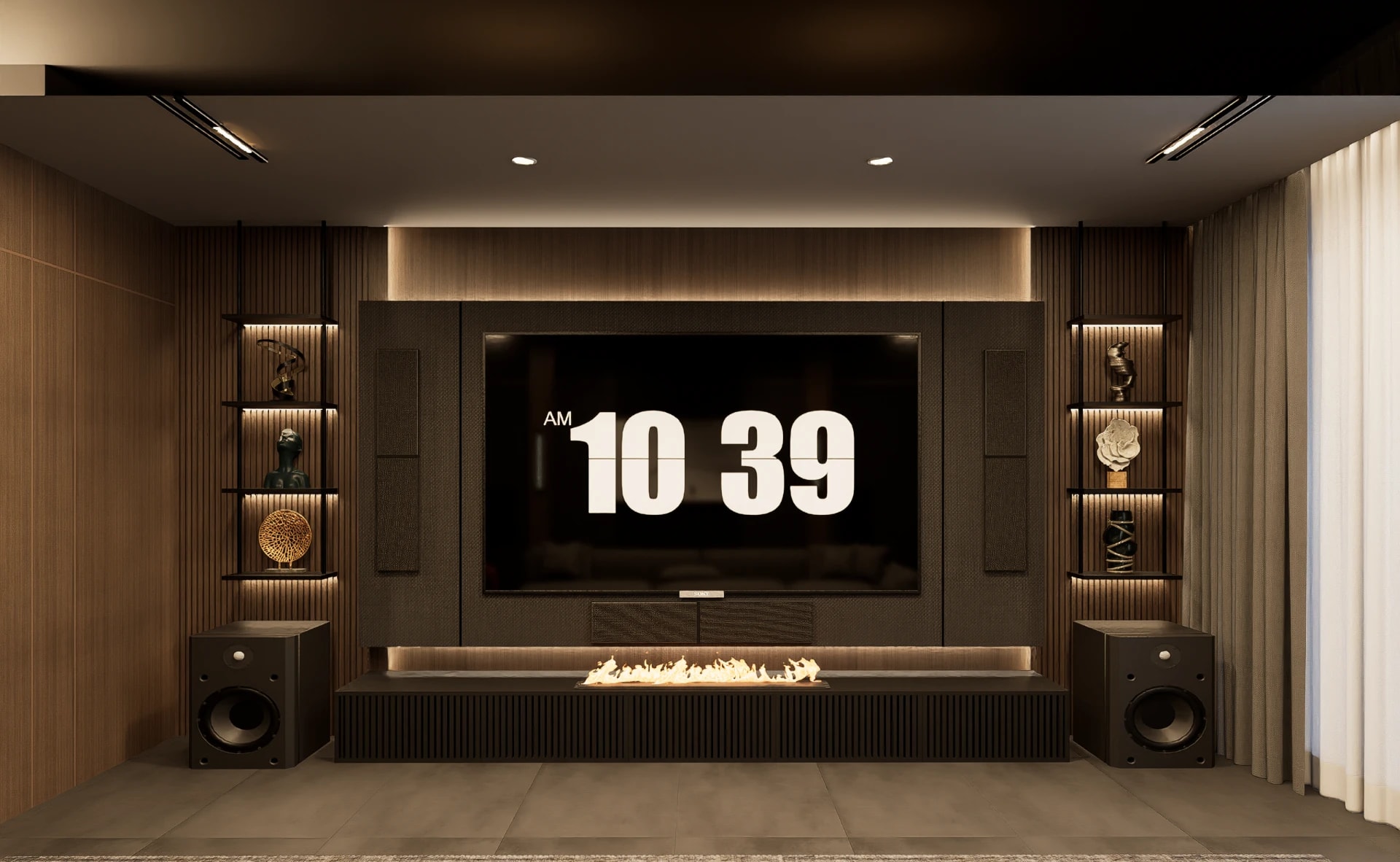
The full-height feature wall is the defining media-wall look. Running floor to ceiling in fluted timber, natural stone, or a matt micro-textured finish, it frames the screen as part of a composed surface rather than a box on a stand. It is among the fastest ways to give a room a hotel-grade sense of order.
Floating Consoles and Minimalist Units
For a lighter, contemporary look, a wall-mounted floating console keeps the floor clear and the room open. A slim cabinet in matt lacquer or veneer holds equipment behind handleless fronts, with the screen above and a clean expanse of wall around it. Plinth or under-cabinet lighting makes the unit appear to float.
Concealed and Disappearing Screens
For owners who would rather the television not dominate, the screen can be concealed when not in use. Sliding panels, pivoting art frames, or a recessed niche with a sliding cover let the wall read as joinery or artwork until the screen is needed, which suits formal living rooms and majlis areas.
Integrated Storage and Display
A media wall is valuable storage as well as a focal point. Closed cabinets keep equipment and clutter hidden, while open niches and backlit shelving display books, art, and objects. Mixing the two stops the wall from feeling like a storage block and gives the eye somewhere to rest.
Lighting and AV Integration
Lighting and technology are what make a media wall feel finished. Backlighting behind the screen reduces eye strain and adds depth, while LED (light-emitting diode) strips wash fluted timber or display niches. Audio-visual (AV) integration conceals soundbars behind acoustically transparent panels, ventilates equipment, and routes every cable inside the structure. Planned properly, the controls and lighting stay tidy and the technology never dictates how the room looks.
A Practical Framework for Planning a Media Wall
A refined result comes from a clear process, not guesswork.
- Discovery and brief. Establish how the room is used, the screen size, the equipment to house, and whether the television should be a feature or concealed.
- Survey and setting-out. A precise survey records dimensions, sockets, data points, and structural features, so the screen, storage, and feature surface are set out cleanly against the architecture.
- Concept and design. Designers translate the brief into elevations, 3D visuals, and detailed drawings showing the feature material, storage layout, lighting, and screen position.
- Materials and finishes. Choose the feature surface, cabinetry fronts, and finishes specified for the climate, since air conditioning and humidity test surfaces hard. The trade-offs are covered in premium finishes that last in Dubai's climate.
- Fabrication and coordination. The joinery is made in a controlled workshop while electrical, data, AV, and AC works, including MEP (mechanical, electrical, and plumbing) routing, are coordinated ahead of installation. Made-to-order bespoke joinery services cut, finish, and assemble each element to the approved drawings.
- Installation and handover. Trained fitters fix the wall and unit, mount the screen, dress the cabling, then a final walk-through checks alignment, finish, lighting, and function.
Delivering this through a single interior design and build team keeps the media wall consistent with the rest of the room from first sketch to final fix.
Best Practices
- Set the screen height for seated viewing. Comfortable eye level from the sofa matters more than centring the screen on the wall.
- Plan ventilation and access. Equipment needs airflow and a way to be reached for servicing.
- Route every cable inside. Designing in conduits and power early keeps the surface clean and clutter-free.
- Mix closed and open storage. Hide the equipment, display what deserves it, so the wall never reads as a block.
- Keep the palette disciplined. Let one feature material lead and limit the scheme to two or three finishes.
Common Challenges and Solutions
Cable and equipment clutter. Trailing leads and exposed boxes undermine any media wall. The fix is designing in conduits, ventilated equipment housings, and access panels so cabling and kit stay hidden yet serviceable.
Climate-driven movement and finish wear. Constant air conditioning and humidity warp poorly specified board and lift cheap finishes. Engineered substrates such as moisture-resistant MDF (medium-density fibreboard), quality edge-banding, and finishes rated for the conditions, acclimatised before installation, prevent this.
Hidden services in the way. Sockets, data points, and AC grilles often sit where the wall should go. Early surveying lets the joinery be designed around them and relocate services before fabrication.
A screen that overwhelms the room. A large television can dominate a refined scheme. Framing it in a feature surface, or concealing it behind sliding panels, keeps the wall balanced when the screen is off.
Frequently Asked Questions
Is a bespoke media wall better than a freestanding TV unit?
For most Dubai villas, yes. Custom media wall units use the full wall, hide cabling and equipment, integrate lighting, and frame the screen as part of the architecture in ways freestanding furniture cannot.
What materials suit a TV feature wall in the UAE climate?
Fluted or veneered timber, natural and engineered stone, and durable matt finishes over moisture-resistant substrates all perform well under constant air conditioning and humidity when specified and sealed correctly.
How is cabling and equipment hidden in a media wall?
A bespoke design routes cables inside the structure, houses equipment in ventilated, accessible compartments, and conceals speakers behind acoustically transparent panels, so the surface stays clean and the technology stays serviceable.
Can the television be hidden when not in use?
Yes. Sliding panels, pivoting art frames, or a recessed niche with a cover let the screen disappear into the joinery or behind artwork, which suits formal living rooms and majlis areas.
Does a custom media wall add value to a villa?
Quality joinery signals a high-specification, well-considered home, which supports resale appeal in a market where buyers notice craftsmanship. It also makes the living room calmer and easier to enjoy.
The Wall You Live With Every Evening
Of all the surfaces in a home, the media wall earns its keep after dark, when the family settles in and the room is judged not on how it photographs but on how it feels. A considered one rewards that nightly use: nothing to trip the eye, no tangle of leads, just a calm backdrop whether the screen is glowing or dark. That lived-in ease is the real point of bespoke TV wall design in Dubai, the kind of wall a household comes back to evening after evening.
If yours is currently a stand and a cable bundle, it is an easy thing to put right. Bring your room dimensions and your kit list to the Hammer Group joinery team, and they will shape a wall that fits both, made and fitted in-house. Request a concept for your living room, see how it comes together in a recent entertainment lounge project, or drop by the workshop to compare finishes in person.