
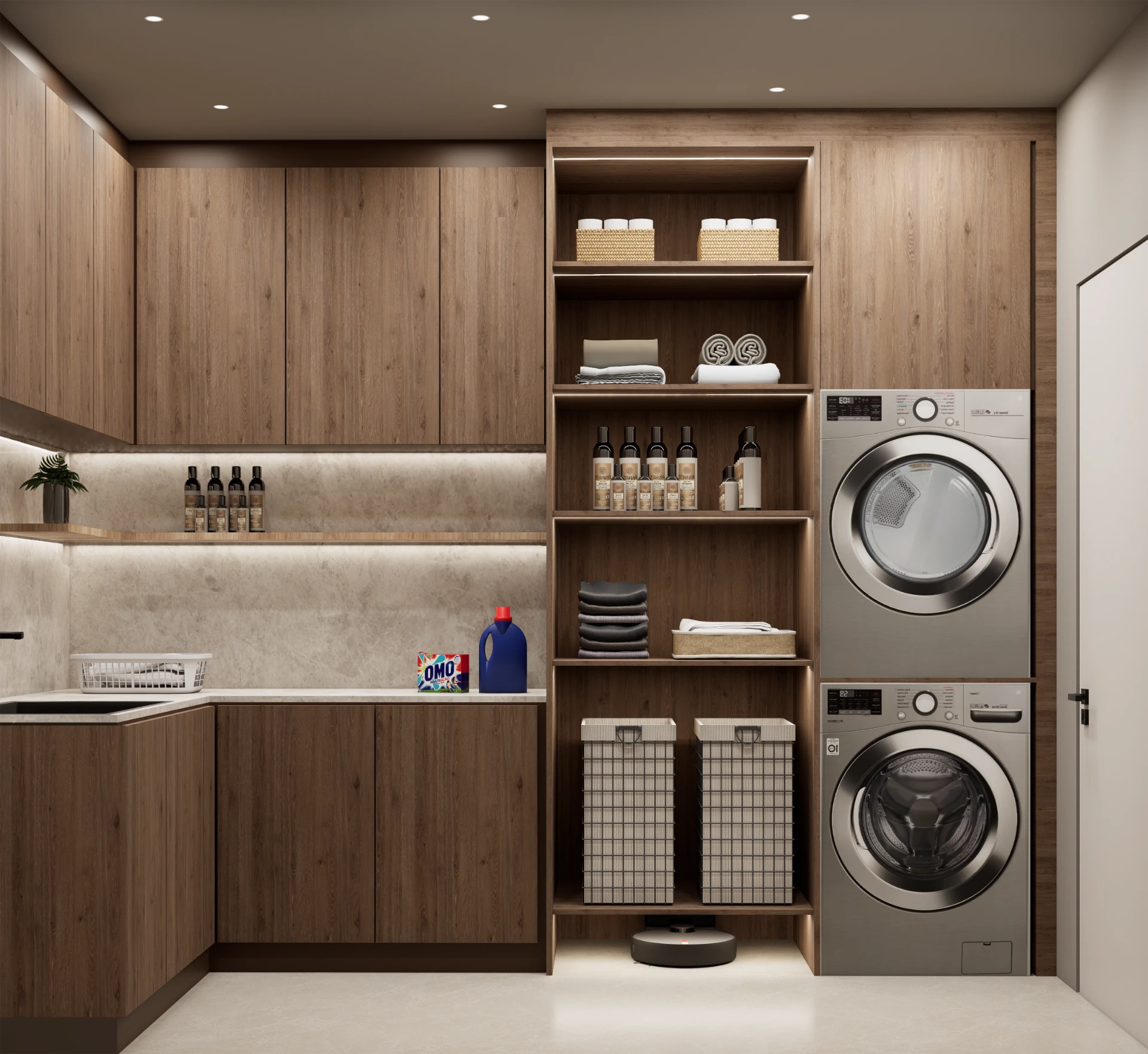
Two kitchens can have identical layouts and hardware yet feel worlds apart, and the reason is almost always the finish. The surface you see and touch every day decides whether cabinetry reads as warm and crafted or flat and cheap, and it also decides how the joinery copes with heat, humidity, sunlight, and daily handling. Choosing the right joinery finishes for Dubai homes is therefore one of the most consequential decisions in any fit-out, and one that is easy to get wrong when the options all look convincing in a small sample.
What a Joinery Finish Actually Does
A finish is the outer surface applied to the cabinet body, doors, and panels. It is both decorative and protective: it gives the joinery its colour, texture, and sheen, and it shields the substrate from moisture, scratches, heat, and wear. Most cabinetry starts as an engineered board such as MDF (medium-density fibreboard) or plywood, which is then faced with one of several finish types.
The finish is rarely the most expensive part of a cabinet, but it is the part you interact with constantly, so it carries an outsized influence on how the joinery looks and lasts. Two cabinets with the same internal build can age very differently depending on whether their surface resists fingerprints, holds its colour in sunlight, and shrugs off the occasional knock.
Why Finish Choice Matters in Dubai's Climate
Conditions in Dubai and Abu Dhabi are demanding on surfaces in ways that milder climates are not.
- Sunlight and UV. Strong ultraviolet (UV) light streams through large windows and can fade or yellow finishes that are not UV-stable, particularly some natural materials and certain whites.
- Heat and humidity swings. Spaces cycle between hot exteriors and cool, air-conditioned interiors, and seasonal humidity is high. Finishes and the boards beneath them must stay stable rather than lifting, peeling, or warping.
- Daily handling. High-use areas such as kitchens, wardrobes, and vanities collect fingerprints, oils, and cleaning chemicals, so a finish that wipes clean and resists marking earns its place.
A finish that performs beautifully in a milder climate can disappoint in a sunlit Dubai villa, which is why specifying for local conditions matters more than chasing a trend. The regional taste for understated, high-specification interiors also rewards finishes that read as genuine and refined rather than glossy and synthetic.
The Main Joinery Finishes for Dubai Homes
There is no single best finish, only the right finish for a given room, budget, and look. Here are the options most often specified.
Wood Veneer
Veneer is a thin slice of real timber bonded to a board, giving authentic grain and warmth at a fraction of the cost and instability of solid wood. It suits living rooms, libraries, headboards, and feature joinery where natural character is the goal, and can be book-matched for dramatic grain and finished matt or satin. Its trade-off is that, as a natural material, it needs UV-stable sealing to resist fading and a little more care than synthetic surfaces.
Lacquer (Spray-Painted)
Lacquer is a sprayed paint finish that delivers a smooth, seamless, colour-rich surface in any shade and any sheen from dead matt to high gloss. It gives the cleanest, most contemporary look and suits handleless kitchens, wardrobes, and minimalist joinery. Quality lacquer is durable and repairable, but it must be applied in a controlled workshop for an even result, and high-gloss versions show fingerprints and fine scratches more readily than matt.
High-Pressure Laminate (HPL)
High-pressure laminate (HPL) is a tough, factory-bonded surface available in a huge range of solid colours, wood looks, stone looks, and textures. It is one of the most practical finishes for Dubai homes because it resists scratches, heat, moisture, and fingerprints, making it ideal for kitchens, children's rooms, and high-traffic areas. Modern HPL looks far more convincing than older versions, though edges and joints need careful detailing.
Melamine and Foil-Wrapped
Melamine (melamine-faced board) and foil-wrapped finishes are cost-effective, hardwearing surfaces well suited to wardrobe interiors, utility joinery, and budget-conscious projects. They resist everyday wear and come in many colours and wood effects. They sit below veneer and lacquer on the prestige scale, but used in the right places they deliver dependable value.
Specialty Finishes
Beyond the staples, a range of specialty surfaces add character: anti-fingerprint matt laminates that stay clean-looking in busy kitchens, deep-textured and fluted panels that add tactile interest, and metallic, glass, or microcement-style surfaces for statement pieces. These work best as accents rather than throughout, both for cost and visual restraint.
How to Choose the Right Finish
Rather than picking a finish in isolation, weigh it against the room and how it will be used.
- Start with the room and its use. A high-traffic kitchen leans toward HPL or durable lacquer; a calm living-room feature wall can carry veneer; wardrobe interiors suit melamine. Match the finish to the wear it will face.
- Set the look and sheen. Decide whether the scheme wants natural warmth (veneer), seamless colour (lacquer), or a practical patterned surface (laminate), and choose the sheen, since matt hides marks while gloss amplifies light and fingerprints.
- Check climate performance. Confirm the finish is UV-stable and rated for heat and humidity. The trade-offs are set out well in premium finishes that last in Dubai's climate.
- Plan combinations. Most refined homes mix two or three finishes, such as veneer feature pieces with lacquer or laminate workhorses. The art of pairing surfaces is explored in material layering and texture in residential interiors.
- Coordinate with hardware and build. Specify the finish alongside the carcass, edging, and hardware so everything performs as a set, since the finish, substrate, and fittings all age together.
- See large samples in the actual light. Judge candidates as big samples in the room itself, at different times of day, before committing. Small chips under showroom lighting mislead.
Working through made-to-order bespoke joinery services means finishes are applied and edged in a controlled workshop, which is where finish quality is won or lost.
Best Practices
- Match finish to function, not just looks. The hardest-working surfaces deserve the toughest finishes.
- Insist on UV-stable, climate-rated products. Fading and lifting are avoidable with the right specification.
- Keep the palette disciplined. Two or three finishes across a home read as more considered than a patchwork.
- Mind the edges. Quality edge-banding and careful jointing separate a premium finish from a cheap-looking one.
- Finish in a workshop, not on site. Controlled spraying and bonding give an even, durable result.
Common Challenges and Solutions
Fading and yellowing in sunlight. Strong UV light discolours non-stable finishes over time. The fix is specifying UV-resistant lacquers and sealed veneers, and considering solar-control glazing in the brightest rooms.
Fingerprints and smudging. High-gloss surfaces show every mark in a busy home. Anti-fingerprint matt laminates and satin lacquers keep cabinetry looking clean with less effort.
Peeling, lifting, or delamination. Cheap finishes or poor bonding fail under humidity and temperature swings. Engineered substrates such as moisture-resistant MDF, quality adhesives, proper edge-banding, and workshop application prevent this.
Colour or grain mismatch across a run. Components from different batches can vary. Sourcing materials together and finishing in a single workshop run keeps the surface consistent from end to end.
Frequently Asked Questions
Which joinery finish is most durable for a Dubai home?
For sheer toughness, high-pressure laminate (HPL) leads, resisting scratches, heat, moisture, and fingerprints, which makes it ideal for kitchens and high-traffic areas. Quality lacquer and well-sealed veneer also perform well when specified for the climate.
Veneer or lacquer, which should I choose?
It depends on the look. Veneer gives natural timber warmth and grain for feature pieces, while lacquer gives a seamless, colour-rich, contemporary surface in any shade. Many homes use both.
Do natural wood finishes fade in Dubai's sunlight?
They can if left unprotected. UV-stable sealing and placement away from the harshest direct light, with solar-control glazing where needed, keep veneer and timber finishes consistent for years.
Is matt or gloss better for cabinetry here?
Matt and satin finishes hide fingerprints and fine scratches and suit the regional quiet-luxury look, while gloss amplifies light and colour but shows marks more. Busy kitchens usually favour matt or anti-fingerprint surfaces.
Can I mix different finishes in one home?
Yes, and the best schemes usually do. Combining two or three finishes, such as veneer features with lacquer or laminate elsewhere, adds depth while keeping a cohesive palette.
Bringing the Right Finish to Your Home
The finish is the part of your joinery you live with every day, so it deserves more thought than a quick showroom glance allows. The best joinery finishes for Dubai homes balance the look you want with honest performance in heat, humidity, and sunlight, matched room by room to how each space is used. Get that balance right and cabinetry stays beautiful for years; get it wrong and even well-built joinery disappoints.
If you are weighing veneer, lacquer, laminate, and the alternatives, our team at Hammer Group would be glad to talk through the options and show you large samples in the right light. With design and in-house manufacturing under one roof, our interior design and build services specify and apply finishes built to last in the local climate. Arrange a consultation or explore one of our recent joinery projects to see considered, made-to-measure finishes in place.