
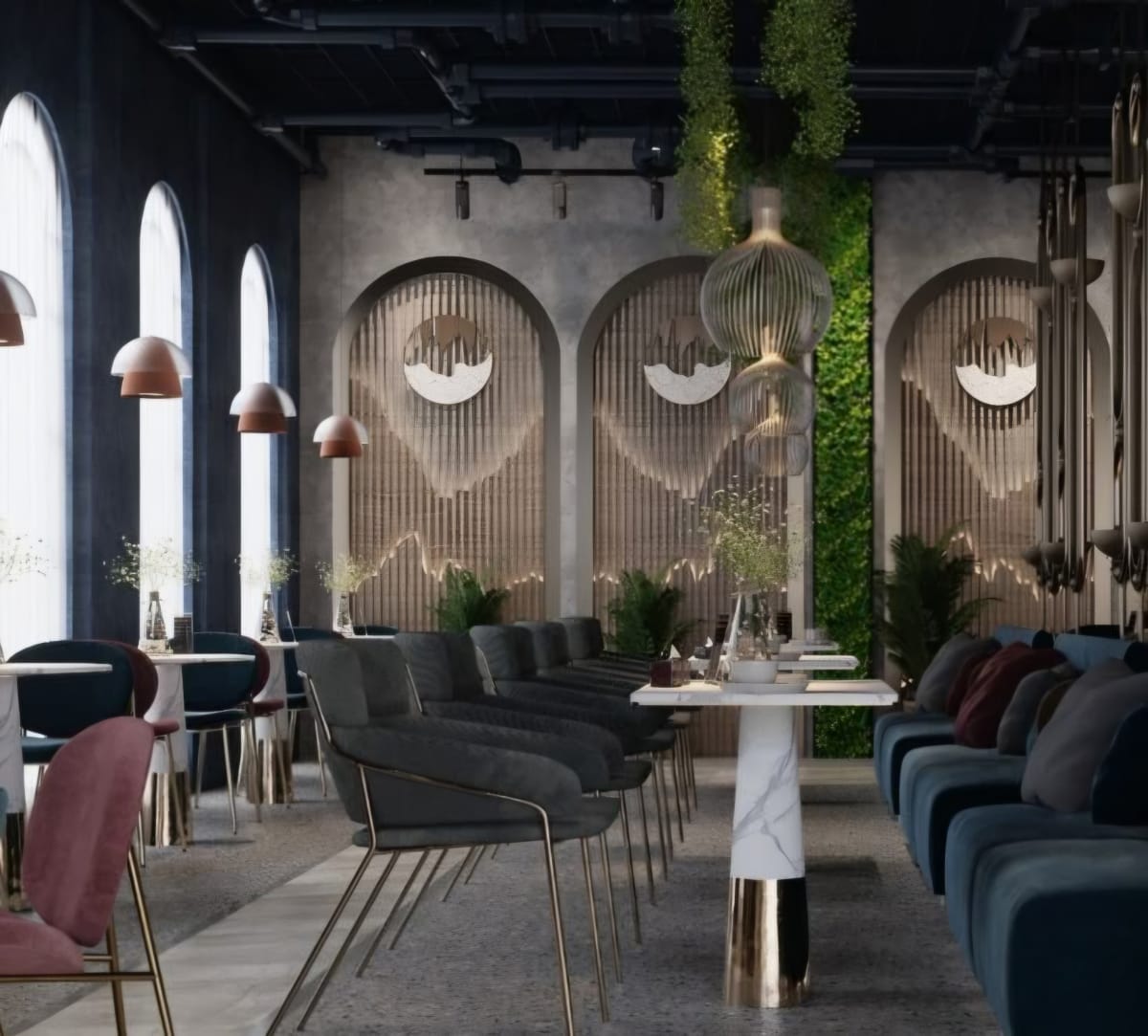
A guest decides what kind of evening it will be within a few steps of the door, and more often than not the bar is what they are looking at. It is the brightest, busiest and most photographed piece of furniture in a restaurant or hotel lobby, and it takes more spills, knocks and elbows than anything else in the building. That mix of theatre and hard work is what makes bar and hospitality joinery in the UAE a specialist discipline. Operators here are expected to dubai-it, opening venues with signature counters guests remember, and the joinery is where that ambition either holds up through service or quietly starts to fail.
What Bar and Hospitality Joinery Means
Bar and hospitality joinery covers the built-in woodwork that front-of-house teams work from and guests interact with: bar counters and their under-bar stations, back-bars and display shelving, hostess stands, banquette seating, waiter service stations, coffee displays and the wall panelling that ties a dining room together. Each piece is drawn to the venue's layout, the operator's service routine and the equipment that sits inside or behind it.
What separates it from residential work is intensity of use. A hotel lobby bar is wiped down constantly, leaned on through every service and cleaned with commercial products every night. Carcasses, edges, hardware and finishes all have to be specified for commercial loads, and the design must give technicians access to refrigeration, drainage and power without dismantling the front. That balance between craft and engineering is the core of our bespoke joinery work, from shop drawings through to fitting on site.
Why Hospitality Joinery Works Harder in the Emirates
Hospitality in the UAE is built on generosity and long evenings. Restaurants serve late into the night, hotel lobbies double as meeting places and majlis-style lounges, and many venues run a coffee, juice and mocktail programme as elaborate as any drinks list. Bars often become social centrepieces for families and business guests alike, so counters need generous lengths, comfortable footrests and seating heights that suit long conversations rather than quick visits.
The climate adds its own pressures. Air conditioning runs almost constantly indoors, while terrace bars and poolside service points sit in heat and humidity just a door away, so joinery that crosses that threshold has to cope with both. Prestige counts too: a signature bar can define a hotel's identity and its presence on social media. Our hospitality suite interior in Abu Dhabi shows how natural textures and bespoke joinery can give a guest space a crafted, considered character.
Bar and Hospitality Joinery Ideas
Statement Bar Fronts
The front of the counter is the face guests see from across the room. Reeded timber, with convex ribs standing proud of the surface, catches light beautifully in a low-lit room, while fluted stone or lacquered panels, with concave grooves cut into the face, give a softer, more architectural look. Light-emitting diode (LED) strips tucked beneath the bar top wash the front with light and pick out texture without glare. A recessed kick zone and a brass or stainless footrail protect the lower face from shoes and stools.
Under-Bar Stations Designed Around the Workflow
Behind the counter, the layout should follow the order a bartender works in: ice, glassware, garnish, mixing and service, with the waste bin and glass washer within a step. Modular stainless steel stations can sit inside a timber carcass, so the working side meets hygiene standards while the guest side keeps its finish. Moisture-resistant medium-density fibreboard (MR-MDF) or marine-grade plywood, sealed on every edge, keeps the carcass stable around ice wells and sinks.
Back-Bars That Sell the Room
The back-bar is the venue's display wall. Lit glass shelves, timber niches and mirrored panels show off bottles, coffee equipment or a tea collection, while closed lower cabinets hide refrigeration and stock. Removable ventilated panels let compressors breathe and give engineers a way in without disturbing the display above. In hotels, the back-bar can also carry branded elements such as an inlaid motif or a signature material repeated throughout the property.
Banquettes and Fixed Seating
Built-in banquettes increase covers along walls and give diners a sense of enclosure. Upholstered backs mounted on timber frames, with removable seat pads for cleaning, keep maintenance simple, while slatted backrests, made from separate battens with a gap behind, add rhythm and let air move. Plinths with a recessed toe kick make floor cleaning easier and protect the base from mops and trolleys.
Hostess Stands and Service Stations
The hostess stand is the first piece of joinery a guest meets, so it should share the bar's material and detailing. Inside, it needs room for a tablet, menus, a reservation printer and charging points. Waiter stations placed around the dining room keep cutlery, napkins and payment terminals close to the tables, with solid-surface or high-pressure laminate (HPL) tops that shrug off spills and hot plates.
A Practical Framework for Hospitality Joinery Projects
Bar and restaurant packages follow a sequence close to the one in our guide to custom joinery for hotel interiors in Dubai, adjusted for the equipment and service demands of front-of-house.
- Discovery. Understand the concept, menu, service style and peak covers, and how the operator wants guests to move from the entrance to the bar and tables.
- Survey. Measure the shell and record drainage points, floor levels, ceiling voids and the positions for power, water and extraction.
- Design. Produce plans and shop drawings coordinated with kitchen consultants and mechanical, electrical, and plumbing (MEP) services, within a wider interior design and build process so every trade works from one set of drawings.
- Materials. Select timber, stone, metal, HPL and upholstery, testing finishes against the cleaning products staff will actually use and approving them under the venue's lighting.
- Fabrication. Produce components using computer numerical control (CNC) machining, dry-assemble bar fronts and back-bars in the workshop, and check equipment fit before dispatch.
- Installation. Fix joinery in step with the equipment suppliers, connect services alongside the relevant trades, and protect finished surfaces until the venue is cleaned.
- Handover. Complete a quality assurance (QA) inspection, test every door, drawer and access panel, and give staff clear care instructions.
Best Practices
- Design the bar around the equipment schedule, not the other way round.
- Seal every exposed edge near sinks, ice wells and glass washers.
- Specify commercial-grade hinges, runners and stays rated for constant use.
- Keep refrigeration and plumbing reachable through removable panels.
- Use quartz, granite or solid surface on working counters.
- Repeat key materials across bar, hostess stand and service stations.
- Remember the guest side: footrails, bag hooks and charging points.
Frequently Asked Questions
Which materials work best for a hotel bar top?
Quartz, granite and solid surface resist stains and heat, while timber tops suit lounge bars when sealed with a commercial lacquer and maintained regularly.
Can a bar be designed around coffee and mocktails?
Yes. Layouts can include espresso stations, juice presses and chilled displays, each with dedicated plumbing and power.
How is refrigeration integrated without spoiling the design?
Under-counter units sit inside the carcass behind matching doors or panels, with ventilation routed through slatted kick plates or rear grilles.
Can the joinery follow a hotel's brand standards?
Yes. Finishes, motifs and dimensions can follow a brand book, with samples approved against it before production begins.
What maintenance does hospitality joinery need?
Daily wiping with suitable cleaners, regular checks on hinges and runners, and periodic touch-ups to edges keep everything in service condition.
Built for the Busiest Hour
A bar is judged twice: once when guests first see it, and again every night when service is at full stretch. The counters, back-bars and banquettes that look effortless are the ones where the hard thinking happened in the drawings, the materials and the workshop. Getting bar and hospitality joinery in the UAE right means designing for service as carefully as for appearance. Hammer Group draws, manufactures and installs hospitality joinery through its own workshop, and we would welcome a conversation about your next restaurant, lounge or hotel bar.