
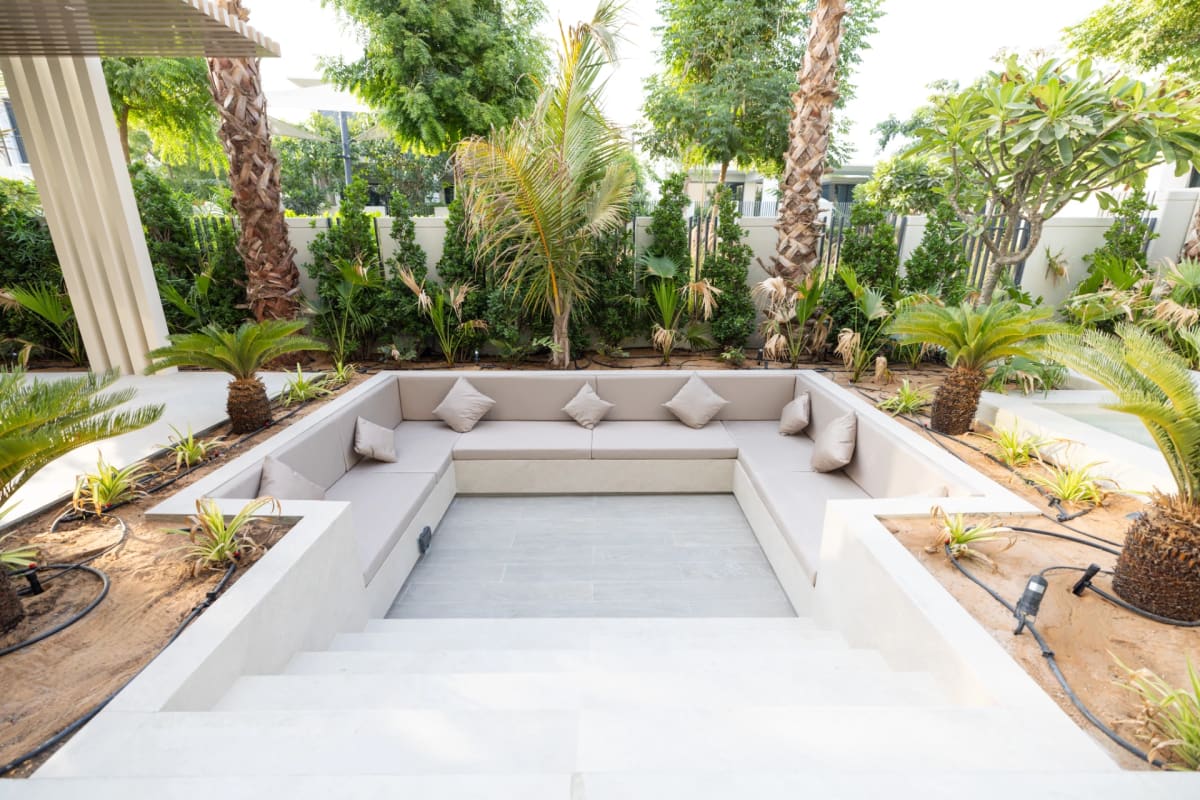
The UAE’s natural landscape offers a distinctive source of inspiration for contemporary outdoor design. From expansive desert dunes and rocky mountain formations to native vegetation and subtle earth tones, the region provides an opportunity to create outdoor environments that combine visual sophistication with environmental sensitivity.
Desert Garden Design UAE is an approach that transforms traditional landscaping into carefully considered outdoor spaces inspired by the natural character of the Arabian Peninsula. Rather than relying on conventional lawns and water-intensive planting, this design philosophy embraces native vegetation, natural materials, architectural forms, and sustainable landscaping techniques.
In Dubai and Abu Dhabi, where high temperatures, intense sunlight, and limited water resources influence landscape performance, desert-inspired gardens offer a practical way to create attractive and environmentally responsive outdoor environments.
1. Understanding Contemporary Desert Garden Design
Contemporary desert garden design combines the simplicity of modern landscape architecture with the textures, colours, and ecological characteristics of the UAE environment.
The objective is not simply to recreate the desert but to interpret its natural elements through a refined design language.
Key characteristics include:
- Natural colour palettes: Sand, beige, terracotta, warm grey, and muted green.
- Architectural planting: Carefully positioned trees, shrubs, and ornamental grasses.
- Organic textures: Natural stone, gravel, timber, and textured concrete.
- Minimalist layouts: Clean geometry balanced with natural planting forms.
- Water-conscious landscapes: Efficient irrigation and drought-tolerant vegetation.
This approach creates outdoor spaces that complement contemporary villas, residential developments, hospitality environments, and commercial properties.
2. Selecting Plants Suitable for the UAE Climate
Plant selection is one of the most important considerations in Sustainable Desert Landscaping UAE. The region's climate presents challenges such as high temperatures, limited rainfall, saline soil conditions in certain locations, and prolonged periods of direct sunlight.
Choosing suitable vegetation helps establish a landscape that remains visually appealing while supporting long-term environmental performance.
UAE Native Plants
Native and climate-adapted plants are particularly valuable because many are naturally suited to regional environmental conditions.
Suitable options include:
- Ghaf trees: Recognised for their resilience and cultural significance in the UAE.
- Sidra trees: Provide shade and contribute to the natural character of regional landscapes.
- Desert grasses: Introduce movement, texture, and softness.
- Native shrubs: Create natural planting layers and define garden boundaries.
- Date palms: Offer architectural height and a recognisable regional identity.
A well-planned UAE Native Plant Garden Design considers the mature size, root behaviour, water requirements, and positioning of every plant.
Combining Native and Contemporary Planting
Native species can be combined with carefully selected ornamental plants to achieve a more contemporary appearance. The key is to maintain a consistent planting palette rather than introducing too many unrelated varieties.
For example, sculptural trees can establish focal points, while low-growing shrubs and grasses create transitions between pathways, seating areas, and architectural features.
3. Modern Desert Garden Ideas for Dubai Properties
Contemporary desert landscapes can be adapted to different property types, from private villas to larger residential developments.
Several design approaches are particularly effective in Dubai.
Minimalist Gravel Gardens
Gravel gardens replace extensive lawn areas with decorative aggregates, stone arrangements, and carefully positioned plants.
Different gravel colours and textures can create visual contrast while reinforcing a clean, architectural appearance.
Sculptural Planting Arrangements
Trees and plants can be treated as architectural elements within the garden.
A single Ghaf tree, for example, can become a focal point surrounded by low planting, natural stone, and understated seating.
Natural Stone Features
Stone pathways, retaining walls, and decorative boulders introduce texture and connect the garden with the surrounding desert environment.
Shaded Outdoor Living Areas
Pergolas, covered terraces, and shaded seating areas make gardens more functional during warmer periods.
For additional inspiration, explore as a supporting landscape design topic.
These Modern Desert Garden Ideas Dubai demonstrate how outdoor spaces can balance simplicity, comfort, and regional identity.
4. Designing Contemporary Outdoor Spaces Around Architecture
Successful Contemporary Outdoor Spaces Dubai should feel connected to the architecture of the property rather than functioning as separate decorative environments.
Landscape planning should consider the building's proportions, materials, circulation routes, and relationship with surrounding spaces.
Important design considerations include:
- Visual continuity: Use complementary colours and materials between indoor and outdoor environments.
- Spatial organisation: Define separate areas for relaxation, entertaining, circulation, and planting.
- Privacy: Position trees, shrubs, and screening elements strategically.
- Shade: Integrate architectural shading and appropriately positioned trees.
- Lighting: Highlight planting textures, pathways, and architectural details.
For example, a contemporary villa with a minimalist façade may benefit from a restrained desert garden featuring geometric paving, sculptural vegetation, and natural stone.
The landscape should reinforce the architectural identity while introducing a softer natural character.
5. A Step-by-Step Framework for Desert Garden Planning
Developing a successful desert-inspired landscape requires a structured approach that considers environmental conditions alongside design objectives.
Step 1: Assess the Site
Begin by evaluating the property's soil conditions, sunlight exposure, drainage, existing vegetation, and surrounding architecture.
In the UAE, understanding soil salinity and heat exposure is particularly important.
Step 2: Establish Functional Zones
Divide the outdoor environment into practical areas, such as:
- Main entrance and arrival spaces.
- Outdoor dining and entertaining areas.
- Private relaxation zones.
- Planting beds and shaded gardens.
- Pedestrian pathways and circulation routes.
Step 3: Develop the Planting Strategy
Select plants according to their environmental suitability, mature dimensions, maintenance requirements, and visual contribution.
Grouping plants with similar water requirements can also improve irrigation efficiency.
Step 4: Select Appropriate Materials
Natural stone, gravel, textured concrete, and suitable outdoor timber finishes can create a cohesive design language.
Material selection should account for heat absorption, durability, maintenance, and outdoor exposure.
Step 5: Integrate Irrigation and Lighting
Efficient irrigation systems, including drip irrigation, help deliver water directly to plant root zones.
Lighting should be positioned to improve visibility, highlight architectural features, and create a comfortable evening atmosphere.
Step 6: Review Environmental Performance
The final design should be evaluated for water efficiency, plant health, drainage, shade provision, and long-term maintenance requirements.
This structured approach can help create a landscape that is both visually consistent and environmentally responsive.
6. Sustainable Landscaping Practices for the UAE
Sustainability is central to contemporary desert landscaping because water conservation and environmental performance directly influence landscape quality.
Professional landscape planning should consider several practices.
Water-efficient irrigation: Drip systems and smart irrigation controllers can reduce unnecessary water consumption.
Drought-tolerant planting: Selecting appropriate native and climate-adapted species reduces dependence on intensive irrigation.
Mulching: Organic or mineral mulch helps protect soil surfaces and reduce moisture loss.
Soil improvement: Appropriate soil amendments can improve drainage, soil structure, and plant establishment.
Efficient shading: Trees and pergolas can reduce direct solar exposure in selected outdoor areas.
A further consideration is the selection of materials with suitable environmental characteristics. Locally appropriate materials can support a landscape that feels connected to its surroundings.
In Dubai, the principles of dubai-it can also be reflected through thoughtful integration of contemporary design thinking and regional environmental identity.
For a deeper understanding of environmental landscape planning, explore .
7. Common Desert Landscaping Challenges and Professional Solutions
Despite its advantages, desert garden design requires careful technical planning.
| Common challenge | Professional solution |
|---|---|
| Extreme summer temperatures | Select heat-tolerant plants and provide appropriate shade. |
| High soil salinity | Conduct soil assessments and select suitable plant species. |
| Excessive water consumption | Introduce drip irrigation and climate-appropriate planting. |
| Limited planting diversity | Combine native trees, shrubs, grasses, and suitable ornamental species. |
| Material deterioration | Specify durable materials suitable for outdoor exposure. |
| Poor drainage | Assess site levels and incorporate appropriate drainage systems. |
Another common challenge is achieving a natural appearance without making the garden feel visually unfinished. This can be addressed through thoughtful layering, repetition of planting groups, and carefully balanced hardscape elements.
For properties with limited outdoor space, provides additional guidance on making smaller gardens functional and visually balanced.
8. The Future of Desert Garden Design in the UAE
As contemporary architecture continues to evolve across Dubai and Abu Dhabi, landscape design is increasingly focused on creating outdoor environments that respond to local environmental conditions.
Future landscape approaches are likely to place greater emphasis on native planting, efficient irrigation technologies, biodiversity, outdoor wellness, and the integration of natural materials.
Desert-inspired gardens also offer opportunities to strengthen the relationship between modern buildings and the UAE's natural heritage.
The most successful designs will be those that combine environmental awareness with thoughtful spatial planning and a strong architectural identity.
Frequently Asked Questions (FAQs)
1. What is desert garden design?
Desert garden design is a landscaping approach inspired by arid environments. It uses suitable plants, natural materials, efficient irrigation, and carefully planned layouts to create attractive outdoor spaces.
2. Which plants are suitable for desert gardens in the UAE?
Ghaf trees, Sidr trees, date palms, native shrubs, and selected ornamental grasses are suitable options, depending on site conditions and irrigation requirements.
3. Is desert landscaping suitable for luxury villas in Dubai?
Yes. Desert landscaping can complement luxury villas through sculptural planting, natural stone, minimalist pathways, shaded seating areas, and carefully selected architectural features.
4. How can desert gardens reduce water consumption?
Water consumption can be reduced through drought-tolerant planting, drip irrigation, moisture-conscious soil management, and limiting extensive lawn areas.
5. What materials work best in contemporary desert gardens?
Natural stone, gravel, textured concrete, and suitable outdoor timber finishes are commonly used to create durable and visually cohesive landscapes.
6. Can desert garden design be adapted to small outdoor spaces?
Yes. Compact gardens can incorporate vertical planting, carefully positioned feature trees, gravel surfaces, and multifunctional seating to maximise available space.