
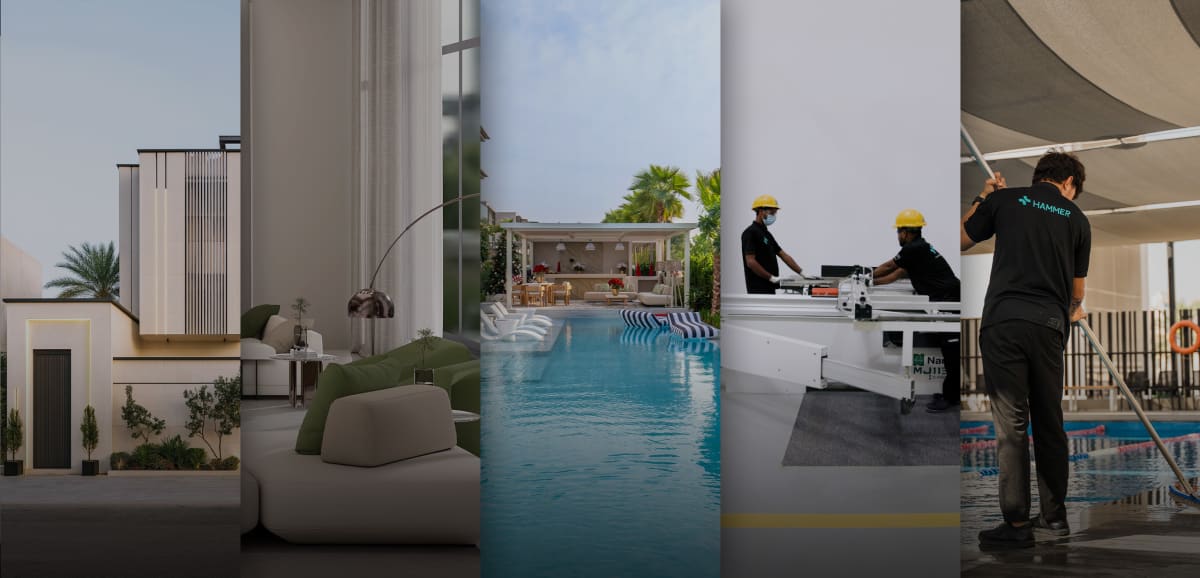
A fabrication drawing, a cutting list, and a site installation schedule all have to agree with each other before a single panel leaves the workshop, and on a project with separate joinery and construction contractors, that agreement often only happens after something has already gone wrong on site. In-house joinery project coordination in Dubai removes one of the more common points of friction on a fit-out or build by keeping design, fabrication, and installation inside a single team rather than passed between vendors who rarely see the same drawing at the same time. The result is fewer surprises at delivery and less time spent waiting for a revised panel because a measurement was never checked against the latest site conditions. Done properly, it is also how a project gets to dubai-it, moving fast on ambitious detailing because the team producing it is the same team installing it.
What In-House Joinery Coordination Means
In-house joinery coordination means the same organisation designs, fabricates, and installs a project's bespoke cabinetry, panelling, and fitted furniture, rather than a designer, a separate joinery workshop, and a separate site contractor each working from their own version of the drawings. It matters most at the handoff points: when a shop drawing moves from design to production, when a finished panel moves from the workshop to the truck, and when that panel is fitted against site conditions that may have shifted since the drawing was approved. Each handoff between separate companies is a chance for a measurement, a finish code, or a revision to be lost or misread. Keeping those stages under one roof does not eliminate every risk, but it means the person cutting a panel and the person fitting it work from the same file, updated by the same team, rather than reconciling two different sets of paperwork on site.
What Dubai's Build Programmes Ask of Coordination
Dubai and Abu Dhabi's construction market moves at a pace that rewards tight coordination and penalises loose handoffs. Villas, offices, and hospitality fit-outs frequently run several trades in parallel, so a joinery delay caused by a missed MEP (mechanical, electrical, and plumbing) coordination point can hold up electricians, AV (audio-visual) installers, and stylists all waiting on the same wall. Open-plan layouts and long feature runs common in the region also mean a single measurement error can affect an entire wall of cabinetry rather than one isolated unit, so catching a discrepancy before fabrication matters more here than in smaller, compartmentalised spaces.
Because many projects in this market also work to fixed milestones and stakeholder reporting, a coordinated in-house process that limits back-and-forth between vendors is one of the more practical ways to keep a build programme on schedule, an approach set out further in how turnkey delivery simplifies commercial projects.
Ways In-House Joinery Improves Coordination
One Set of Shop Drawings for Design and Fabrication
When the design team and the workshop are part of the same organisation, a shop drawing does not need reinterpreting by an external fabricator. Revisions made during design review carry straight through to the cutting file, removing a common source of mismatched dimensions between what was approved and what was actually produced.
MEP and Services Coordinated Before Cutting
Cut-outs for sockets, switches, and AV points can be checked against MEP drawings before a panel is cut, rather than marked out on site once the joinery has arrived. This is one of the more effective ways to avoid a panel being cut back or patched on site to fit around a service not accounted for at the design stage.
A Single Point of Accountability for Snagging
When one team is responsible for both fabrication and installation, there is no ambiguity at snagging over whether a fault originated in the workshop or on site. This tends to resolve issues faster, since the same team that produced a piece is also the team responsible for correcting it.
Faster Response to Site Conditions
Site conditions rarely match the drawing exactly, and an in-house team can adjust a cutting list or a fitting detail directly rather than routing a change request through a separate fabricator and waiting for a revised drawing to come back. This keeps small, routine discrepancies from becoming installation delays.
Consistent Scheduling Between Workshop and Site
Production scheduling can be planned directly against the site programme, so panels are fabricated in the sequence they are needed for installation rather than in whatever order suits an external workshop's own queue. This reduces both early deliveries that need storing on a live site and late deliveries that hold up other trades.
Reduced Handling and Damage in Transit
Fewer handoffs between companies generally means fewer occasions for a finished panel to be loaded, unloaded, and moved between separate premises before it reaches site, which in turn reduces the chance of transit damage to a finished surface.
A Practical Framework for Coordinated Joinery Delivery
- Discovery. Establish the project programme and identify where joinery milestones need to align with other trades on site.
- Survey. Take site measurements directly against the current condition of the space, not an earlier design-stage assumption.
- Design. Develop shop drawings within the wider interior design and build service, coordinated with MEP and other trades before anything is finalised.
- Materials. Confirm material and hardware availability against the production schedule so fabrication is not held up waiting on a single component.
- Fabrication. Cut and assemble panels in the sequence the site programme requires, with quality assurance (QA) checks at each stage.
- Installation. Fit joinery with the same team accountable for its production, resolving any site discrepancy directly rather than through a third party.
- Handover. Carry out a joint snagging walkthrough and close out any outstanding items with a single point of contact.
Best Practices
- Align joinery production schedules with the site programme early, rather than treating them as separate schedules that happen to overlap.
- Coordinate MEP and service cut-outs into shop drawings before fabrication, not after panels arrive on site.
- Keep one master set of drawings that both design and production teams work from, with revisions tracked centrally.
- Assign a single point of contact for snagging and site queries so issues are not lost between departments.
- Re-survey site conditions close to the fabrication date on longer programmes, since conditions can shift after the original design survey.
Frequently Asked Questions
What is the main advantage of in-house joinery over using a separate workshop?
A single team designs, fabricates, and installs the work, which reduces the miscommunication and delay that can happen when drawings and revisions pass between separate companies.
Does in-house joinery reduce the risk of measurement errors?
It can, since the same team surveying the site is often the same team producing the shop drawings, reducing the chance of a drawing being based on outdated or misread measurements.
How does in-house joinery help with MEP coordination?
Cut-outs for sockets, switches, and AV points can be checked against MEP drawings before fabrication, rather than adjusted on site after a panel has already arrived.
Who is responsible if a fault appears after installation?
With one team responsible for design, fabrication, and installation, there is no ambiguity over which party is accountable, which generally speeds up resolution.
Does in-house coordination help keep a build programme on schedule?
Generally, yes, since joinery production can be scheduled directly against the site programme rather than around a separate workshop's own queue.
Is in-house joinery coordination only useful on large commercial projects?
No. Villas and smaller fit-outs benefit as well, particularly where long cabinetry runs or tight service coordination make a single point of accountability valuable.
Where the Workshop and the Site Meet
A joinery project rarely fails because of one bad decision. It usually fails in the handoffs, a drawing that was not updated, a measurement that was never rechecked, a fault nobody wants to own. In-house joinery project coordination in Dubai closes those gaps by keeping design, fabrication, and installation inside a single accountable team rather than several vendors working from separate versions of the same project. Hammer Group delivers joinery this way through its in-house joinery capability, applied on projects such as a recent commercial office project. Anyone planning a fit-out or build who wants fewer handoffs between design and delivery is welcome to get in touch to discuss the programme.