
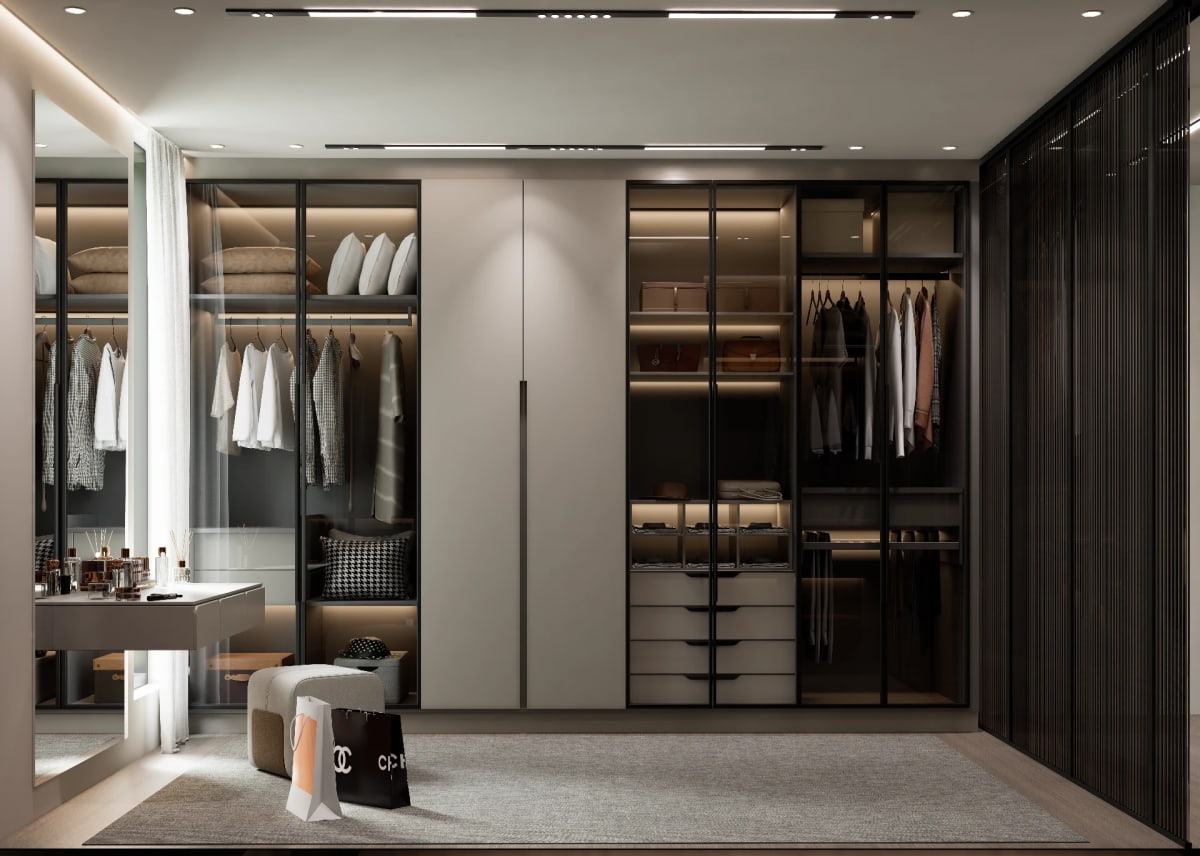
Most people judge a wardrobe or kitchen by how it looks on the first visit, but they live with how it moves. A door that drops out of line, a drawer that rattles under weight or a pocket door that sticks halfway will undo the finest veneer. Hardware selection for bespoke joinery is the quiet discipline behind every satisfying close, and in a city where homeowners like to dubai-it with oversized doors, handleless fronts and floor-to-ceiling panels, the fittings carry more load than ever.
What Hardware Selection Means in Bespoke Joinery
Hardware covers every moving or load-bearing component inside a piece of joinery: concealed hinges, drawer runners and drawer boxes, sliding and pocket door gear, lift systems for overhead cabinets, pull-outs for larders and corners, and the handles, push latches and dampers that control the motion. In bespoke work, none of this is chosen from a catalogue at the end. The fittings dictate panel thickness, internal clearances, carcass construction and even the drilling pattern on every door.
Selection therefore means matching each fitting to the size, weight, material and use of the part it serves. A heavy stone-faced door needs a different hinge from a slim lacquered one, and a drawer full of cookware needs a different runner from one holding cufflinks. Good bespoke joinery treats hardware as part of the design brief, specified alongside the finishes rather than after them.
Why Dubai Homes Put Hardware to the Test
UAE villas tend to be generous in scale. Ceilings are high, wardrobes run full height, and kitchens often include both a show kitchen and a working kitchen behind it. Larger doors and deeper drawers mean greater loads on every fitting. Entertaining also matters: a majlis cabinet or dining room sideboard may be opened by guests and staff many times in a single evening, so smooth, quiet action becomes part of the hospitality.
The climate adds its own pressure. Constant air conditioning keeps interiors dry, while kitchens, laundries and bathrooms carry steam and humidity, and that movement between conditions can make timber panels shift slightly. Hardware with fine adjustment allows doors to be realigned without removing them. Fittings also feed into prestige and resale value: buyers notice the weight and silence of a well-specified door, as seen in the custom kitchen cabinetry in one of our recent joinery projects.
Hardware Ideas for Bespoke Joinery
Concealed Hinges Matched to Door Weight
Concealed cup hinges remain the standard for cabinet doors, but the right model depends on the door. Tall wardrobe doors need additional hinges spaced along their height, while thick or stone-clad doors call for heavy-duty hinges with a wider opening angle so the door clears adjacent panels. Integrated soft-close dampers prevent slamming, and three-way adjustment (height, depth and side) lets the installer achieve perfectly even shadow gaps. Inset doors, which sit within the frame, demand even tighter tolerances.
Full-Extension Drawer Systems With Soft-Close
Full-extension runners let a drawer open completely, so nothing at the back is lost. Concealed undermount runners hide beneath the drawer box and allow solid timber or veneered sides to show, while metal drawer systems with integrated sides offer slim profiles and high load ratings. For kitchens, choose runners rated for heavy pans and appliances; for dressing rooms, prioritise smooth, silent action and the option of leather or velvet-lined inserts.
Push-to-Open and Handleless Mechanisms
Handleless joinery relies on push-to-open latches or electrically assisted opening, where a light touch releases the door or drawer. This keeps fronts clean and suits fluted, reeded or veneered faces where a handle would interrupt the pattern. The mechanism must be paired carefully with soft-close hardware, as some combinations work against each other. In busy kitchens, a recessed finger pull or integrated profile can be more practical than push-to-open on every drawer.
Pocket and Sliding Door Systems
Pocket doors slide into a cavity within the wall or joinery, saving swing space in dressing rooms, pantries and en-suites. The track and carriage must suit the door weight, and soft-close dampers at both ends prevent the door from bouncing or disappearing into the pocket. Within wardrobes, flush-sliding systems allow large doors to glide in a single plane, while retractable or pivot-and-slide doors fold back into side pockets to reveal an entire media wall or bar. Access to the track for adjustment must be designed in from the start.
Lift Systems and Specialist Fittings
Overhead cabinets benefit from lift-up flap fittings that hold the door open at any height, removing the need to reach around a swinging door. Corner units can use pull-out or swing-out mechanisms so deep spaces remain usable, and tall larders can carry full-height pull-out frames. In wardrobes, pull-down hanging rails bring high rails within reach, and integrated trouser racks, tie pull-outs and valet rods turn storage into a considered routine.
A Practical Framework for Hardware Specification
Hardware quality is easiest to judge once you know what to look for when checking bespoke cabinetry, and a structured process builds those checks in from the beginning:
- Discovery. Understand how each piece will be used, by whom and how often, including any preference for handleless fronts, soft-close action or accessibility features.
- Survey. Measure openings, ceiling heights and wall cavities, confirming whether pocket doors are feasible and where electrical points for powered mechanisms can go.
- Design. Specify every hinge, runner and track in the shop drawings, calculating door weights and drawer loads, and coordinate pocket doors and powered fittings with the MEP (mechanical, electrical, and plumbing) design through the wider interior design and build process.
- Materials. Choose carcass and panel materials that hold screws securely, using MR-MDF (moisture-resistant medium-density fibreboard) or plywood near wet areas, and confirm finishes such as lacquer or HPL (high-pressure laminate) suit the hardware fixings.
- Fabrication. Bore hinge cups, runner positions and track recesses by CNC (computer numerical control) machining for accuracy, then pre-fit and operate the hardware in the workshop.
- Installation. Fix carcasses level and square on site, then fine-tune hinges and runners so gaps, alignments and closing action are consistent across every unit.
- Handover. Complete a QA (quality assurance) walkthrough, demonstrate adjustment points to the client and provide a hardware schedule for future servicing.
Best Practices
- Specify hardware during design, before panel thicknesses and internal dimensions are fixed.
- Use one hardware family throughout a room so action and feel are consistent.
- Rate every runner and hinge for the real load, with a margin for heavy contents.
- Choose fittings with three-way adjustment wherever doors are large or highly visible.
- Keep tracks, dampers and powered units accessible for adjustment and servicing.
- Test every moving part in the workshop before delivery.
Common Challenges and Solutions
Tall doors that twist or drift out of line.
Add extra hinges along the height, use door straighteners concealed in the back of the panel, and select stable cores so the door holds its shape in air-conditioned rooms.
Panels moving between dry and humid zones.
Specify MR-MDF or plywood carcasses near kitchens and bathrooms, seal all edges and drilled holes, and rely on adjustable hinges to absorb small movements.
Drawers sagging under heavy contents.
Calculate loads at design stage and select runners with a higher rating, especially for pan drawers, appliance drawers and jewellery drawers with stone or metal inserts.
Pocket doors that stick or bounce.
Size the track to the door weight, fit soft-close at both ends and design an access panel so the carriage can be adjusted without opening the wall.
Push-to-open fronts that open unintentionally.
Calibrate latch sensitivity, avoid push-to-open on doors that are often leaned against, and use integrated finger pulls where practical.
Frequently Asked Questions
Should soft-close hardware be specified throughout? For most residential joinery, yes. It protects finishes, reduces noise and gives every door and drawer the same considered feel.
Can pocket doors be used in existing walls? Often, but it depends on wall construction and services within it. A site survey confirms whether a cavity can be formed or whether the pocket should sit within new joinery instead.
What is the difference between undermount and side-mount runners? Undermount runners sit hidden beneath the drawer and allow fine drawer sides to show, while side-mount systems attach to the drawer sides and are often used for metal drawer boxes.
Are handleless kitchens practical for daily use? They can be, provided the opening method suits the task. Many kitchens mix push-to-open on upper units with integrated finger pulls on frequently used drawers.
How is hardware adjusted after installation? Quality hinges and runners include adjustment screws for height, depth and alignment, so small shifts can be corrected without removing the door or drawer.
Does hardware choice affect the joinery design? Very much. Hinges, runners and tracks set clearances, panel thicknesses and internal dimensions, which is why they are specified before drawings are finalised.
What You Feel Every Time a Door Closes
The best joinery hardware goes unnoticed: doors hang true, drawers glide under load, and pocket doors disappear without a sound. Hardware selection for bespoke joinery is where that quiet reliability is decided, through careful load calculations, considered pairings and precise workshop fitting. If you are planning wardrobes, a kitchen or a dressing room and want every movement to match the quality of the finish, Hammer Group can specify, build and install the joinery as one coordinated package.