
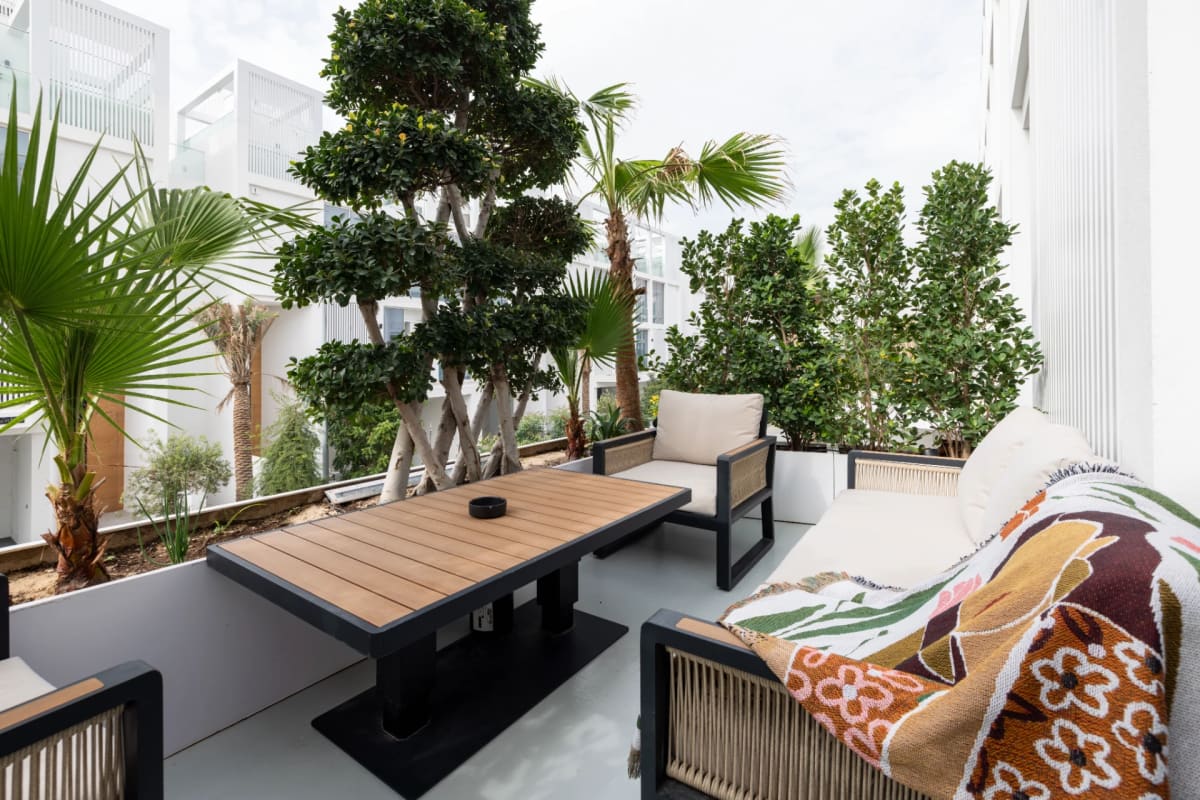
Japanese gardens are defined by restraint, balance, natural materials and a carefully considered relationship between architecture and landscape. For luxury villas, these principles can create outdoor spaces that feel calm, private and visually refined without relying on excessive ornamentation.
In Dubai, where villas often feature expansive terraces, pools and sophisticated architectural finishes, Japanese landscape design Dubai can provide a distinctive approach to outdoor living. The challenge is adapting traditional Japanese aesthetics to the UAE climate while maintaining authenticity, functionality and long-term landscape performance.
What Defines Japanese-Inspired Landscape Design?
Japanese-inspired landscaping is less about copying a traditional garden and more about applying its underlying principles to a contemporary setting.
Balance, simplicity and negative space
A Japanese-inspired garden typically uses a limited palette of materials and plants. Instead of filling every area, designers deliberately leave open space to create visual breathing room.
Key principles include:
- Asymmetrical but balanced compositions
- Controlled planting and uncluttered views
- Natural stone and timber
- Water as a visual or sensory element
- Carefully framed architectural views
- Layered greenery and textural contrast
- Deliberate transitions between indoor and outdoor spaces
For a luxury villa, these principles can complement contemporary architecture particularly well. Clean architectural lines can be softened by planting, stone pathways and carefully positioned trees.
Designing Japanese-Inspired Landscapes for Dubai Villas
The most successful Japanese-inspired landscape design for villas considers both aesthetics and the realities of the UAE environment.
1. Start with the villa architecture
The landscape should respond to the architecture rather than compete with it.
Begin by identifying the property’s main visual axes, entrances, terraces, pool areas and important views. A minimalist villa may benefit from strong geometric planting arrangements, while a more traditional architectural style could accommodate layered planting and natural stone features.
The garden should feel like an extension of the home’s design language.
2. Create a controlled planting palette
Plant selection is one of the most important considerations in Dubai.
Traditional Japanese gardens often feature species associated with temperate climates, but directly reproducing these plant palettes may not be practical in the UAE. A better approach is to capture the visual character of Japanese gardens using plants that are appropriate for the local environment.
Consider:
- Evergreen structural plants
- Architectural grasses
- Carefully pruned shrubs
- Feature trees suited to the site
- Groundcover and textured foliage
- Plants that provide seasonal or visual variation
The objective is not botanical imitation. It is to reproduce the layering, rhythm and tranquillity associated with Japanese garden design.
3. Introduce stone as a structural element
Stone can establish the visual foundation of a Japanese-inspired garden.
Large feature stones can act as focal points, while smaller stone arrangements can define pathways, planting beds and transitions. Natural variations in colour, texture and shape help prevent the landscape from appearing overly manufactured.
For Dubai villas, stone selection should also consider heat exposure, surface temperatures, maintenance requirements and compatibility with the property’s architectural finishes.
Water Features and Sensory Design
Water is strongly associated with Japanese gardens because it introduces movement, sound and reflection.
A contemporary villa does not necessarily require a large pond. Smaller interventions can be equally effective:
- Reflective water basins
- Narrow rills
- Minimalist fountains
- Pool-edge water features
- Cascading elements
- Shallow decorative pools
Water features should be proportionate to the villa and integrated into the overall composition. In Dubai, technical design is particularly important because evaporation, filtration, water management and maintenance must be considered from the outset.
A well-designed feature should contribute to the atmosphere without becoming the dominant element.
Modern Japanese Garden Ideas for Luxury Villas
Traditional Japanese gardens can be reinterpreted in a contemporary way for modern Dubai residences.
Minimalist courtyard gardens
A courtyard can become a private contemplative space using a small number of carefully selected elements. Gravel, stone, sculptural planting and a single feature tree can create a strong composition without requiring a large footprint.
Japanese-inspired pool landscapes
Pool areas provide an opportunity to combine modern luxury with natural materials. Stone paving, restrained planting and timber accents can soften a large pool while preserving a clean architectural appearance.
The landscape should frame the water rather than overwhelm it.
For a practical example of this approach, explore our luxury villa landscape project in Dubai.
Screened outdoor spaces
Privacy is a major consideration for villa landscapes. Layered planting, bamboo-inspired screening solutions and architectural walls can create secluded areas for relaxation while maintaining the minimalist character of the design.
Contemporary tea and meditation spaces
A small pavilion, shaded seating area or garden platform can introduce a dedicated retreat within a larger villa landscape. Materials should remain simple, with emphasis placed on proportion, shade, planting and views.
These spaces can also support the broader trend of creating outdoor environments that encourage slower, more intentional use of residential gardens.
A Practical Design Framework
A professional approach to Japanese-inspired landscaping can be organised into five stages.
Step 1: Analyse the site
Assess orientation, sunlight, wind exposure, existing vegetation, drainage, access and the relationship between internal rooms and outdoor areas.
Step 2: Define the visual concept
Establish the desired balance between hardscape, planting, water and open space before selecting individual materials or plants.
Step 3: Build the material palette
Select stone, timber, gravel, paving and architectural finishes that complement the villa. Limiting the palette generally creates a more coherent result.
Step 4: Select climate-appropriate planting
Choose species according to the site’s environmental conditions, irrigation strategy, maintenance requirements and desired visual effect.
Step 5: Integrate lighting and maintenance
Lighting should reveal key forms and pathways rather than flatten the garden with excessive illumination. Maintenance requirements should be considered during design, not after installation.
For a broader approach to residential outdoor spaces, readers can explore modern landscape design ideas for Dubai villas and luxury outdoor living design in the UAE.
Common Challenges and Professional Solutions
Challenge: Adapting Japanese aesthetics to Dubai’s climate
Some traditional Japanese plants and materials may not perform well under intense heat and sunlight.
Solution: Use climate-appropriate alternatives while retaining the core principles of asymmetry, restraint, layering and natural character.
Challenge: Making minimalism feel luxurious
A limited material and planting palette can sometimes appear sparse if proportions are poorly considered.
Solution: Focus on material quality, mature planting structure, sightlines, texture and carefully designed focal points rather than adding more elements.
Challenge: Maintaining privacy without creating visual heaviness
Tall boundaries and dense screening can make a villa garden feel enclosed.
Solution: Combine layered planting with architectural screening, varying heights and selective openings to maintain privacy while preserving depth.
Challenge: Integrating the landscape with existing architecture
A garden can appear disconnected when its materials and geometry do not relate to the villa.
Solution: Repeat selected architectural materials, colours, lines or textures within the landscape to establish continuity.
For properties requiring coordinated planning and execution, an integrated landscape design and build service in Dubai can help align the landscape concept with architectural and outdoor requirements.
Why Japanese Garden Design Works for Dubai Villas?
The appeal of Japanese garden design Dubai projects lies in their ability to combine simplicity with sophistication.
Rather than filling a garden with decorative features, the design gives each element a purpose. A tree can frame a view, a stone can establish visual weight, water can introduce movement, and a pathway can guide visitors through the landscape.
This approach is particularly suitable for luxury villas where outdoor areas are expected to function as extensions of the interior. The result can be an environment that feels private, composed and connected to the surrounding architecture.
The concept can even be adapted when homeowners want to dubai-it—taking an established design aesthetic and reinterpreting it specifically for Dubai’s climate, architecture, lifestyle and outdoor conditions.
Frequently Asked Questions
What is Japanese-inspired landscape design?
It is a landscape approach based on Japanese principles such as simplicity, balance, natural materials, asymmetry, controlled planting, water and intentional use of space.
Can Japanese gardens work in Dubai’s climate?
Yes, when the concept is adapted using climate-appropriate plants, suitable materials, efficient irrigation and landscape detailing designed for UAE environmental conditions.
What plants are suitable for a Japanese-inspired villa garden in Dubai?
Plant selection depends on the specific site, exposure and irrigation strategy. Designers typically focus on species that provide evergreen structure, texture, screening and architectural form while performing appropriately in the local environment.
Do Japanese-inspired gardens require a lot of maintenance?
Maintenance depends on the planting palette, pruning requirements, irrigation system and complexity of the design. A carefully planned landscape can be designed around practical maintenance requirements.
Can a Japanese garden be combined with a modern villa?
Absolutely. The restrained forms, natural materials and emphasis on clean composition can work particularly well with contemporary villa architecture.
Does a Japanese-inspired garden need a water feature?
No. Water is a common Japanese garden element, but it is not essential. Stone, planting, gravel, pathways and carefully framed views can create a strong Japanese-inspired character without water.
Japanese-inspired landscaping offers luxury villa owners in Dubai an opportunity to create outdoor spaces that are sophisticated without being excessive. The strongest designs focus on proportion, natural textures, carefully selected planting, privacy, sensory elements and a close relationship between architecture and landscape.
For 2026 villa projects, the most effective approach is not to reproduce a traditional Japanese garden literally. Instead, it is to interpret its enduring principles through materials, plants and construction techniques appropriate to the UAE.
Whether the goal is a serene courtyard, a refined pool landscape or a private garden retreat, thoughtful Japanese landscape design Dubai can transform an outdoor area into a cohesive extension of the villa.
To explore how these principles could be applied to a specific property, consider reviewing luxury villa landscaping services in Dubai or discussing the project with a qualified landscape design professional.