
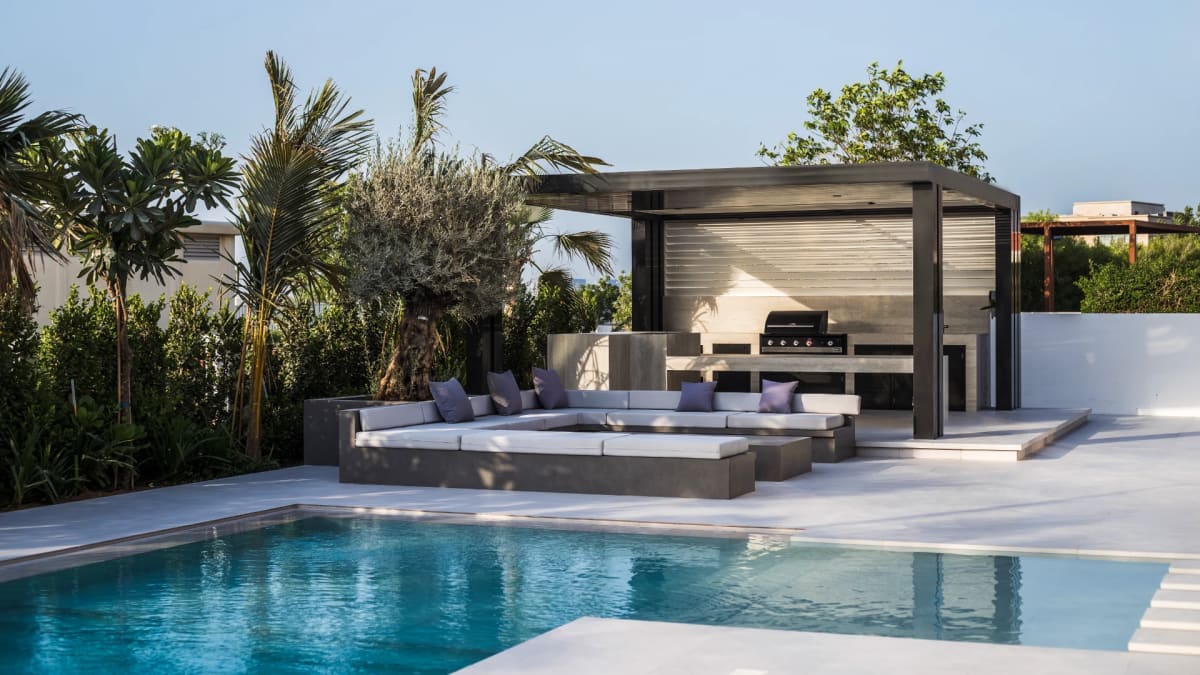
Villa outdoor spaces are becoming an important part of modern residential design in the UAE. From private backyards and landscaped gardens to side yards, courtyards, and outdoor seating areas, these spaces can improve the functionality and visual appeal of a property when planned carefully.
Villa backyard landscape design UAE requires more than selecting plants and installing decorative features. It involves creating a cohesive outdoor environment that responds to the local climate, complements the villa’s architecture, and supports the daily needs of its occupants.
For property owners, developers, and decision-makers, the objective is to create outdoor areas that combine aesthetics, comfort, practicality, and long-term usability.
Understanding Villa Backyard Landscape Design in the UAE
Villa backyard landscape design brings together planting, paving, outdoor furniture, lighting, shade structures, and functional zoning to create a well-organised outdoor environment.
In the UAE, landscape planning must account for strong sunlight, high temperatures, water consumption, and the durability of outdoor materials. A successful design should also consider privacy, access, maintenance requirements, and the relationship between indoor and outdoor spaces.
Key considerations include:
- Climate-responsive planting: Selecting species suited to local conditions and the garden’s exposure.
- Functional layouts: Creating dedicated areas for relaxation, dining, and family activities.
- Material selection: Using outdoor finishes that withstand heat and environmental exposure.
- Privacy and screening: Incorporating planting, walls, or screens where appropriate.
- Architectural coordination: Ensuring the landscape complements the villa’s exterior finishes and design style.
A unified approach helps transform the backyard into a practical extension of the property rather than an isolated decorative area.
Explore our landscaping services to understand how professional landscape planning can transform villa backyards and outdoor living spaces across the UAE.
Designing Secondary Outdoor Living Areas
Secondary outdoor areas can provide additional functionality without requiring a large garden. These spaces include side yards, entrance gardens, courtyards, terraces, and smaller seating areas.
The key is to identify the purpose of each space before deciding on its layout, materials, and features.
Side Gardens and Narrow Spaces
Side gardens often have limited width and restricted sunlight. However, careful planning can make them attractive and functional.
Practical design solutions include:
- Using vertical planting to maximise available space.
- Installing subtle lighting to improve visibility and ambience.
- Choosing compact plants that do not obstruct pathways.
- Selecting suitable paving and drainage solutions.
- Maintaining clear access for property maintenance.
Courtyards and Private Seating Areas
Courtyards can provide quiet, sheltered environments for relaxation or informal gatherings. A combination of textured surfaces, selected plants, comfortable seating, and layered lighting can create visual interest without overcrowding the area.
Terraces and Outdoor Dining Areas
Terraces can accommodate outdoor dining, entertaining, or relaxation. Pergolas, shade systems, and carefully positioned furniture can improve usability while helping manage direct sunlight.
The layout should maintain comfortable circulation and account for the property’s orientation, exposure, and intended use.
These principles are central to secondary outdoor living areas design, particularly in villas where several smaller spaces must work together as part of one landscape concept.
Climate-Responsive Landscaping in the UAE
Climate is one of the most important factors in landscape design across Dubai, Abu Dhabi, and the wider UAE. Planting, shade, irrigation, and material selection should all be considered during the initial design stage.
Selecting Suitable Plants
Plant selection should reflect the amount of sunlight, soil conditions, irrigation requirements, and maintenance expectations.
A practical approach includes:
- Considering native and regionally adapted species.
- Grouping plants with similar water requirements.
- Using efficient irrigation systems where appropriate.
- Limiting unnecessary lawn areas.
- Planning planting density according to available space and sunlight.
The suitability of individual species should always be assessed against the specific site’s environmental conditions.
Creating Comfortable Shaded Areas
Shade is essential when designing outdoor spaces intended for regular use. Designers should assess the sun’s movement before positioning dining tables, lounge seating, or recreational areas.
Possible solutions include pergolas, architectural overhangs, trees, and suitable screening systems. Outdoor materials should also be evaluated for heat retention, durability, and comfort under direct sunlight.
A climate-conscious approach helps UAE villa outdoor living design deliver spaces that are attractive while remaining practical for everyday use.
A Step-by-Step Approach to Landscape Planning
A structured design process helps ensure that the finished landscape reflects the property’s requirements and works as a coordinated whole.
Step 1: Assess the Existing Site
Review the garden dimensions, ground levels, drainage, sunlight, soil conditions, boundary walls, access points, and existing utilities. These factors establish the practical limitations and opportunities of the site.
Step 2: Identify the Main Functions
Determine how the outdoor spaces will be used. Priorities may include outdoor dining, family gatherings, private seating, gardening, or children’s activities.
Defining these needs early helps prevent unnecessary features from taking up valuable space.
Step 3: Organise Functional Zones
Create a layout that separates activities while maintaining easy movement between the villa and its outdoor areas.
For example, a dining zone may sit close to the kitchen, while a private seating area can occupy a quieter part of the garden.
Step 4: Coordinate Materials and Planting
Select paving, planting, furniture, lighting, and shade structures as part of a consistent design scheme. The selected finishes should complement the villa and perform appropriately in outdoor conditions.
Step 5: Integrate Irrigation, Drainage, and Lighting
Technical systems should be coordinated with the landscape layout before installation. Proper drainage helps prevent standing water, while suitable irrigation and lighting support the garden’s functionality and maintenance.
Step 6: Plan for Long-Term Maintenance
Consider pruning, irrigation access, surface cleaning, plant replacement, and the upkeep of outdoor features. A realistic maintenance strategy helps preserve the landscape’s appearance and functionality.
Landscape Design Considerations in Dubai and Abu Dhabi
Although Dubai and Abu Dhabi share many climatic challenges, individual properties may differ in orientation, exposure, soil conditions, coastal influence, and community requirements.
Villa Garden Design in Dubai
Villa garden design in Dubai can incorporate contemporary layouts, structured planting, outdoor entertainment zones, and integrated lighting. The appropriate approach depends on the villa’s architecture, the available space, and the owner’s preferred use of the garden.
Clean layouts and carefully selected materials can create a cohesive appearance without compromising shade, drainage, or practical access.
Backyard Landscaping in Abu Dhabi
Backyard landscaping in Abu Dhabi should give particular consideration to heat exposure, water-conscious planting, durable materials, and comfortable outdoor seating.
Planting arrangements and lawn areas should be selected according to their intended function and ongoing maintenance requirements.
For both locations, applicable community guidelines and approval requirements should be checked before implementing major landscape changes or installing structures.
View our landscaping projects to see how considered planting, outdoor materials, and functional layouts can be brought together in real spaces.
Best Practices for Successful Villa Landscaping
Good landscape design balances appearance with everyday practicality. The following principles help create outdoor spaces that remain functional and visually consistent.
- Prioritise usability: Design around the activities that matter most rather than adding features without a clear purpose.
- Maintain visual consistency: Use complementary materials, planting styles, and lighting across different outdoor areas.
- Make shade a priority: Position seating and dining areas with sunlight exposure in mind.
- Use water responsibly: Choose suitable plants and efficient irrigation methods.
- Consider privacy: Incorporate planting and screening without unnecessarily restricting airflow or circulation.
- Coordinate technical details: Integrate drainage, irrigation, lighting, and electrical provisions into the overall design.
- Avoid excessive decoration: Keep the layout clear and ensure that every major feature contributes to the space’s function.
Social media trends can offer inspiration, but each design decision should be assessed against the property’s requirements. Even a trend described as dubai-it should be considered carefully before being incorporated into a permanent landscape scheme.
Common Landscaping Challenges and Solutions
Limited Outdoor Space
Challenge: A small backyard must accommodate several activities without feeling crowded.
Solution: Prioritise essential functions, use appropriately scaled furniture, and maintain clear circulation routes. Vertical planting can add greenery without taking up excessive ground space.
Excessive Heat
Challenge: Direct sunlight and heat-retaining surfaces can make outdoor areas uncomfortable.
Solution: Introduce suitable shade structures, evaluate surface materials, and position seating according to sun exposure.
High Water Requirements
Challenge: Unsuitable planting and inefficient irrigation can create unnecessary water demand.
Solution: Select climate-appropriate species, group plants by water requirements, and review irrigation coverage regularly.
Inconsistent Design Across Outdoor Areas
Challenge: Courtyards, side gardens, and terraces may appear disconnected when planned separately.
Solution: Establish a common design language through complementary materials, planting palettes, and lighting while allowing each space to serve its own purpose.
Landscape Design Ideas for UAE Villas
The right design direction depends on the property’s architecture, available area, and intended use. Several approaches can be adapted to different villa settings.
- Contemporary minimalist gardens: Defined pathways, restrained planting, and simple geometric layouts.
- Lush private gardens: Layered planting and shaded seating, using species suited to local conditions.
- Outdoor entertainment areas: Dedicated dining and lounge zones with appropriate shade and lighting.
- Courtyard gardens: Compact planting arrangements, textured surfaces, and carefully positioned focal points.
- Low-maintenance landscapes: Practical paving, suitable plant selection, efficient irrigation, and simplified layouts.
Discover more outdoor landscaping ideas for UAE villas to explore practical ways of combining planting, shade, lighting, and outdoor seating.
These concepts can be adapted to suit different property sizes without compromising comfort, circulation, or maintenance considerations.
Frequently Asked Questions
What makes villa backyard landscape design suitable for the UAE?
A suitable design accounts for heat, sunlight, water requirements, drainage, privacy, and material durability. Every element should be selected according to the site’s conditions and intended use.
Which plants are appropriate for UAE villa gardens?
Native and regionally adapted plants are worth considering, but the final selection should reflect the site’s soil, exposure, irrigation provision, and maintenance requirements.
How can a small backyard feel more spacious?
A clear layout, appropriately scaled furniture, consistent materials, and carefully positioned planting can help create a more open and functional environment.
Why are secondary outdoor living areas important?
Side yards, terraces, and courtyards provide additional opportunities for relaxation, dining, and privacy. Planning each area according to its function helps make better use of the available space.
How can villa landscaping reduce water consumption?
Climate-appropriate planting, efficient irrigation, suitable soil preparation, and careful lawn planning can help reduce unnecessary water use.
Should landscaping be coordinated with the villa’s architecture?
Yes. Coordinating outdoor materials, planting, lighting, and spatial layouts with the villa’s architecture helps create a cohesive and functional property.
Effective villa landscape design in the UAE combines architectural coordination, climate-responsive planting, thoughtful shade, practical layouts, and appropriate technical planning.
Whether the objective is to improve a private backyard, develop a shaded terrace, or transform an underused side garden, a coordinated approach helps ensure that every outdoor area serves a clear purpose.
For property owners, developers, and decision-makers, the next step is to assess the existing space, define its intended functions, and explore a landscape solution that supports the property’s architectural character and long-term usability. Hammer Group can help clients explore integrated landscaping and design-and-build solutions suited to their project requirements.