
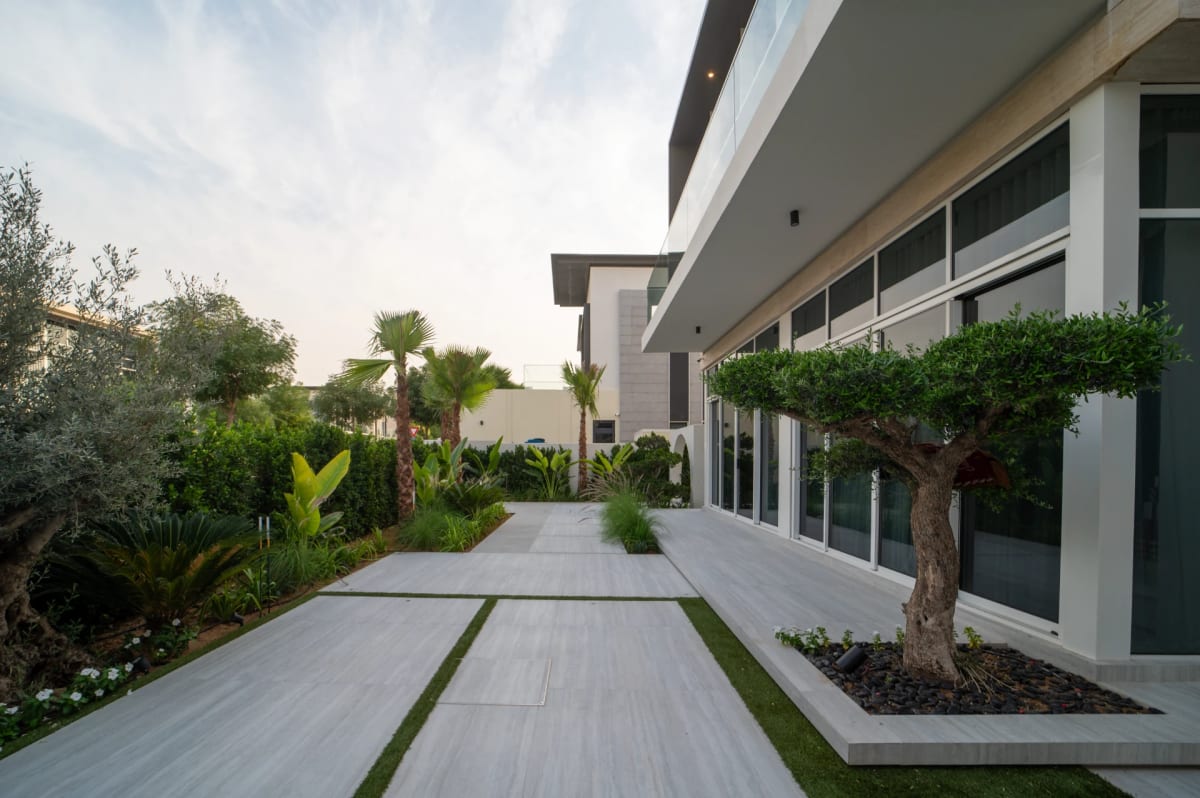
Contemporary landscapes across the UAE increasingly combine clean architectural lines with natural textures, functional outdoor spaces, and carefully selected materials. Among the materials gaining attention in modern landscape schemes are decorative gravel and pebbles, which can be used to define spaces, frame planting, create pathways, and introduce subtle visual contrast.
Decorative Gravel and Pebble Design offers considerable flexibility for commercial developments, hospitality environments, residential communities, private properties, and other outdoor spaces. When selected and installed as part of a coordinated landscape concept, gravel and pebbles can complement architecture while creating a distinctive and visually balanced environment.
Understanding Decorative Gravel and Pebble Design
Decorative gravel and pebbles are commonly used as landscape materials for both functional and aesthetic purposes. While gravel is generally smaller and may have either angular or rounded edges, pebbles are typically larger and smoother.
Their applications can range from simple ground-cover treatments to carefully designed feature areas.
Common uses include:
- Garden and pedestrian pathways
- Borders around planting beds
- Courtyard features
- Tree surrounds
- Decorative drainage areas
- Transitions between paving and planting
- Feature zones around architectural elements
The right material depends on the intended application, surrounding finishes, landscape style, and practical requirements of the space.
Why Gravel and Pebbles Work Well in UAE Landscapes?
The UAE has a distinctive landscape environment shaped by strong sunlight, high temperatures, dust, and the need for carefully planned outdoor spaces. These factors make material selection an important part of landscape design.
Gravel and pebbles can help create structured outdoor environments while introducing natural texture into predominantly architectural settings. Their neutral colours and varied textures can complement concrete, stone, porcelain paving, timber, metal, and other contemporary finishes.
However, the selection should always be based on the requirements of the specific project. A material that works well in a decorative courtyard may not necessarily be the best choice for a frequently used pedestrian route.
Decorative Gravel Landscaping Applications
Pathways and Walkways
Decorative gravel can be used to establish informal pedestrian routes through gardens, courtyards, and landscaped developments. It provides a visual distinction from paved surfaces and can help guide movement through different areas of the landscape.
For high-use areas, designers should consider stone size, stability, edging, and accessibility before selecting the material.
Planting Bed Borders
Gravel and pebbles can create clear boundaries between planting areas and surrounding paving. This is particularly useful in contemporary landscapes where strong geometric forms and clean transitions are important.
A contrasting stone colour can also help frame planting and create greater visual definition.
Courtyards and Feature Areas
Pebbles can be particularly effective in courtyards and entrance spaces where the design calls for controlled natural textures.
Larger stones can be positioned around specimen plants, planters, water features, or architectural details to create focal points without overwhelming the space.
Pebble Landscaping Ideas for Contemporary Spaces
Pebbles do not have to be used simply as decorative ground cover. With careful planning, they can become an integral part of the overall landscape composition.
Creating Material Contrast
Smooth pebbles can contrast effectively with textured paving, concrete, stone walls, or other architectural surfaces. Different stone sizes can also establish visual hierarchy between primary and secondary areas.
Framing Architectural Features
Pebbles can be positioned around walls, planters, sculptures, water features, and entrances to draw attention toward important elements within the landscape.
Introducing Natural Texture
Contemporary landscapes can sometimes rely heavily on hard surfaces and geometric forms. Natural stone introduces texture and variation while still maintaining a refined appearance.
The objective is not to add as much decorative stone as possible, but to use it selectively to support the overall design.
For further inspiration, readers can explore landscape design ideas for contemporary outdoor spaces to see how different materials, planting strategies, and architectural elements can be brought together within a cohesive landscape concept.
A Practical Approach to Gravel and Pebble Landscape Design
A successful gravel and pebble landscape design should begin with the wider project rather than the material itself.
1. Define the Purpose
Determine why gravel or pebbles are being introduced.
Are they intended for:
- Pedestrian circulation?
- Planting-bed definition?
- A decorative feature?
- A transition between materials?
- A courtyard composition?
Defining the purpose helps determine the most appropriate material and installation approach.
2. Consider the Existing Architecture
The stone should complement the surrounding building and landscape materials.
Consider the colours, textures, shapes, and finishes already present in the project before introducing additional materials.
3. Select the Appropriate Material
Important considerations include:
- Stone size
- Shape
- Colour
- Texture
- Expected foot traffic
- Surrounding materials
- Maintenance requirements
- Intended landscape application
A carefully selected material will generally integrate more successfully than one chosen purely for its individual appearance.
4. Establish Clear Boundaries
Edging is particularly important when loose materials are used next to paving or planted areas.
Well-defined edges help maintain the intended geometry of the landscape and reduce unwanted movement of gravel or pebbles.
5. Review the Complete Landscape
The final assessment should consider the relationship between gravel, planting, paving, lighting, furniture, architecture, and other landscape elements.
Every component should contribute to the same overall design language.
For projects requiring an integrated approach to landscape planning, design, and implementation, explore Hammer Group’s landscaping service to see how professional landscape solutions can support contemporary UAE environments.
Combining Gravel and Pebbles with Planting
One of the strengths of gravel and pebble design is the ability to create contrast with vegetation.
Plants introduce height, colour, softness, and movement, while stone provides structure at ground level. Together, they can create a layered composition that works particularly well within contemporary landscape schemes.
A landscape may combine:
- Structural trees
- Architectural shrubs
- Groundcover
- Decorative gravel
- Feature pebbles
- Paved surfaces
- Integrated outdoor lighting
This combination can help prevent large outdoor areas from appearing visually flat while maintaining a controlled and contemporary aesthetic.
Common Challenges and Professional Solutions
Stone Movement
Loose gravel can move through foot traffic, maintenance activities, and environmental conditions.
Professional approach: Appropriate edging and material selection can help maintain defined areas.
Poor Material Coordination
A decorative stone may look attractive individually but fail to complement the surrounding architecture.
Professional approach: Select gravel and pebbles as part of a wider landscape material palette.
Excessive Use
Using decorative stone throughout an entire landscape can make the design repetitive or visually harsh.
Professional approach: Balance stone with planting, paving, shade structures, and architectural elements.
Maintenance Requirements
Outdoor stone surfaces can collect dust, leaves, and other debris.
Professional approach: Consider cleaning access, maintenance practices, and surrounding planting during the design stage.
Decorative Gravel and Contemporary UAE Landscape Design
In commercial and development projects, the success of a gravel or pebble application often depends on how well it integrates with the wider design.
Material selection should therefore be considered alongside:
- Building architecture
- Pedestrian circulation
- Planting design
- Hardscape
- Outdoor furniture
- Lighting
- Maintenance requirements
This integrated approach is particularly important for developers, business owners, hospitality operators, and commercial property teams seeking outdoor environments that remain visually coherent and functional.
As part of a wider landscape project, reviewing a completed landscaping project can provide useful insight into how gravel, planting, paving, and architectural elements can be combined in practice.
Best Practices for Decorative Gravel and Pebble Design
The following principles can help achieve a more successful result:
- Start with the overall landscape concept.
- Select materials that complement the architecture.
- Avoid unnecessary combinations of too many stone types.
- Consider pedestrian use before selecting loose materials.
- Use edging to maintain clean transitions.
- Balance hardscape with planting.
- Consider maintenance from the beginning.
- Use decorative stone selectively rather than filling every available space.
- Evaluate colours and textures under the UAE’s natural light conditions.
Frequently Asked Questions
What is decorative gravel and pebble design?
It is the planned use of gravel and natural pebbles as functional or decorative elements within a landscape. Applications can include pathways, planting borders, courtyards, feature areas, and transitions between landscape materials.
Are decorative gravel and pebbles suitable for UAE landscapes?
They can be suitable for many outdoor applications in the UAE when the material, location, installation method, and maintenance requirements are properly considered.
Where can decorative gravel be used?
Common applications include pathways, planting beds, tree surrounds, courtyards, entrance areas, and decorative feature zones.
Can gravel and pebbles be combined with plants?
Yes. Combining stone with planting can create useful contrast between natural textures, vegetation, and architectural surfaces.
How can gravel make a landscape look contemporary?
Clean boundaries, restrained material palettes, carefully selected colours, and integration with modern paving and planting can give gravel a contemporary appearance.
What should be considered when selecting landscape pebbles?
Stone size, shape, colour, texture, location, pedestrian use, surrounding materials, edging, and maintenance requirements should all be considered.
Decorative gravel and pebbles can play a valuable role in contemporary UAE landscapes when they are used with purpose and integrated into the wider design.
From pathways and planting borders to courtyards and architectural features, these materials can introduce texture, structure, and visual contrast while complementing modern architecture.
The strongest Decorative Gravel and Pebble Design applications are not simply about selecting attractive stones. They depend on understanding the space, choosing appropriate materials, creating clear transitions, and balancing hardscape with planting.
For developers, businesses, and property owners considering a contemporary outdoor environment, a carefully planned approach can help ensure that every landscape material contributes to a cohesive and functional result.