
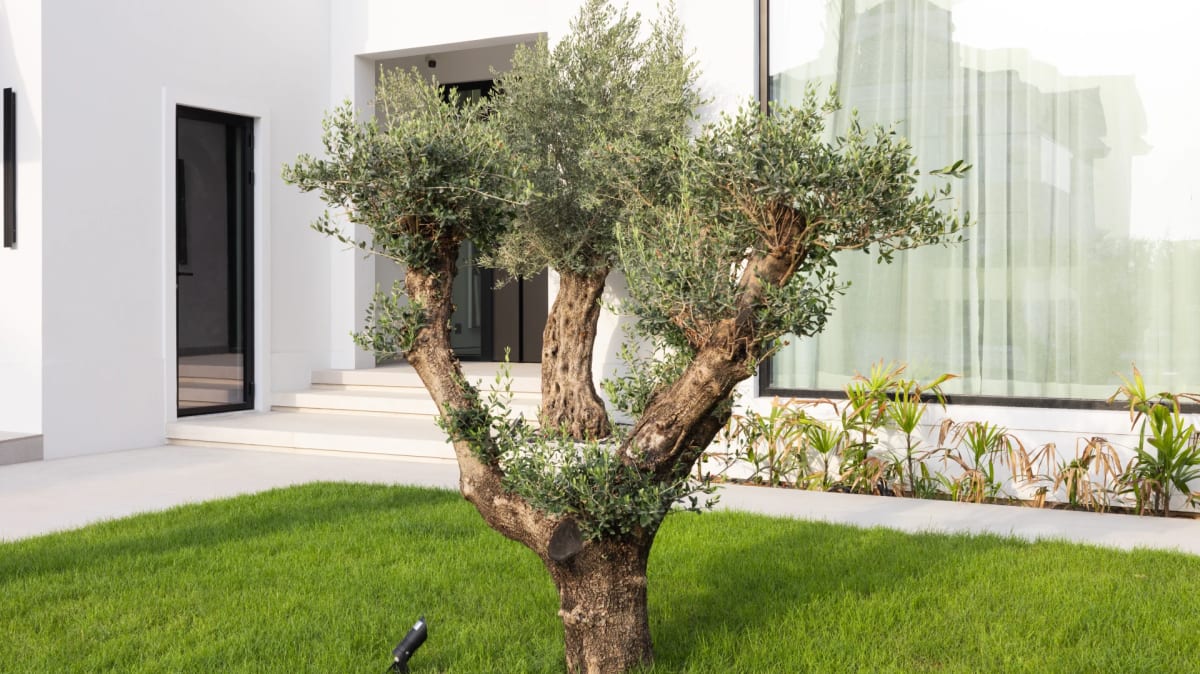
Selecting the right trees is one of the most important decisions when creating a successful villa landscape in the UAE. Trees influence the character of a garden, provide shade and privacy, frame architectural features, and contribute to the overall balance of an outdoor space.
However, choosing trees for a UAE villa requires more than selecting attractive species. Climate, sunlight, soil conditions, irrigation, available space, and the architectural style of the property all need to be considered. This is especially important when planning ornamental trees for UAE villas, where the local environment can place additional demands on landscape planting.
Why Ornamental Tree Selection Matters?
A mature tree can become one of the defining elements of a villa landscape. When selected and positioned correctly, it can enhance the relationship between the building and its surrounding garden.
Poor selection, on the other hand, can create practical problems. A tree may eventually become too large for its planting area, interfere with pathways, obstruct views, or require excessive pruning.
For this reason, ornamental tree selection for villas should be considered during the early stages of landscape planning rather than as an afterthought.
The main factors to assess include:
- Climate and heat tolerance
- Sun exposure
- Mature height and canopy spread
- Root characteristics
- Soil and drainage conditions
- Irrigation requirements
- Maintenance needs
- Proximity to buildings and structures
- Relationship with the villa’s architectural style
Understanding the UAE Landscape Environment
The UAE’s climate creates a distinctive environment for landscape design. High temperatures, strong sunlight, limited rainfall, and varying soil conditions mean that plant selection needs to be approached carefully.
Dubai, Abu Dhabi, and other parts of the UAE also contain different microclimates. A tree planted in an exposed garden may experience very different conditions from one positioned inside a sheltered courtyard.
This is why there is no single list of trees that will automatically be suitable for every villa.
Instead, landscape planning should begin with an assessment of the property itself.
Assess the Planting Area
Before selecting a tree, consider:
- How many hours of direct sunlight the area receives
- Whether the soil drains effectively
- How irrigation will reach the planting zone
- The amount of space available for root and canopy development
- Nearby buildings, walls, paving, pools, and utilities
These factors help determine which trees are appropriate and where they should be positioned.
How to Choose Ornamental Trees for UAE Villas
1. Define the Purpose of the Tree
Every major tree should have a clear purpose within the landscape.
It may be selected to create a focal point, provide shade, establish privacy, frame an entrance, soften a building façade, or add height and structure to a garden.
Defining the purpose first makes the selection process more focused.
2. Consider Mature Size
One of the most important principles in tree selection is to consider the mature size rather than the size of the tree when it is first planted.
A young tree may appear perfectly suited to a small space, but its canopy and root system can expand considerably over time.
Potential conflicts should be considered around:
- Villa façades
- Windows and balconies
- Swimming pools
- Driveways
- Walkways
- Boundary walls
- Outdoor seating
- Irrigation and utility infrastructure
Adequate space should be provided from the beginning to allow the tree to develop naturally.
3. Match the Tree With the Architecture
The visual relationship between trees and architecture can have a significant effect on the overall appearance of a villa.
Contemporary properties may work well with trees that have strong architectural forms and controlled silhouettes. More traditional or Mediterranean-inspired villas may benefit from softer, more natural planting arrangements.
The objective is not simply to add greenery, but to create a landscape where the planting and architecture feel connected.
Best Trees for UAE Villas: A Practical Approach
When considering the best trees for UAE villas, it is better to focus on suitability rather than simply choosing species that are visually popular.
A suitable tree should respond to the conditions of the specific property.
Important characteristics include:
- Tolerance of local heat and sunlight
- Appropriate water requirements
- Suitable mature dimensions
- Compatibility with the available soil
- Manageable maintenance requirements
- Appropriate root behaviour
- Visual compatibility with the villa
- Suitability for its intended function
A tree that works well in a large estate landscape may not be appropriate for a compact villa courtyard.
Tree Placement: Getting the Position Right
Selecting an appropriate tree is only half of the process. Its location within the landscape is equally important.
Create Focal Points
A well-positioned ornamental tree can provide a natural focal point in an entrance garden, courtyard, lawn, or outdoor entertaining area.
Rather than placing trees wherever there is unused space, consider how each specimen contributes to the overall composition.
Frame Architectural Features
Trees can be positioned to frame entrances, terraces, pathways, and important views.
The objective should be to complement the architecture rather than hide it. A carefully positioned canopy can create depth and visual interest while maintaining important sightlines.
Allow for Future Growth
Spacing should always reflect the expected mature dimensions of the tree.
This is particularly important near buildings and paved areas. Insufficient space can eventually lead to excessive pruning, damaged surfaces, blocked access, or conflicts with structures.
Consider the Movement of the Sun
The position of the sun changes throughout the day and across the year. Understanding this movement can help determine where shade may be most useful.
For example, trees positioned near outdoor seating areas may contribute to a more comfortable environment when their location and canopy are planned appropriately.
Ornamental Trees for Dubai Landscapes
Ornamental trees for Dubai landscapes should be selected with the property’s specific environmental conditions in mind.
A villa located in an exposed plot may require a different planting strategy from a property surrounded by neighbouring buildings. Soil conditions, irrigation systems, available planting areas, and the desired level of maintenance can also influence the final selection.
Dubai villa landscapes often combine architecture, hardscape, planting, lighting, pools, and outdoor living areas. Trees should therefore be considered as part of the complete landscape rather than as isolated features.
For property owners looking to develop a complete outdoor environment, exploring a professional landscaping service can help integrate tree selection with the wider landscape design.
Designing With Trees as Part of the Landscape
Trees should work together with other landscape elements.
A well-planned villa garden may combine trees with:
- Shrubs and groundcovers
- Lawns and planting beds
- Pergolas and seating areas
- Pathways
- Water features
- Landscape lighting
- Boundary treatments
- Architectural elements
The position of major trees should ideally be established before finalising these elements because tree placement can influence circulation, shade, views, lighting, and irrigation.
Common Tree Selection Challenges
Limited Space
Small villa gardens often have restricted planting areas.
Solution: Select tree forms that are appropriate for the available space and account for mature growth before planting.
Excessive Sun Exposure
Open areas can experience intense sunlight and heat.
Solution: Evaluate the exposure of each planting zone and select species appropriate for the conditions.
Trees Planted Too Close to Buildings
Trees positioned too close to façades or paved areas can create maintenance and access issues as they mature.
Solution: Consider the mature canopy and root characteristics before determining the final planting position.
Overcrowded Landscapes
Using too many trees can make a garden feel visually heavy and may increase maintenance requirements.
Solution: Give each tree a defined role and prioritise strategic placement over quantity.
A Simple Tree Selection Framework
A practical five-step process can make ornamental tree planning more effective:
Step 1: Assess the Site
Review sunlight, soil, drainage, irrigation, available space, and surrounding structures.
Step 2: Define the Function
Determine whether the tree is required for shade, privacy, screening, framing, or visual impact.
Step 3: Check Mature Characteristics
Review the expected height, canopy spread, root behaviour, and maintenance requirements.
Step 4: Consider the Architecture
Choose tree forms and planting arrangements that complement the villa’s architectural character.
Step 5: Plan the Position
Check spacing, sightlines, access, utilities, structures, and future growth before finalising the planting location.
Looking at completed landscape project examples can also help property owners understand how trees, planting and architectural features can be integrated into a cohesive outdoor setting.
Landscape Ideas for Villa Gardens
Tree selection can also be used to create different visual experiences throughout a villa.
For example, a feature tree can establish a focal point near an entrance, while smaller ornamental trees can help create rhythm along a pathway. Trees can also be combined with layered planting to create privacy without relying entirely on solid walls.
For additional landscape ideas, exploring practical villa garden ideas can help inspire different approaches to planting, outdoor spaces, and garden composition.
The important point is to adapt inspiration to the actual property rather than copying another landscape without considering its site conditions.
Frequently Asked Questions
What should I consider when selecting ornamental trees for a UAE villa?
Consider the site’s sunlight, soil, irrigation, available space, mature tree size, maintenance requirements, and relationship with the villa’s architecture.
What are the best trees for UAE villas?
There is no single tree that is best for every property. The appropriate choice depends on the specific site, intended function, available space, and environmental conditions.
How should ornamental trees be positioned around a villa?
Trees should be positioned according to their mature size, purpose, sightlines, sunlight, proximity to structures, and relationship with other landscape elements.
Can ornamental trees provide privacy?
Yes. Trees can contribute to privacy when they are strategically positioned and combined with shrubs, hedges, walls, or other screening elements.
Should trees be selected before the rest of the landscape?
Major trees should ideally be considered early because their size and location can influence pathways, seating, lighting, irrigation, and other planting areas.
Are ornamental trees suitable for both Dubai and Abu Dhabi?
Many tree selections can be considered across both locations, but suitability should always be assessed according to the individual property’s soil, irrigation, exposure, available space, and landscape objectives.
Choosing and positioning trees correctly can have a lasting impact on the appearance and functionality of a UAE villa landscape. Ornamental trees for UAE villas should be selected based on more than appearance; climate, mature growth, planting space, irrigation, architecture, and long-term landscape performance all need to be considered.
A thoughtful approach begins with understanding the site, defining the purpose of each tree, selecting appropriate species, and planning their placement around the villa and wider garden.
When these decisions are integrated into the overall landscape design from the beginning, ornamental trees can become a natural extension of the architecture and create a more balanced and functional outdoor environment.
For villa owners, developers, and project teams, professional landscape planning can provide a structured approach to tree selection, placement, planting, and integration with the wider outdoor environment.