
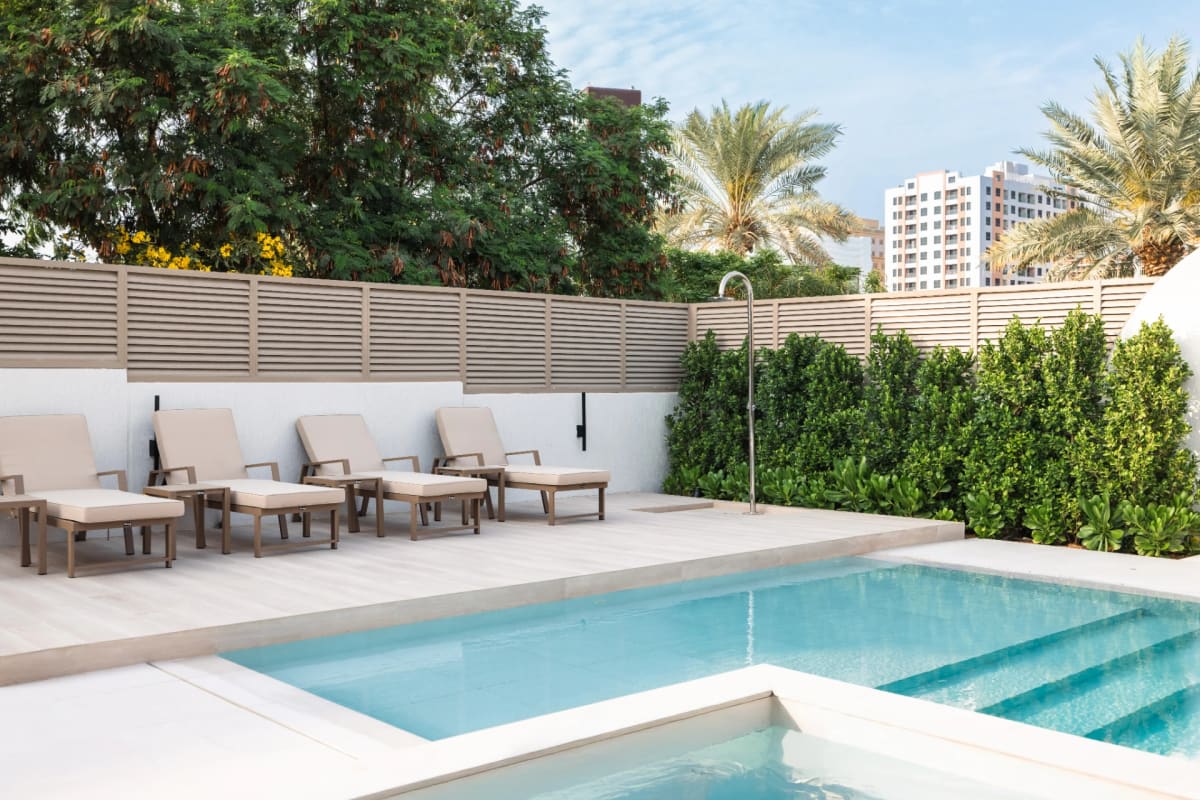
Well-designed garden borders and planting beds provide structure, definition, and visual rhythm within a landscape. They help separate planting from paving, lawns, pathways, pools, and architectural elements while creating opportunities to introduce colour, texture, and seasonal interest.
Garden Border Design Dubai requires more than selecting attractive plants. In contemporary Dubai landscapes, successful borders should respond to the villa's architecture, available space, sunlight, irrigation, soil conditions, and overall landscape style. The result should feel intentional, balanced, and integrated with the surrounding environment.
Why Garden Borders Matter in Contemporary Landscapes
Garden borders act as a transition between different landscape elements. A carefully planned border can soften hard architectural lines while giving planting areas a clear visual boundary.
They can be used to:
- Frame pathways and entrances
- Define lawn areas
- Separate planting from paving
- Highlight architectural features
- Create privacy screens
- Introduce layered planting
- Connect different outdoor zones
- Add structure to large garden spaces
In contemporary gardens, borders are often more restrained than in traditional landscapes. Clean geometry, controlled planting, and consistent materials can create a sophisticated appearance without making the garden feel overly formal.
Planning Contemporary Garden Borders Dubai
A successful border starts with the relationship between the planting area and the surrounding landscape.
Consider the Garden's Geometry
Straight borders can reinforce modern architectural lines, while curved borders can soften courtyards and recreational areas. The shape should respond to existing structures rather than appearing randomly placed.
For contemporary villas, repeating lines or carefully proportioned planting beds can create visual continuity between the building and garden.
Define the Function
Before selecting plants or edging materials, establish what the border needs to achieve.
It might be designed to:
- Frame a building façade
- Guide movement along a pathway
- Screen an outdoor seating area
- Surround a pool
- Highlight a feature tree
- Create separation between active and quiet spaces
This functional approach helps prevent planting beds from becoming decorative elements without a clear purpose.
Planting Bed Design UAE: Structure and Layering
Planting bed design UAE should account for both visual composition and the conditions in which plants will grow.
A layered planting strategy can combine different heights and textures.
Background Layer
Taller shrubs, ornamental grasses, or carefully selected feature plants can establish the backdrop of a border.
Middle Layer
Medium-height shrubs and flowering plants can provide volume and visual transition.
Foreground Layer
Lower planting can soften the edge of pathways, paving, or lawn areas.
This layered approach creates depth while avoiding a flat row of plants.
Plant selection should also consider mature size. Plants that appear appropriately spaced when newly installed can become overcrowded as they develop.
Modern Garden Edging Dubai
Edging provides a physical and visual transition between planting and adjacent surfaces. Modern garden edging Dubai projects can use different materials depending on the desired architectural character.
Potential options include:
- Natural stone
- Concrete
- Metal edging
- Brick or pavers
- Timber-look materials
- Raised masonry beds
A contemporary landscape may use a simple linear edge to create a sharp transition between planting and paving. Alternatively, a slightly raised border can add depth and create a more defined garden composition.
The choice should complement existing materials rather than introduce unnecessary visual variation.
Villa Planting Bed Ideas UAE
For villa landscapes, planting beds can be designed around the way residents use outdoor spaces.
Entrance Gardens
Borders along villa entrances can create a welcoming transition from driveway or pathway to the building. Repeated planting forms can reinforce the architectural geometry.
Poolside Planting
Pool borders need careful plant selection to avoid excessive leaf litter and unwanted growth near water features. Low, controlled planting can frame the pool while maintaining clean sightlines.
Outdoor Living Areas
Planting beds around lounges and dining areas can provide privacy and soften hardscape. Layered vegetation can create a sense of enclosure without relying entirely on walls.
Boundary Planting
Wider borders along property boundaries can combine screening plants with ornamental layers. This can create a greener visual edge while supporting privacy.
Integrating Landscape Planting Borders Dubai With Hardscape
Landscape planting borders Dubai should be planned alongside paths, terraces, walls, outdoor kitchens, and other hardscape features.
A successful transition considers:
- Border width
- Edge material
- Drainage
- Irrigation
- Pedestrian movement
- Plant maturity
- Maintenance access
For example, a narrow planting strip beside a pathway needs a different planting strategy from a deep border surrounding a large lawn.
The relationship between planting and hardscape is particularly important in Contemporary Landscape Design Dubai, where clean transitions and controlled material palettes are central to the visual composition.
A Step-by-Step Garden Border Design Framework
Step 1: Study the Site
Assess sunlight, existing vegetation, drainage, soil conditions, circulation routes, and architectural features.
Step 2: Establish the Border Geometry
Determine whether straight, curved, raised, or mixed border forms are appropriate for the property.
Step 3: Define the Planting Structure
Organise plants into background, middle, and foreground layers according to their mature characteristics.
Step 4: Select the Edge Treatment
Choose edging that complements the villa architecture and surrounding hardscape.
Step 5: Coordinate Irrigation
Ensure irrigation reaches planting areas effectively without creating unnecessary wet zones around paths or structures.
Step 6: Review Long-Term Maintenance
Consider pruning, replacement, access, seasonal changes, and plant growth before finalising the design.
This structured process helps create borders that remain visually coherent as the landscape matures.
Common Garden Border Challenges and Solutions
Borders Look Too Busy
Using too many plant varieties or edging materials can create visual clutter.
Solution: Limit the material palette and repeat selected plant forms throughout the garden.
Plants Outgrow Their Beds
Incorrectly sized plants can quickly make narrow borders feel overcrowded.
Solution: Select plants according to mature dimensions rather than their initial nursery size.
Edges Become Untidy
Poorly defined transitions can make otherwise attractive planting appear unfinished.
Solution: Use a clearly defined edge and maintain a consistent relationship between planting and adjacent surfaces.
Irrigation Affects Hardscape
Poorly positioned irrigation can lead to water reaching pathways or paved areas.
Solution: Coordinate irrigation layouts with the final planting-bed geometry and edging.
Best Practices for Contemporary Garden Borders
For a refined result, consider these principles:
- Match border geometry to the villa's architecture.
- Use repetition to create visual continuity.
- Select plants according to mature size and environmental conditions.
- Keep material transitions clean and deliberate.
- Combine different plant heights for depth.
- Maintain clear access around planting beds.
- Coordinate irrigation and drainage early.
- Consider how the garden will look throughout the year.
A broader Villa Landscape Design UAE strategy can help coordinate garden borders with pools, outdoor living areas, planting, lighting, and architectural features.
For gardens that incorporate natural materials, Natural Stone Landscaping Dubai can provide additional inspiration for edging, retaining elements, pathways, and feature areas.
Frequently Asked Questions
What is garden border design?
Garden border design is the planning of planting areas and their edges to create defined transitions between vegetation and other landscape elements such as lawns, paths, paving, and buildings.
What materials can be used for modern garden edging?
Natural stone, concrete, metal, pavers, and masonry are among the options that can create defined contemporary garden edges.
How wide should a planting bed be?
There is no single ideal width. The appropriate size depends on plant selection, mature growth, access requirements, irrigation, and the scale of the surrounding landscape.
How can planting beds look more contemporary?
Simple geometry, controlled plant palettes, repeated forms, clean edging, and coordinated materials can contribute to a contemporary appearance.
How can garden borders work in Dubai's climate?
Plant selection should reflect site-specific sunlight, heat, irrigation, soil, and maintenance conditions. Plants should be chosen for their suitability to the intended location rather than solely for appearance.
Should garden borders match the villa?
They do not need to match the building exactly, but their geometry, materials, colours, and planting character should complement the architectural design.