
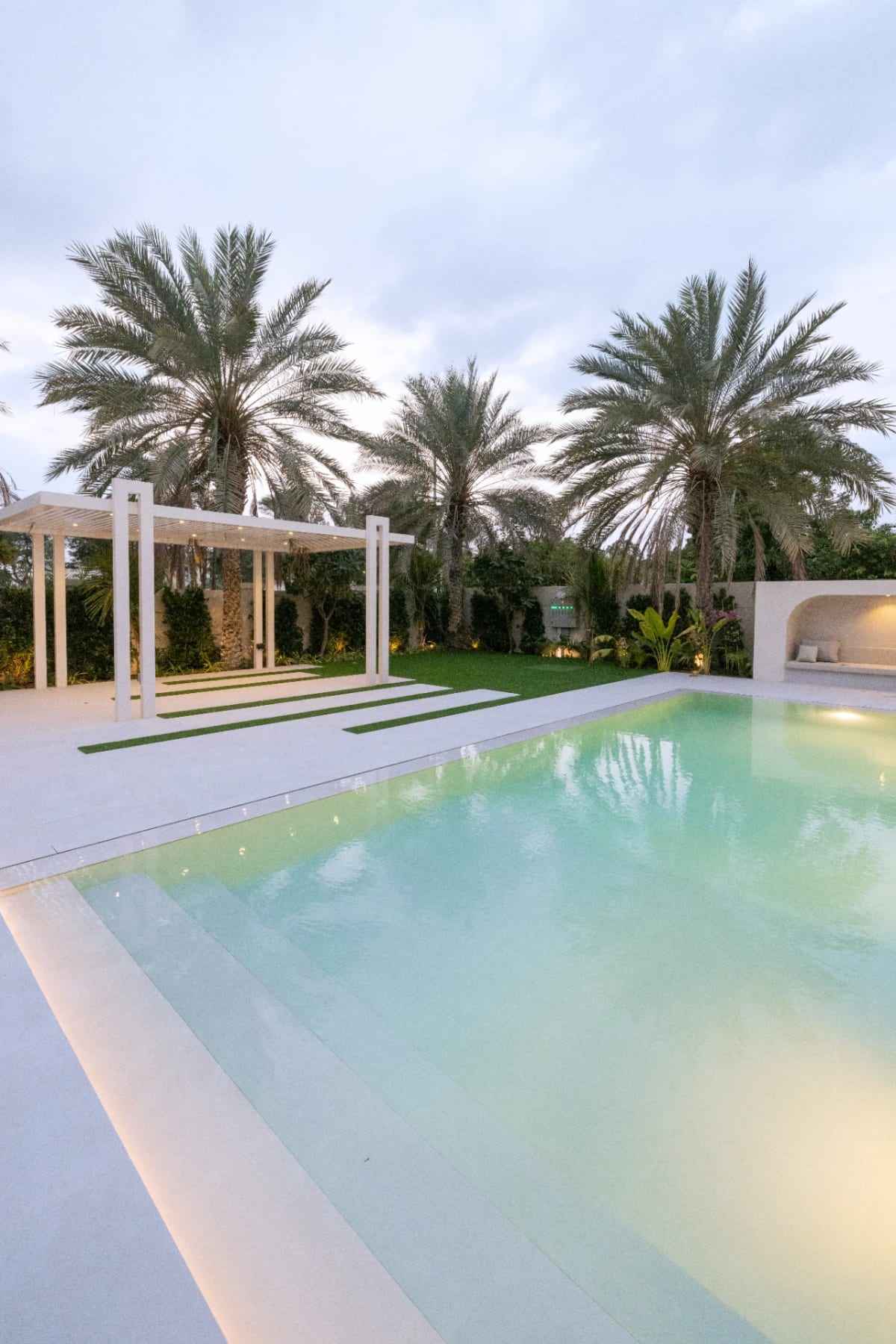
In the UAE’s extreme climate, villa landscaping requires more than visual appeal—it demands ecological intelligence, water efficiency, and long-term resilience. This is where Native plant villa landscaping becomes a strategic approach rather than a design trend.
With increasing emphasis on sustainability and reduced water consumption across Dubai, Abu Dhabi, and the wider region, native and adaptive planting is reshaping how outdoor villa environments are designed. It blends aesthetics with practicality, creating landscapes that thrive in arid conditions while maintaining a refined, luxury feel.
This guide explores how native plant systems are being used in modern villa landscaping across the UAE in 2026, along with design principles, implementation frameworks, and professional best practices.
Understanding Native Plant Villa Landscaping in the UAE Context
What It Means in Practice
Native plant villa landscaping refers to the use of plant species naturally adapted to the UAE’s desert climate or similar arid ecosystems. These plants typically require:
- Minimal irrigation once established
- High tolerance to heat and salinity
- Lower maintenance compared to imported ornamental species
Unlike conventional villa gardens that rely heavily on high-water turf and exotic plants, native planting prioritizes ecological balance and sustainability.
Why It Matters in the UAE?
The UAE’s climate conditions make traditional landscaping resource-intensive. Native planting helps address:
- Water scarcity concerns
- Heat stress on vegetation
- Soil salinity challenges
- Long-term maintenance costs for large villas
This shift aligns strongly with national sustainability goals and evolving design standards in high-end residential developments.
Key Principles of Sustainable Native Landscaping
1. Climate-Responsive Plant Selection
A successful design begins with selecting species that naturally thrive in arid environments. This includes drought-tolerant shrubs, desert grasses, and salt-resistant groundcovers.
Common principles include:
- Prioritizing survival in extreme heat
- Reducing irrigation dependency
- Supporting local biodiversity
This aligns closely with Native plant landscaping UAE villas as a core design strategy for modern residential projects.
2. Water-Efficient Irrigation Design
Even native landscapes require initial irrigation planning. The goal is to minimize water waste through:
- Drip irrigation systems
- Zoned watering strategies
- Soil moisture monitoring
- Smart irrigation controllers
Over time, irrigation demand significantly decreases as plant systems establish themselves.
3. Soil Preparation and Microclimate Design
Soil quality in many UAE developments requires enhancement before planting. Professional landscape design typically includes:
- Organic soil conditioning
- Sand and compost blending for structure
- Windbreak planning using hardy shrubs or hardscape elements
Microclimate creation—such as shaded courtyards and wind-buffered garden zones—also improves plant survival and comfort in outdoor villa spaces.
Design Framework for Villa Landscaping Projects
Step 1: Site Analysis and Environmental Mapping
Before design begins, professionals assess:
- Sun exposure patterns
- Wind direction and intensity
- Soil composition and drainage
- Existing hardscape integration
This ensures plant selection and layout decisions are based on real environmental conditions.
Step 2: Zoning the Landscape
Villa landscapes are typically divided into functional zones:
- Arrival and frontage areas (visual impact zones)
- Private garden spaces (comfort zones)
- Service and utility areas (low-maintenance zones)
- Outdoor entertainment spaces
Each zone uses different planting densities and species types.
Step 3: Plant Palette Development
A curated plant palette is essential. In Indigenous plant garden design UAE, designers typically combine:
- Structural native shrubs for form
- Groundcovers for soil protection
- Accent plants for seasonal variation
- Shade-providing trees for usability
The result is a layered ecosystem rather than a decorative arrangement.
Step 4: Hardscape Integration
Native planting works best when integrated with architectural landscape features such as:
- Stone pathways
- Shaded pergolas
- Water-efficient courtyards
- Natural rock formations
This balance ensures the landscape remains functional, usable, and visually cohesive.
Best Practices for Sustainable Villa Landscaping in Dubai
Prioritize Low-Water Ecosystems
One of the most important principles in Sustainable villa landscaping Dubai is reducing reliance on irrigation-heavy planting systems. This is achieved through:
- Xeriscaping techniques
- Native species clustering
- Mulching to retain soil moisture
Design for Long-Term Growth, Not Instant Impact
Unlike imported landscaping styles that aim for immediate visual density, native systems evolve over time. Designers should:
- Allow for seasonal growth cycles
- Plan for plant maturity spread
- Avoid overcrowding at installation stage
Integrate Biodiversity Support
Native villa landscapes can support:
- Pollinators such as bees and butterflies
- Local bird species
- Soil microorganisms
This creates a self-sustaining ecological system that improves over time.
Common Challenges and Professional Solutions
Challenge 1: Client Expectation of Instant Greenery
Solution: Use layered planting and temporary transitional species during establishment phases.
Challenge 2: Heat Stress During Establishment
Solution: Provide temporary shading and optimize irrigation schedules during the first growth cycle.
Challenge 3: Soil Limitations in New Developments
Solution: Apply engineered soil systems tailored for drainage and root development.
Challenge 4: Maintenance Misalignment
Solution: Train villa maintenance teams on native plant care cycles and reduced watering regimes.
Service Integration in Landscape Projects
Professional execution often requires coordination across multiple disciplines, including:
- Villa landscaping design and build services UAE – full lifecycle project delivery from concept to execution
- Outdoor landscape architecture planning – spatial and ecological master planning for large villas
- Hardscape and irrigation system installation – engineering integration for long-term sustainability
These services ensure that native planting systems are implemented correctly and perform as intended over time.
FAQ
1. Are native plants suitable for luxury villas in the UAE?
Yes. When designed properly, native plants can create highly refined, modern landscapes that align with luxury aesthetics while remaining sustainable.
2. Do native plant landscapes require irrigation?
They require irrigation during establishment, but demand significantly decreases once plants are established.
3. How long does it take for a native villa landscape to mature?
Typically, native landscapes stabilize within 6–18 months depending on plant selection and soil conditions.
4. Can native landscaping still look modern and architectural?
Yes. With structured design and hardscape integration, native planting can achieve highly contemporary aesthetics.
5. Is native landscaping more cost-efficient in the long term?
Yes, due to reduced water consumption and lower maintenance requirements.
6. What is the difference between xeriscaping and native landscaping?
Xeriscaping focuses on water efficiency broadly, while native landscaping specifically uses locally adapted plant species.
The evolution of villa landscaping in the UAE is moving toward ecological intelligence, where design decisions are guided by climate, sustainability, and long-term performance. Native plant villa landscaping is not just an aesthetic direction—it is a strategic response to environmental conditions and resource efficiency requirements in the region.
For villa owners, developers, and decision-makers, adopting this approach ensures landscapes that are both visually compelling and environmentally responsible.
To explore how native planting strategies can be integrated into your villa development, consider reviewing advanced design approaches and consulting with specialists in sustainable landscape systems