
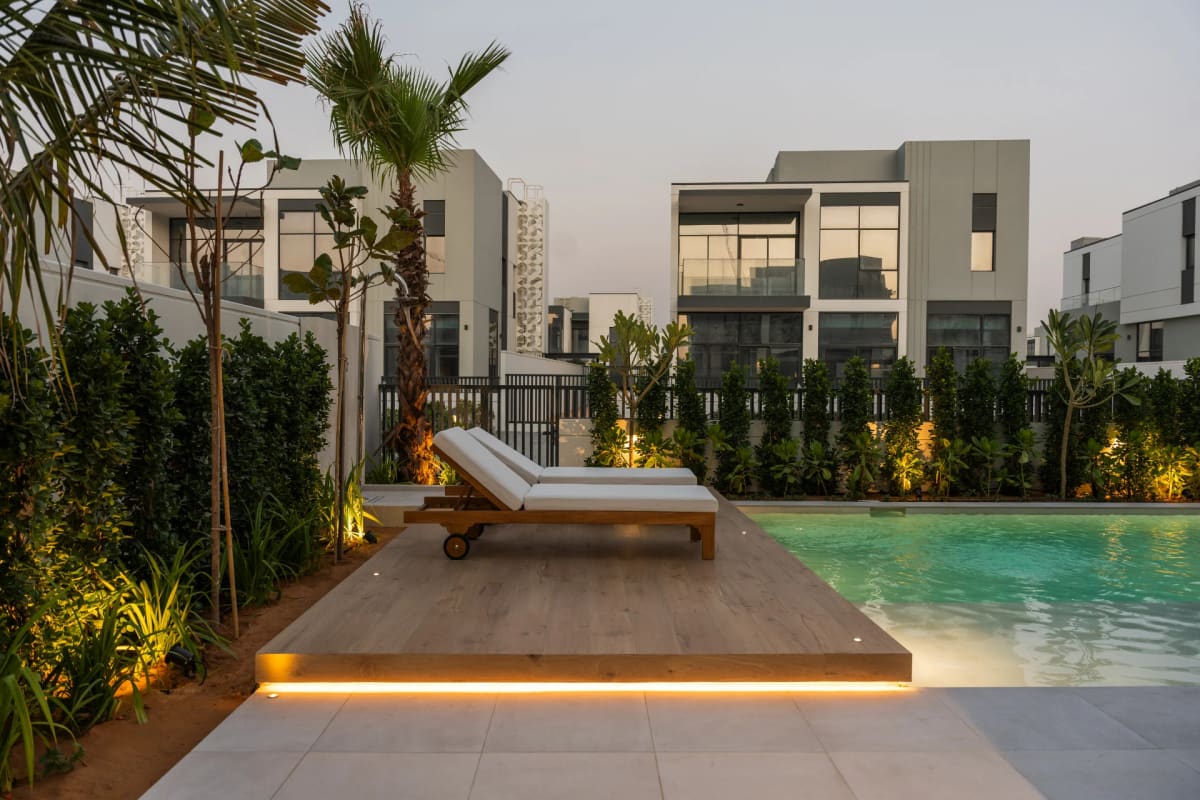
Across Dubai, Abu Dhabi, and the wider Emirates, residential outdoor areas are increasingly designed with a focus on health, comfort, and long-term lifestyle value. The concept of Outdoor wellness spaces UAE reflects this shift toward landscapes that support relaxation, mindfulness, and daily living experiences that extend beyond indoor environments.
Rather than being purely decorative, outdoor spaces are now being shaped as functional environments that improve well-being, encourage outdoor living, and create a stronger connection with nature.
Understanding Outdoor Wellness Spaces
Outdoor wellness spaces are intentionally designed landscape environments that support physical relaxation, mental clarity, and emotional balance. These spaces go beyond traditional gardens by integrating nature, comfort, and usability into a single cohesive experience.
Common components include:
- Shaded seating areas
- Meditation zones
- Water features
- Walking paths
- Sensory planting
- Outdoor lounges
This shift aligns closely with modern expectations of residential landscape wellness design, where outdoor areas are treated as an extension of daily living space rather than separate garden zones.
Why Wellness-Oriented Landscapes Are Growing in the UAE?
The UAE’s climate and urban lifestyle have encouraged homeowners and developers to rethink how outdoor spaces are used. As a result, demand for wellness-driven landscapes has increased significantly.
Key drivers include:
- A stronger focus on mental well-being and lifestyle balance
- The rise of private outdoor living in villas and residential communities
- Demand for multifunctional and flexible outdoor environments
- Increased interest in sustainable and climate-responsive design
- Growing awareness of nature-based design principles
These factors are shaping the development of more intentional wellness-focused outdoor living spaces across high-end residential projects.
Core Elements of Residential Wellness Landscapes
Creating effective wellness landscapes requires a careful balance of aesthetics, comfort, and environmental performance.
1. Natural Planting and Green Integration
Plant selection plays a critical role in shaping atmosphere and comfort. Thoughtful greenery provides shade, reduces heat, and enhances visual calmness.
Designers often draw inspiration from native plants for UAE landscaping to ensure resilience and reduced maintenance requirements in local climate conditions.
2. Shade and Climate Comfort
Due to high temperatures in the UAE, shaded environments are essential for usability.
Key strategies include:
- Pergolas and pergola structures
- Mature tree planting
- Fabric shade systems
- Green walls and vertical gardens
These elements ensure outdoor areas remain functional throughout the year.
3. Water as a Sensory Element
Water introduces movement, sound, and cooling effects, all of which enhance relaxation. Features such as fountains, reflecting pools, and water walls are commonly used in wellness-focused designs.
Water integration is often part of broader therapeutic garden design UAE concepts that prioritize sensory engagement and emotional calmness.
The Role of Biophilic Design in Residential Landscapes
Biophilic design is a foundational approach in modern landscape architecture. It focuses on connecting people with nature through thoughtful spatial and material choices.
What Biophilic Design Means in Practice
At its core, biophilic design integrates natural systems into built environments. This includes light, vegetation, textures, and organic forms.
The approach is strongly aligned with biophilic design principles for outdoor spaces, which guide how nature is introduced into residential environments in a structured and meaningful way.
Key Features of Biophilic Landscapes
- Natural daylight and shade variation
- Organic materials such as stone and wood
- Layered planting structures
- Visual and physical connection to greenery
- Seasonal variation in plant selection
These elements create environments that feel calm, balanced, and immersive.
Designing a Functional Wellness Landscape Framework
A well-structured design process ensures that outdoor spaces are both practical and visually cohesive.
Step 1: Lifestyle and Usage Planning
The design process begins by identifying how the space will be used:
- Relaxation and quiet retreat
- Social gatherings
- Outdoor dining
- Fitness or yoga activities
This step defines the foundation of the layout.
Step 2: Spatial Zoning
Outdoor areas are divided into functional zones such as:
- Private relaxation areas
- Social entertainment zones
- Green and planting spaces
- Activity-focused areas
This improves usability and flow across the landscape.
Step 3: Climate-Responsive Material Selection
Materials must withstand heat, humidity, and seasonal variations. Durable surfaces and heat-resistant finishes ensure long-term performance.
These strategies align with sustainable landscape solutions in the UAE, which emphasize efficiency and environmental responsibility.
Step 4: Sensory Landscape Design
Wellness landscapes engage multiple senses through:
- Fragrant plants
- Textured surfaces
- Flowing water
- Natural sounds
- Ambient lighting
This creates a more immersive outdoor experience.
Common Challenges and Professional Solutions
Heat and Outdoor Usability
High temperatures can limit outdoor activity.
Solution: Strategic shading, planting, and cooling features help maintain comfort throughout the year.
Water Efficiency
Maintaining greenery in arid climates requires careful planning.
Solution: Efficient irrigation systems and drought-tolerant planting strategies reduce water consumption while maintaining visual quality.
Limited Outdoor Space
Many urban villas have compact gardens.
Solution: Vertical planting systems and multifunctional layouts help maximize available space without compromising design quality.
Balancing Function and Aesthetics
Outdoor areas must be both usable and visually appealing.
Solution: Integrated planning ensures harmony between design structure and lifestyle needs, often supported through residential landscape design services.
Best Practices for Wellness-Focused Outdoor Spaces
Successful projects in the UAE often follow these principles:
- Design around real lifestyle needs
- Prioritize shade and cooling strategies
- Use native and climate-adapted planting
- Incorporate layered sensory experiences
- Maintain strong indoor-outdoor connectivity
- Ensure long-term environmental efficiency
For larger residential projects, expertise in luxury villa landscaping in Dubai and Abu Dhabi is often essential to achieve a cohesive and high-performing outdoor environment.
Future Direction of Outdoor Wellness Design in the UAE
The future of residential landscaping is increasingly centered around well-being and sustainability. Outdoor environments are evolving into essential living spaces rather than secondary garden areas.
Emerging trends include:
- Outdoor meditation and yoga decks
- Smart irrigation and landscape automation
- Edible gardens and sustainable planting systems
- Multi-use outdoor living environments
- Enhanced integration of natural and built elements
These developments reinforce the growing importance of wellness-driven design across residential communities in the UAE.
Frequently Asked Questions
What are outdoor wellness spaces?
They are landscaped environments designed to support relaxation, mental well-being, and outdoor living experiences.
Why are wellness landscapes important in the UAE?
They improve comfort, support lifestyle balance, and make outdoor spaces usable despite the region’s climate.
What features are included in wellness-focused gardens?
Common features include shaded seating, water elements, sensory planting, and relaxation zones.
How does biophilic design influence residential landscapes?
It integrates natural elements into built environments to improve well-being and strengthen human-nature connections.
Can small outdoor areas become wellness spaces?
Yes, through smart zoning, vertical planting, and multifunctional design approaches.
What makes a landscape sustainable in the UAE?
Efficient irrigation, native planting, and climate-responsive materials contribute to long-term sustainability.
Well-designed outdoor environments are becoming a core part of modern residential living in the UAE. By combining functionality, comfort, and natural integration, Outdoor wellness spaces UAE offer meaningful improvements to everyday lifestyle quality.
As demand continues to grow, thoughtful planning and design expertise remain essential to creating landscapes that are both sustainable and restorative.