
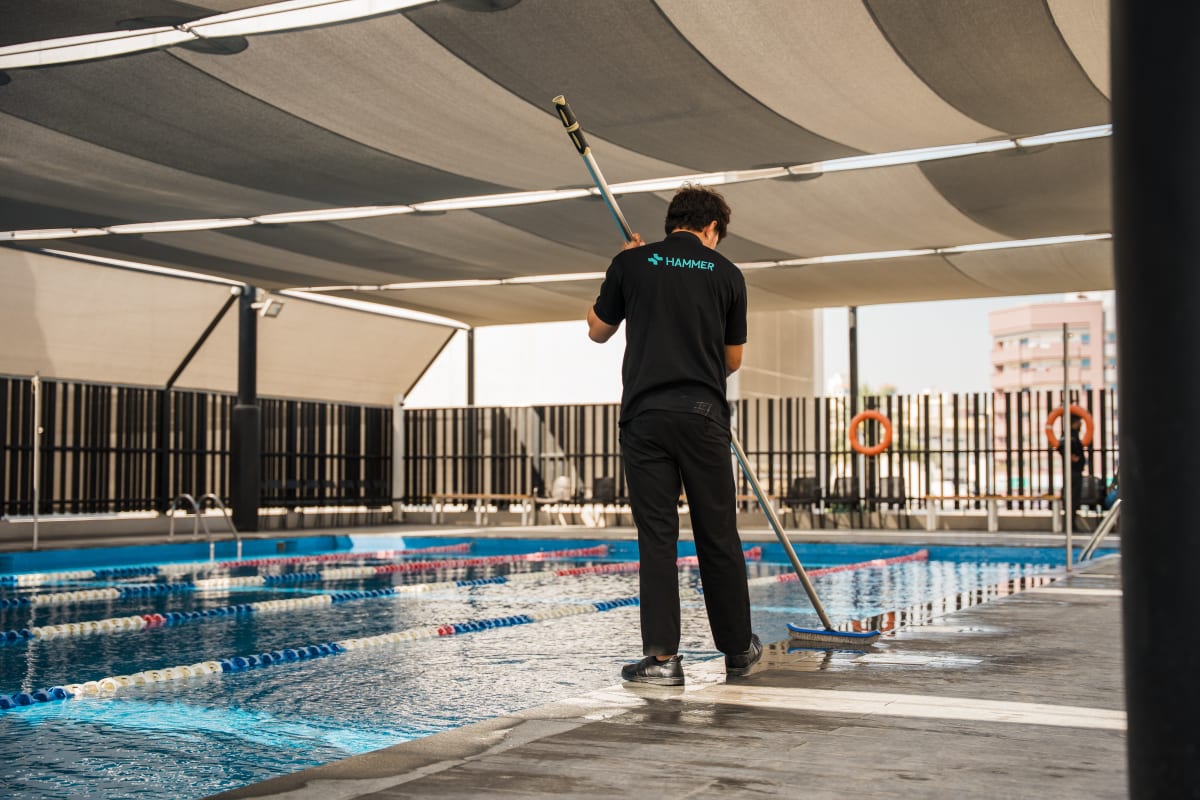
Most building failures announce themselves quietly long before they become emergencies: a chiller drawing slightly more current, a condensate tray that never quite dries, a fire door that needs an extra push to latch. Planned preventive maintenance in the UAE is the discipline of catching those signals on schedule rather than by complaint, and in a climate that runs cooling plant hard for most of the year, it separates a building that performs from one that lurches between callouts. For facility managers who want to dubai-it, the ambition is not a thicker maintenance binder but a building that quietly outperforms its neighbours on comfort, compliance and reliability.
What Planned Preventive Maintenance Means
Planned preventive maintenance (PPM) is a structured programme of inspections, servicing and minor replacements carried out at set intervals or trigger points, before a component fails. It sits between two other approaches: reactive maintenance, where work starts only after something breaks, and predictive maintenance, where sensor data and trend analysis decide when to intervene. A mature commercial programme usually blends all three, but PPM is the backbone that gives the others structure.
In a commercial building, the scope starts with hard services: heating, ventilation and air conditioning (HVAC); mechanical, electrical, and plumbing (MEP) systems; fire and life-safety equipment; lifts; generators; and water systems. It also reaches the building fabric, including roofs, façades, sealants and doors, and the fit-out itself. Integrated facility management services typically combine this planned work with reactive response and soft services under one contract, so every task is linked to a specific asset, a defined method, a responsible technician and a record of what was found.
What UAE Buildings Ask of a Maintenance Plan
Commercial buildings across Dubai and Abu Dhabi operate in conditions that shorten the life of almost everything mechanical. Cooling plant runs under heavy load through the long summer, coastal humidity drives condensation inside ductwork and ceiling voids, and fine dust works its way into filters, coils and moving parts. Reactive buildings here tend to fail during peak heat, exactly when occupants notice most.
Expectations are also high. Grade A offices, hospitality venues and retail destinations compete on presentation, and tenants judge a building by its lobby temperature, its lift reliability and the condition of its washrooms. Well-documented maintenance also supports tenant retention and a stronger position when an asset is valued or sold. Statutory obligations, including civil defence certification for fire systems and Legionella risk management for water systems, add a compliance layer that only a planned programme can track reliably. You can see how scheduled inspections are structured on a live site in one of our preventive maintenance programmes.
Planned Preventive Maintenance Solutions for UAE Commercial Buildings
Build Everything Around a Criticality-Ranked Asset Register
A PPM plan is only as good as the list it works from. Start with a complete asset register: every air handling unit (AHU), fan coil unit (FCU), pump, panel, fire damper and water tank, tagged and located. Then rank each asset by criticality, asking what happens to occupants, safety and operations if it fails. A chiller serving an entire tower and a single washroom extract fan should never sit in the same priority band, and the register should make that obvious at a glance.
Schedule Around the UAE Year, Not a Generic Calendar
In the UAE, the heaviest servicing of cooling plant belongs before peak summer, when coils, belts, refrigerant charge and controls can be checked while load is still moderate. Filter inspections should tighten after sandstorms and during dusty spells, and cooling tower water treatment needs closer attention in the hottest part of the year.
Combine Time-Based Tasks With Condition Monitoring
Fixed intervals are a sensible starting point, but on their own they can over-service some assets and neglect others. Pairing scheduled tasks with condition data, such as vibration readings on pumps, thermal imaging of electrical panels and trend logs from the building management system (BMS), lets the team adjust frequencies based on evidence.
Fold Fit-Out and Interior Elements Into the Plan
Maintenance plans often stop at the plant room, yet occupants experience a building through its interiors. Door closers, ironmongery, joinery hinges and runners, ceiling tiles, sealant joints and floor finishes all degrade under constant air conditioning and heavy footfall. Including these items in the register, with simple inspection checklists, prevents the slow decline that makes a well-built office feel tired. Where a space was delivered through an integrated interior design and build process, the as-built drawings and material specifications give the maintenance team a ready reference for like-for-like repairs.
Run Statutory Compliance as a Visible Workstream
Fire alarm testing, sprinkler and hose reel inspections, emergency lighting checks, lift certification and water hygiene sampling all carry regulatory weight. Rather than burying these among routine tasks, many facility managers run them as a separate, clearly reported workstream with its own register of certificate renewals. Nothing then lapses because a routine task was deferred.
Close the Loop With CAFM Reporting
A computer-aided facility management (CAFM) system turns a schedule into accountability. Every work order is raised, assigned, completed and signed off with photos and readings, and the data builds into a history for each asset. Regular dashboards showing completion rates, overdue tasks and repeat faults let facility managers spot weak assets and support replacement decisions with evidence rather than instinct.
A Practical Framework for Rolling Out a PPM Programme
A PPM programme works best treated as a project in its own right, and it sits naturally within wider commercial building asset lifecycle management, which governs when repair gives way to replacement.
- Discovery. Agree objectives with the owner or tenant: occupancy patterns, critical operations, compliance obligations, service expectations and any history of recurring faults.
- Survey. Walk the building end to end, tag and photograph assets, record nameplate data and assess current condition.
- Design. Build the maintenance schedule: task lists per asset type, frequencies based on manufacturer guidance and site conditions, criticality bands, and response priorities for reactive work.
- Materials. Define the critical spares and consumables to hold on site, such as filters, belts, fuses and seals, and confirm specifications so replacements match the original installation.
- Fabrication. Build the digital framework in the CAFM system: asset hierarchy, task libraries, digital checklists, reporting templates and escalation rules.
- Installation. Mobilise the technical team, brief technicians on site-specific risks and access protocols, and begin the first full cycle of planned work alongside a baseline condition report.
- Handover. Move into steady-state operation with agreed reporting, regular review meetings and a process for adjusting frequencies as condition data accumulates.
Best Practices
- Keep the asset register live, updating it whenever equipment is added, moved or replaced.
- Write task checklists in plain language with clear pass and fail criteria.
- Require photos and readings on completion, not just a tick.
- Review repeat faults as a pattern rather than as isolated tickets.
- Agree planned shutdowns with tenants before the work is scheduled.
- Hold specifications for finishes and fittings so repairs match the original fit-out.
Common Challenges and Solutions
Incomplete or missing as-built records.
Treat the initial survey as a data-capture exercise, rebuild the asset register from site, and retrieve manufacturer manuals wherever possible.
Condensation and humidity damage in ceiling voids and ductwork.
Add insulation checks, drain pan cleaning and condensate line flushing to HVAC tasks, and inspect ceiling tiles around FCUs for early staining.
Dust and sand loading on filters and outdoor units.
Change filters on condition, measured by pressure drop across the filter bank, and schedule additional coil cleaning after sandstorms.
Constant air conditioning load wearing out equipment.
Rotate duty and standby equipment where installed, monitor run hours through the BMS, and complete major servicing ahead of peak demand.
Frequently Asked Questions
What is the difference between PPM and reactive maintenance? PPM is scheduled work designed to prevent failures, while reactive maintenance responds to breakdowns after they happen. A healthy programme keeps reactive work to a small, manageable share.
Which assets should a commercial PPM plan prioritise? Life-safety systems, cooling plant, electrical distribution, lifts and water systems usually rank highest, because their failure affects safety, compliance or the whole building.
How are maintenance frequencies decided? They start from manufacturer recommendations and statutory requirements, then adjust according to site conditions, criticality and the condition data the team collects.
Should interiors and joinery be part of a maintenance plan? They should. Doors, hardware, finishes and built-in joinery wear under constant air conditioning and daily use, and planned inspection keeps them looking and working as intended.
Can an existing building switch from reactive to planned maintenance? It can. The transition begins with a thorough survey and asset register, after which planned tasks progressively replace callouts as the programme beds in.
The Quiet Work That Keeps a Building Open
The best-run commercial buildings in the UAE are seldom the newest. They are the ones where someone knows the condition of every critical asset and acts before occupants sense a problem. Planned preventive maintenance in the UAE repays that attention generously, because heat, humidity and dust punish anything left to chance. If you are reviewing how your building is maintained, or taking on a newly completed property, Hammer Group can survey the site, build the asset register and run a programme that keeps comfort, compliance and condition exactly where they should be.