
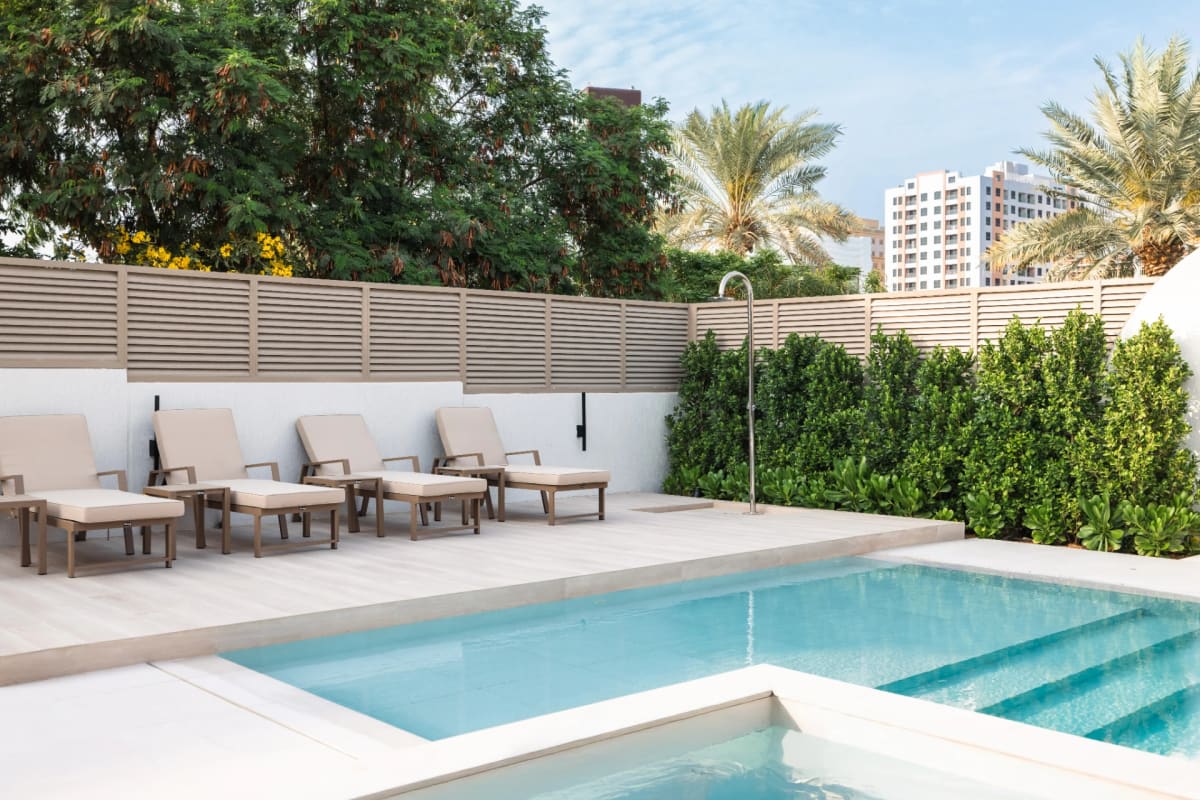
Designing outdoor spaces in the UAE requires more than aesthetics—it demands strategy, climate awareness, and long-term functionality. Seasonal landscape planning UAE is a critical approach that ensures outdoor environments remain usable, comfortable, and visually appealing throughout the year, despite extreme summer heat and mild winters.
For developers, commercial property owners, and villa clients, adopting a seasonal planning mindset leads to higher asset value, improved usability, and better sustainability outcomes.
Understanding Seasonal Landscape Planning in the UAE Context
The UAE’s climate is defined by:
- Intense summer heat
- Mild, pleasant winters
- Low rainfall and high evaporation rates
This creates a unique challenge: designing landscapes that perform well in both peak summer and cooler months.
Effective year-round outdoor design UAE balances:
- Shade and cooling strategies for summer
- Open, sun-friendly areas for winter
- Durable materials and plant selections that withstand seasonal extremes
Why Year-Round Outdoor Planning Matters
A well-planned outdoor space is not just seasonal—it’s adaptive.
Key Benefits:
- Maximized usability across all months
- Improved ROI for commercial and residential developments
- Enhanced user comfort and experience
- Reduced maintenance and water consumption
For deeper insights into integrated outdoor environments, consider linking to → year-round outdoor living design strategies
Core Principles of Climate-Responsive Landscaping
1. Zoning for Seasonal Use
Divide the landscape into functional zones based on seasonal comfort:
- Summer zones: Shaded seating areas Water features for cooling Dense planting for microclimate control
- Shaded seating areas
- Water features for cooling
- Dense planting for microclimate control
- Winter zones: Open terraces Sun-exposed seating Fire pits or gathering areas
- Open terraces
- Sun-exposed seating
- Fire pits or gathering areas
This dual-zoning approach is central to outdoor space planning for all seasons UAE.
2. Smart Shade and Sun Management
In the UAE, shade is not optional—it’s essential.
Best practices include:
- Pergolas with adjustable louvers
- Tensile fabric structures
- Strategic tree placement
- Covered walkways and transitional spaces
At the same time, ensure some areas remain open to sunlight during winter months.
3. Material Selection for Extreme Conditions
Materials must withstand:
- UV exposure
- Heat expansion
- Sand and dust
Recommended materials:
- Light-colored paving to reduce heat absorption
- Natural stone or high-performance composites
- Anti-slip finishes for safety
Durability is a cornerstone of climate-responsive landscaping UAE.
4. Planting Strategy for All Seasons
Plant selection is critical for both aesthetics and survival.
Key considerations:
- Native and drought-tolerant species
- Seasonal variation in color and texture
- Low water consumption
Examples include:
- Ghaf trees for shade
- Bougainvillea for color
- Desert grasses for texture
For more planting insights, link to → sustainable landscaping for UAE developments
5. Water Efficiency and Irrigation Design
Given water scarcity, efficient irrigation is essential.
Strategies include:
- Drip irrigation systems
- Smart controllers based on weather data
- Zoned irrigation for different plant types
This aligns with sustainable landscape design UAE climate principles.
Step-by-Step Framework for Seasonal Landscape Planning
Step 1: Site Analysis
- Assess sun movement and wind patterns
- Identify heat zones and shaded areas
- Evaluate soil and drainage conditions
Step 2: Define Usage Goals
- Residential vs commercial needs
- Daytime vs evening usage
- Seasonal priorities (summer vs winter focus)
Step 3: Concept Design Development
- Create flexible outdoor zones
- Integrate shading and cooling elements
- Plan circulation and accessibility
Step 4: Planting and Material Specification
- Select climate-appropriate plants
- Choose durable, low-maintenance materials
Step 5: Integration of Features
- Water features for cooling
- Outdoor lighting for evening usability
- Smart irrigation and automation systems
For a broader design approach, link to → climate-adaptive landscape solutions
Seasonal Design Strategies for UAE Villas and Commercial Spaces
Summer Optimization
- Maximize shade coverage
- Use misting systems or water features
- Incorporate heat-reflective materials
Winter Enhancement
- Open up shaded areas
- Add flexible seating arrangements
- Introduce warm lighting and social zones
These approaches are particularly relevant for UAE villa landscaping seasonal ideas, where outdoor living is a key lifestyle component.
Common Challenges and Professional Solutions
Challenge 1: Overheating Outdoor Spaces
Solution: Layered shading, vegetation, and reflective materials
Challenge 2: High Water Consumption
Solution: Native planting and smart irrigation systems
Challenge 3: Limited Year-Round Usability
Solution: Flexible zoning and adaptable features
Challenge 4: Maintenance Complexity
Solution: Simplified plant palettes and durable materials
Challenge 5: Poor Microclimate Design
Solution: Integrate wind flow, shade, and evapotranspiration strategies
For execution support, consider linking to → commercial landscaping design services UAE → landscape design and build services UAE
Best Practices for Long-Term Landscape Performance
- Design for adaptability, not fixed use
- Prioritize user comfort in every season
- Integrate technology (lighting, irrigation, automation)
- Use layered design (plants, structures, materials)
- Plan for scalability and future upgrades
Frequently Asked Questions
1. What is seasonal landscape planning in the UAE?
It is the process of designing outdoor spaces that remain functional and comfortable across all seasons, considering the UAE’s extreme summer and mild winter climate.
2. How can outdoor spaces be used during summer in the UAE?
Through shaded structures, cooling elements like water features, and heat-resistant materials that reduce surface temperatures.
3. What plants are best for year-round landscaping?
Native and drought-tolerant species such as Ghaf trees, desert grasses, and hardy flowering plants are ideal.
4. Is seasonal planning only for villas?
No, it is equally important for commercial developments, hospitality spaces, and public landscapes.
5. How does seasonal planning improve sustainability?
By reducing water usage, minimizing maintenance, and selecting climate-appropriate materials and plants.
6. Can existing landscapes be adapted for year-round use?
Yes, through retrofitting shade structures, updating irrigation systems, and modifying planting strategies.