
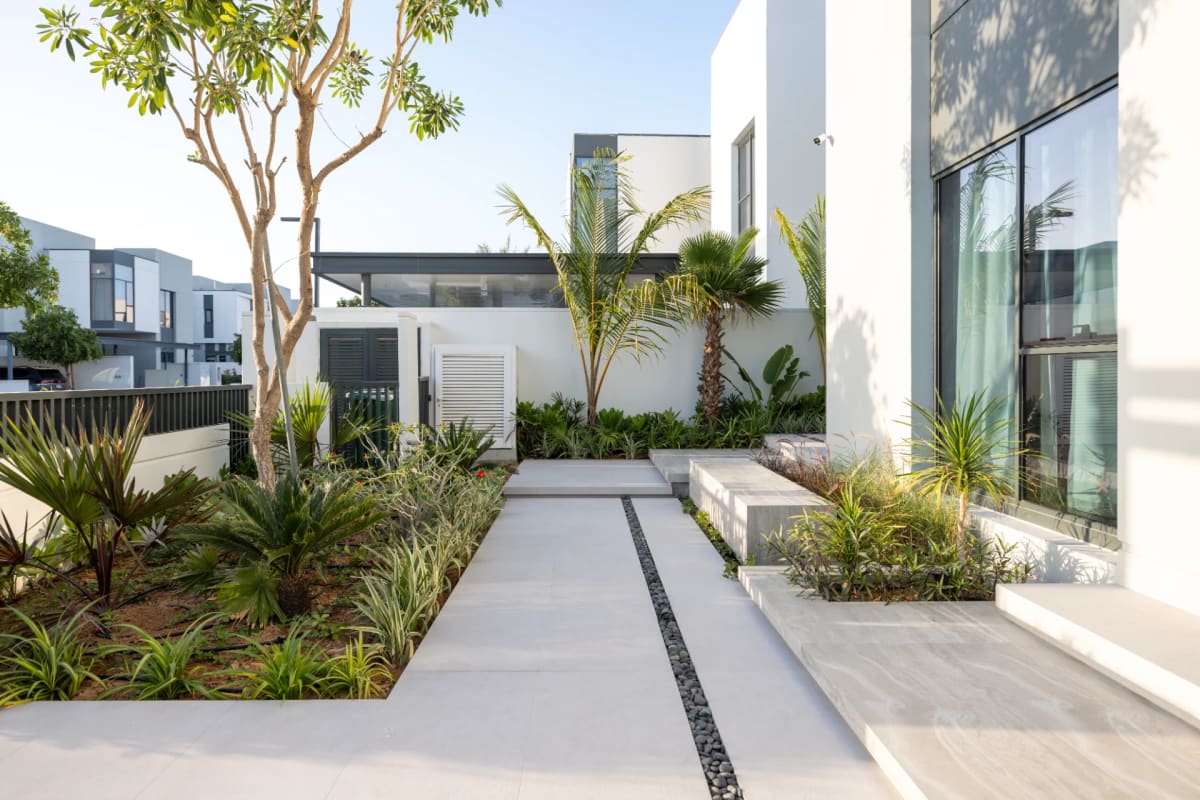
Sloping villa plots offer exciting opportunities to create distinctive outdoor environments with different levels, attractive views, and clearly defined spaces. While changes in ground elevation can present challenges, they can also introduce architectural interest and allow landscape designers to create gardens that feel more spacious, private, and connected to the surrounding property.
Sloping Villa Landscaping Dubai requires more than selecting plants and arranging outdoor features. It involves understanding the site's topography, managing drainage, ensuring structural stability, and designing safe connections between different levels. With the right approach, an uneven plot can become a functional and visually cohesive landscape that complements the villa's architecture and responds to the UAE climate.
Understanding Sloping and Multi-Level Villa Plots
A sloping plot has a natural or constructed difference in ground elevation, while a multi-level plot contains several distinct outdoor levels connected through steps, pathways, terraces, or retaining structures.
In Dubai, these conditions may occur in villas built on elevated plots, properties with stepped gardens, or developments where the outdoor ground level differs from the villa's entrance or surrounding boundaries.
Before developing a design, landscape professionals should assess:
- Topography: Existing ground levels, gradients, and elevation differences.
- Soil conditions: Soil stability, depth, and suitability for planting or construction.
- Drainage: Natural water flow and areas vulnerable to water accumulation.
- Access: Connections between the villa, garden levels, and outdoor facilities.
- Architecture: The relationship between the landscape, building proportions, and exterior materials.
Understanding these factors creates a reliable foundation for successful Sloped Garden Landscaping UAE projects.
1. Assess the Site and Identify Design Opportunities
The first stage is a detailed site assessment. A topographical survey helps establish the existing elevations and identify areas that may require grading, retaining structures, or drainage improvements.
Evaluate the Slope and Ground Conditions
Not every section of a sloping plot needs to be levelled. Some areas may be suitable for planting, while others could accommodate terraces, outdoor seating, or recreational facilities.
The assessment should identify:
- Steep sections that require stabilisation.
- Naturally level areas suitable for outdoor activities.
- Existing trees and vegetation worth retaining.
- Areas exposed to strong sunlight or wind.
- Potential routes for surface water.
Soil and drainage conditions are particularly important in the UAE. Although rainfall is relatively limited, occasional heavy showers can produce significant runoff on sloping surfaces. A landscape design should therefore manage water movement rather than simply redirecting it towards lower areas.
2. Divide the Garden into Functional Levels
One of the main advantages of Multi-Level Garden Design Dubai is the opportunity to create separate outdoor zones while maintaining a connection between them.
Each level can serve a particular purpose depending on its size, position, privacy, and relationship with the villa.
Lower-Level Outdoor Areas
Lower terraces may be suitable for social and recreational activities, including:
- Swimming pools and surrounding decks.
- Outdoor dining and entertainment areas.
- Family seating spaces.
- Lawn areas where ground conditions permit.
Upper-Level Gardens and Terraces
Higher levels can provide more private spaces and attractive views. They may include shaded lounges, decorative planting, pergolas, or quiet relaxation areas.
The key is to ensure that each level has a clear function and connects naturally with the others. Consistent materials, coordinated planting, and well-positioned pathways help prevent the garden from feeling fragmented.
3. Use Terracing to Create Usable Outdoor Spaces
Terracing is an effective solution for managing changes in ground elevation. It divides a continuous slope into a series of more manageable horizontal platforms, creating opportunities for different landscape features.
Design Terraces Around the Villa
Terrace layouts should complement the villa's architecture and outdoor access points. Contemporary properties may benefit from clean geometric platforms, while villas with softer architectural features may suit curved retaining walls and more organic planting arrangements.
Common terracing elements include:
- Retaining walls to support changes in elevation.
- Steps and pathways connecting separate levels.
- Raised planters that introduce greenery.
- Decking and paved platforms for outdoor activities.
- Integrated seating and shaded structures.
A successful Terraced Landscape Design Dubai project balances visual appeal with practical requirements. Terrace dimensions, circulation routes, and structural support must all be considered during the design stage.
4. Integrate Retaining Walls and Structural Features
Retaining walls are often essential in sloping landscapes. They hold soil in place, support level changes, and create stable platforms for planting and outdoor activities.
However, retaining walls should contribute to the overall design rather than appear as purely functional structures.
Choose Materials That Complement the Architecture
Material selection should reflect the villa's exterior finishes and the intended landscape style. Suitable options may include:
- Natural stone: Adds texture and a timeless appearance.
- Architectural concrete: Supports clean, contemporary forms.
- Textured render: Creates continuity with exterior walls.
- Decorative cladding: Introduces detail and visual interest.
Consider Structural Stability and Drainage
Retaining walls must be designed according to soil conditions, ground height, and structural requirements. Drainage behind the wall is particularly important because accumulated water can increase pressure and affect stability.
Professional Retaining Wall Landscape Design UAE should involve appropriate engineering input to ensure that the structures are suitable for the site.
5. Select Plants That Suit Sloping Gardens in Dubai
Planting softens hard landscape features, adds colour and texture, and helps connect different garden levels. On sloping plots, appropriate planting can also help protect exposed soil and reduce erosion.
In Dubai, plant selection should consider high temperatures, sunlight exposure, irrigation needs, and soil conditions.
Create a Layered Planting Scheme
A balanced planting strategy may include:
- Ground covers: Help protect soil and soften exposed slopes.
- Shrubs: Define garden boundaries and add structure.
- Trees: Provide shade and vertical interest where sufficient soil depth is available.
- Ornamental grasses: Introduce movement and texture.
- Native and drought-tolerant plants: Support water-conscious landscaping.
Planting should be grouped according to sunlight and irrigation requirements. Selecting climate-adapted species can help create a landscape that remains attractive while reducing unnecessary water consumption.
6. Connect Different Levels Through Safe Circulation
A multi-level garden should be comfortable and safe to navigate. Steps, pathways, ramps, and transitions must be carefully positioned to provide convenient access between outdoor areas.
Good circulation planning includes:
- Clearly defined staircases between frequently used levels.
- Suitable non-slip paving materials.
- Appropriate lighting around steps and changes in elevation.
- Ramps where accessibility requirements and site conditions allow.
- Direct routes between the villa and key outdoor facilities.
Lighting can also enhance the appearance of the landscape. Integrated step lights, low-level pathway fixtures, and subtle wall lighting improve visibility while highlighting the garden's architectural features.
7. Address Common Challenges in Sloping Landscapes
Sloping plots require careful coordination between landscape design, engineering, and construction. Common challenges should be considered early rather than addressed after the landscape has been installed.
| Challenge | Recommended solution |
|---|---|
| Soil erosion | Suitable ground covers and soil stabilisation |
| Water runoff | Planned surface gradients and drainage channels |
| Limited usable space | Terracing and multi-functional outdoor zones |
| Difficult access | Well-positioned steps and accessible pathways |
| Excessive heat | Shade structures and climate-adapted planting |
| Disconnected garden levels | Consistent materials, planting, and lighting |
Successful Luxury Villa Slope Landscaping combines these solutions into one coordinated design. The result should be both visually balanced and practical for everyday use.
8. Best Practices for a Cohesive Landscape
To achieve a unified result, landscape designers should consider the garden as an extension of the villa rather than a collection of separate outdoor features.
Important principles include:
- Maintain a consistent material palette: Repeat selected paving, stone, and finishes across different levels.
- Create visual connections: Use planting and lighting to link separate areas.
- Prioritise drainage: Direct water safely away from buildings and vulnerable landscape features.
- Balance hardscape and softscape: Combine structural elements with suitable greenery.
- Plan for maintenance: Choose durable materials and plants suited to the UAE climate.
- Coordinate technical disciplines: Align landscape, architectural, structural, and drainage requirements.
A dubai-it perspective on contemporary outdoor living can also encourage thoughtful integration of smart irrigation, outdoor lighting controls, and practical landscape technology.
Frequently Asked Questions
1. Can a sloping villa plot become a functional garden?
Yes. Terracing, retaining walls, planting, and carefully planned pathways can transform uneven ground into usable outdoor spaces.
2. What is the purpose of retaining walls?
Retaining walls support changes in ground elevation, help manage soil movement, and create level areas for planting and outdoor activities.
3. Which plants are suitable for sloping gardens in Dubai?
Climate-adapted ground covers, selected shrubs, ornamental grasses, and suitable trees can work well, depending on soil conditions, sunlight, and irrigation requirements.
4. How can drainage be managed on a sloping plot?
Drainage can be managed through appropriate surface gradients, channels, collection points, and drainage systems behind retaining walls.
5. Are multi-level gardens suitable for modern villas?
Yes. Geometric terraces, integrated steps, minimalist planting, natural stone, and coordinated lighting can complement contemporary villa architecture.
6. How can different garden levels look connected?
Consistent materials, repeated planting combinations, coordinated lighting, and clearly planned pathways help create a unified appearance.