
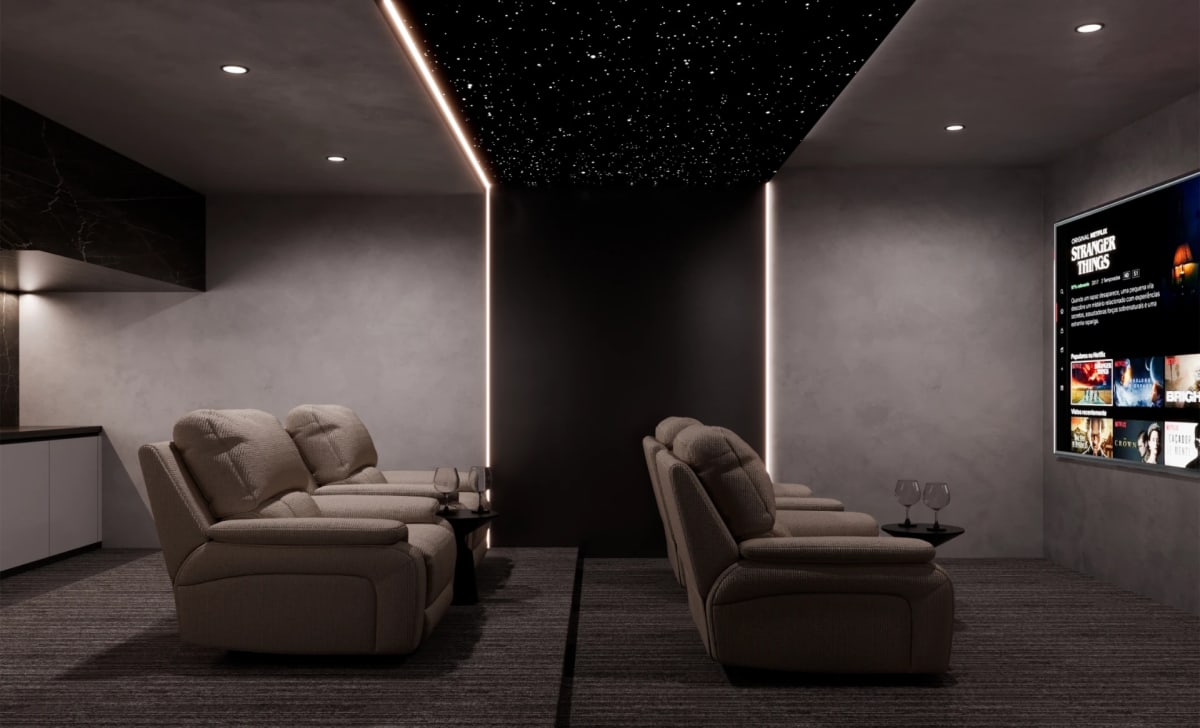
A private cinema can transform an underused room in a Dubai villa into a sophisticated entertainment space. The best Luxury Home Cinema Design Dubai projects go beyond installing a large screen and comfortable seats. They combine interior architecture, acoustics, lighting, technology, materials and spatial planning into one cohesive experience.
For villa owners considering a dedicated cinema, the objective should be to create a room that feels immersive, comfortable and visually connected to the wider character of the property. From contemporary minimalist interiors to richly detailed cinematic spaces, thoughtful design can make a private cinema a distinctive part of a luxury home.
What Defines a Luxury Villa Home Cinema?
Luxury cinema design starts with the room itself. Proportions, access, ceiling height and the relationship between the cinema and adjacent spaces all influence the final result.
Successful luxury villa home cinema ideas typically balance three priorities:
- Visual immersion: Screen positioning, viewing angles and controlled lighting should support a focused viewing experience.
- Acoustic performance: Sound needs to be managed within the room while limiting disturbance to surrounding rooms.
- Interior character: Materials, colours, seating and architectural details should complement the villa rather than make the cinema feel like an isolated commercial theatre.
In Dubai villas, where interiors can range from contemporary architectural styles to highly decorative residences, the cinema should be designed as part of the overall interior scheme.
Choosing the Right Cinema Room Layout
Consider Room Proportions First
A cinema room should be planned around viewing and listening positions rather than simply fitting equipment into an available room.
The layout should account for:
- Screen location and viewing distance
- Seating rows and circulation
- Speaker positioning
- Door locations
- Equipment and storage requirements
- Access for maintenance
- Acoustic treatment
A carefully planned villa cinema room design can also incorporate more than one seating level where the available space permits. Raised rear seating can improve sightlines while creating a more traditional theatre atmosphere.
A well-planned cinema project can make better use of the available space while maintaining comfort and visual balance.
Integrate the Cinema With the Villa
A dedicated cinema does not necessarily need to look dramatically different from the rest of the property. In fact, a consistent design language often produces a more sophisticated result.
For example, timber wall detailing, stone accents, textured fabrics or architectural lighting can be repeated from other areas of the villa while being adapted for acoustic performance.
For broader guidance on residential interiors, luxury villa interior design can be considered when planning the cinema as part of a wider property design.
Materials, Colours and Architectural Details
The material palette has a major influence on how a cinema feels.
Dark and muted colours are commonly considered for dedicated cinema rooms because they help reduce visual distractions and reflections. However, a luxury interior does not have to rely entirely on black walls.
Consider Layered Material Palettes
A refined cinema could combine:
- Dark timber or timber-effect wall panels
- Acoustic fabric panels
- Deep neutral upholstery
- Textured wall finishes
- Subtle metallic details
- Carpeting or other suitable floor finishes
- Decorative ceiling elements
The key is to balance appearance with function. Decorative wall treatments can also be designed to conceal or integrate acoustic components, creating a cleaner architectural appearance.
For projects where entertainment areas form part of a larger residential renovation, residential interior fit-out services may be relevant to the wider planning and execution of the space.
Lighting Design for a More Immersive Experience
Lighting is one of the most important elements in home theatre interior design Dubai projects.
A cinema should offer more than a simple on/off lighting arrangement. Multiple lighting layers allow the room to transition between different uses.
Recommended Lighting Layers
Consider:
- Recessed architectural lighting for general illumination
- Concealed LED lighting for architectural features
- Low-level pathway lighting
- Dimmable accent lighting
- Step lighting around raised seating
- Decorative lighting for pre-screening or social use
Lighting controls should be positioned and programmed so that the viewing environment can be adjusted without interrupting the experience.
The wider lighting strategy should also account for the room’s finishes and screen position. Excessive brightness near the display can reduce visual comfort and undermine the intended atmosphere.
Acoustic Planning Should Start Early
One of the most common mistakes in home cinema projects is treating acoustics as an afterthought.
A room can contain advanced audiovisual equipment and still provide an unsatisfactory experience if sound reflects excessively from hard surfaces or travels into neighbouring rooms.
A professional acoustic strategy may consider:
- Wall and ceiling absorption
- Bass management
- Speaker placement
- Room geometry
- Door construction
- Floor treatment
- Mechanical noise
- Isolation from adjacent spaces
For a Dubai villa, sound isolation can be particularly important when the cinema is located close to bedrooms, family areas or neighbouring properties.
Acoustic solutions should therefore be considered alongside the architectural design rather than added after the interior has been completed.
Luxury Media Room Interiors: Beyond the Traditional Cinema
Not every villa requires a dedicated theatre with multiple rows of seating. An alternative is a flexible media room that can support films, gaming, sports and informal entertaining.
Luxury media room interiors can incorporate:
- A large display or projection system
- Modular or reclining seating
- Integrated cabinetry
- Bar or refreshment areas
- Hidden technology
- Decorative shelving
- Flexible lighting scenes
This approach can work particularly well where a homeowner wants the room to serve several purposes.
There is also room for a distinctly Dubai-inspired interpretation. Rather than copying a conventional cinema aesthetic, designers can combine contemporary luxury, local architectural influences and carefully selected finishes. In other words, you can dubai-it by giving the entertainment space a refined regional identity without compromising its technical performance.
A Practical Design Framework
A successful project can be approached through five key stages:
1. Assess the Space
Review dimensions, ceiling height, access, existing finishes and the relationship with surrounding rooms.
2. Establish the Viewing Concept
Determine the screen format, seating arrangement, viewing positions and circulation requirements.
3. Develop the Interior Scheme
Select materials, colours, wall treatments, flooring, ceiling details and furniture that support the intended atmosphere.
4. Coordinate Technology and Acoustics
Integrate audiovisual equipment, speakers, acoustic treatment, lighting controls and ventilation into the architectural design.
5. Refine the User Experience
Consider how the room will function before, during and after a film. Entry lighting, storage, refreshments, seating comfort and controls all contribute to the finished experience.
For projects involving broader architectural and outdoor improvements, design and build services in the UAE can provide a useful reference for coordinating multiple elements of a villa project.
Common Challenges and Professional Solutions
Limited Room Dimensions
A smaller room does not automatically rule out a high-quality cinema. Careful seating, screen and speaker planning can maximise the available space without overcrowding it.
Excessive Sound Reflection
Large areas of glass, stone and other hard finishes can create acoustic problems. Layered acoustic treatments and appropriate material selection can help control reflections while maintaining a premium appearance.
Visible Technology
Projectors, speakers, cables and equipment can disrupt an otherwise elegant interior. Built-in cabinetry, concealed wiring and integrated acoustic panels can help technology become part of the architecture.
Heat and Ventilation
Audiovisual equipment and enclosed spaces require appropriate ventilation. HVAC planning should be coordinated with the cinema design so that comfort is maintained without introducing unnecessary mechanical noise.
Frequently Asked Questions
What makes a luxury home cinema different from a standard media room?
A luxury cinema considers the entire environment, including architecture, acoustics, lighting, seating, finishes, technology and user comfort, rather than focusing solely on audiovisual equipment.
Is a dedicated room necessary for a home cinema?
No. A flexible media room can provide an excellent entertainment environment where space or lifestyle requirements make a dedicated theatre impractical.
Which colours work best for a villa cinema?
Deep neutrals and darker finishes can help create a focused viewing environment, but the palette should ultimately complement the villa’s architectural style and lighting strategy.
How important are acoustics in home cinema design?
Very important. Acoustic planning influences sound clarity, room comfort and how much sound reaches surrounding areas. It should be considered during the early design stages.
Can a home cinema match the rest of a luxury villa?
Yes. Materials, architectural details and lighting can be coordinated with the wider interior so the cinema feels like an integrated part of the residence.
Can a cinema room serve purposes beyond watching films?
Absolutely. A well-designed media room can accommodate gaming, sports viewing, music, family entertainment and social gatherings.
Creating a Cohesive Luxury Cinema Experience
The strongest villa cinema projects are not defined by one particular screen, material or decorative style. They are the result of careful coordination between spatial planning, interior design, acoustics, lighting and technology.
For homeowners exploring Luxury Home Cinema Design Dubai, the priority should be a space that performs well while feeling naturally connected to the character of the villa. Whether the preferred direction is a sophisticated private theatre or a flexible contemporary media room, early design coordination can make the difference between simply adding technology and creating a genuinely immersive interior.
Professional interior design services can help create a cinema that feels like a natural extension of the villa.