
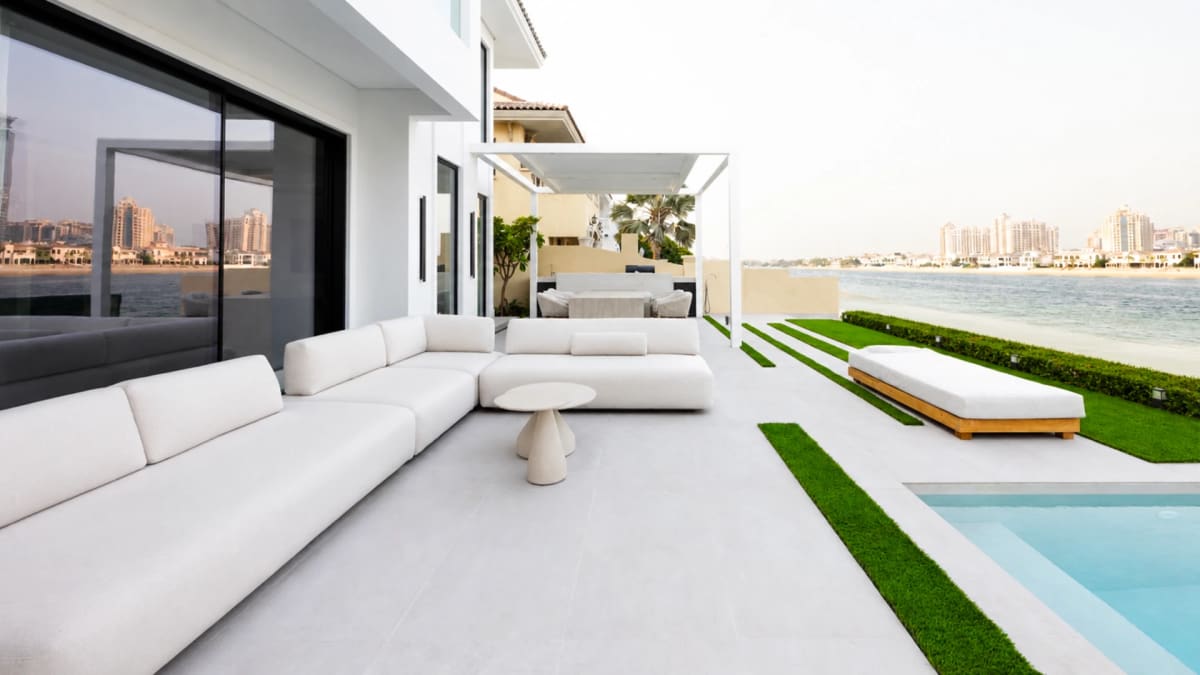
Saltwater swimming pools have become an attractive option for villa owners seeking a refined and practical approach to residential outdoor living. However, designing a saltwater pool requires more than selecting a pool shape and installing a salt-chlorination system. The pool structure, filtration, circulation, surrounding landscape, materials, and maintenance requirements all need to work together.
A well-planned Saltwater Pool Design Dubai concept should respond to the villa's architecture, available outdoor space, environmental conditions, and intended use. In Dubai, where outdoor areas are exposed to intense sunlight and heat for significant parts of the year, technical planning is particularly important.
This guide explores the main design considerations for saltwater swimming pools for villas, from choosing the right layout to integrating landscaping, lighting, materials, and pool systems.
What Is a Saltwater Swimming Pool?
A saltwater pool is not chlorine-free. Instead, it uses a salt-chlorine generator to produce chlorine from dissolved salt through electrolysis. The generated chlorine sanitises the pool water, while the system continuously supports the sanitation process when operating correctly.
This makes the pool different from a conventional manually chlorinated system, but it still requires appropriate water chemistry management.
For villa owners, the appeal may include:
- Automated chlorine generation
- A consistent sanitation approach
- Reduced need for frequent manual chlorine dosing
- A swimming experience that some users find more comfortable
However, the system still requires proper monitoring, filtration, circulation, and maintenance.
Key Considerations for Saltwater Pool Design Dubai
1. Start With the Villa Architecture
The pool should feel like an extension of the property rather than an isolated feature.
Before determining the pool shape and dimensions, consider:
- The villa's architectural style
- Main indoor living areas
- Outdoor entertaining spaces
- Existing terraces
- Garden areas
- Privacy requirements
- Views from bedrooms and living rooms
A contemporary villa may suit a linear pool with clean geometric edges, while a more organic landscape may benefit from softer curves.
A strong Villa pool design Dubai concept connects the pool visually and physically with the surrounding property.
2. Choose the Right Pool Configuration
Pool configuration should be based on both available space and how the pool will be used.
Common residential configurations include:
Rectangular Pools
These are particularly suitable for contemporary villas and can reinforce strong architectural lines.
Freeform Pools
Curved or organic shapes can create a softer relationship with planting and natural-looking landscapes.
Infinity-Edge Pools
Infinity edges can be considered where the site and surrounding views support the concept. They can create a strong visual connection between the water surface and the surrounding landscape.
Compact Pools
Smaller pools can still create a premium outdoor environment when combined with thoughtful paving, planting, seating, and lighting.
The shape should always support the overall landscape composition rather than being selected independently.
3. Select an Appropriate Saltwater Pool System
The technical heart of the installation is the salt-chlorination system.
A properly specified saltwater pool systems Dubai solution should consider:
- Pool volume
- Expected usage
- Filtration capacity
- Circulation requirements
- Salt-chlorine generator capacity
- Control systems
- Equipment location
- Water chemistry monitoring
The equipment should be accessible for servicing while being positioned discreetly within the overall property.
The exact system should be selected according to the pool's design and technical requirements rather than treating the chlorination unit as a standalone product.
4. Plan Filtration and Water Circulation
Good water circulation is essential for maintaining consistent water quality.
The design should account for:
- Skimmer or overflow configuration
- Return outlets
- Pump capacity
- Filtration equipment
- Water turnover requirements
- Equipment access
Poor circulation can create areas where debris or chemicals are distributed unevenly.
This is why pool hydraulics should be considered during the design stage rather than after the pool structure has been finalised.
5. Choose Materials Carefully
Saltwater environments can affect certain materials over time. Material selection should therefore be approached carefully.
Potential areas requiring attention include:
- Pool coping
- Metal fixtures
- Handrails
- Outdoor furniture
- Paving
- Grout
- Pool equipment
- Drainage components
Materials should be selected for their suitability in the specific pool environment and coordinated with the villa's exterior finishes.
Integrating Pool Landscaping
A pool rarely looks complete without an appropriate landscape setting.
Residential pool landscaping UAE projects can combine the water feature with planting, paving, lighting, outdoor furniture, and architectural elements.
Use Planting Strategically
Planting can:
- Improve privacy
- Soften hard edges
- Create visual layers
- Frame views
- Connect the pool with the garden
However, plants should be positioned carefully to reduce excessive leaf litter entering the pool.
Create a Transition Between Pool and Villa
The area between the pool and the villa is often one of the most important parts of the outdoor design.
Large-format paving, terraces, shaded seating, and carefully positioned planting can create a seamless transition between indoor and outdoor spaces.
Designing for Dubai's Climate
Dubai's climate should influence both the pool design and surrounding landscape.
Strong sunlight and high temperatures can affect:
- Water evaporation
- Surface temperatures
- Outdoor furniture
- Plant health
- Pool finishes
- User comfort
Shade can therefore be an important part of the overall pool environment.
Depending on the villa, shade may be created through:
- Pergolas
- Architectural overhangs
- Retractable shade structures
- Feature trees
- Covered outdoor seating
The aim is to make the pool area comfortable and usable while maintaining the visual character of the property.
Lighting for Saltwater Pools
Pool lighting has both functional and aesthetic roles.
Underwater lighting can improve visibility after dark, while landscape lighting can highlight:
- Planting
- Pathways
- Pool edges
- Architectural features
- Outdoor seating areas
Lighting should be coordinated with the surrounding landscape rather than treated as a separate installation.
Low-glare solutions can help preserve the atmosphere of the outdoor space while providing appropriate illumination.
Common Design Challenges and Solutions
Salt Exposure and Material Selection
Challenge: Certain materials and metal components may be affected by prolonged exposure to saltwater or the surrounding environment.
Solution: Select suitable materials and finishes during the design stage and follow manufacturer recommendations for installation and maintenance.
Excessive Heat
Challenge: Poolside surfaces can become uncomfortable under direct sunlight.
Solution: Combine appropriate surface materials with shaded areas, planting, and outdoor structures.
Poor Integration With Landscaping
Challenge: A pool can appear visually disconnected from the rest of the garden.
Solution: Coordinate pool edges, paving, planting, lighting, and outdoor furniture as one landscape composition.
Equipment Visibility
Challenge: Pool equipment can detract from the appearance of a luxury villa.
Solution: Plan a dedicated and accessible equipment area that is visually discreet and properly ventilated.
Excessive Plant Debris
Challenge: Incorrectly positioned planting can increase leaves and debris entering the pool.
Solution: Use suitable planting locations and select species according to the site's conditions and maintenance requirements.
Best Practices for Saltwater Pool Design
When developing a Luxury swimming pool design UAE concept, consider the following:
- Coordinate the pool with the villa architecture.
- Select the pool configuration according to its intended use.
- Plan filtration and circulation early.
- Specify materials suitable for the environment.
- Integrate landscaping from the beginning.
- Provide appropriate shade and outdoor comfort.
- Plan lighting as part of the overall design.
- Allow practical access to pool equipment.
- Consider maintenance when selecting plants and finishes.
A Practical Pool Design Framework
Step 1: Assess the Site
Review the villa architecture, outdoor dimensions, sunlight, access, views, and existing landscape.
Step 2: Define Pool Requirements
Determine whether the pool is primarily intended for exercise, relaxation, family use, entertaining, or a combination of activities.
Step 3: Develop the Layout
Position the pool, terraces, pathways, seating, and planting zones together.
Step 4: Coordinate Technical Systems
Plan filtration, circulation, salt-chlorination equipment, drainage, lighting, and other technical requirements.
Step 5: Select Finishes
Coordinate pool finishes, coping, paving, planting, and outdoor materials with the villa architecture.
Step 6: Review Long-Term Functionality
Consider maintenance access, equipment servicing, landscape management, and everyday usability.
FAQ
Is a saltwater pool completely chlorine-free?
No. Saltwater systems generate chlorine from salt through electrolysis. The difference is how chlorine is produced and introduced into the pool.
Are saltwater pools suitable for Dubai villas?
They can be suitable when the pool structure, equipment, materials, and maintenance requirements are properly planned for the property's conditions.
Does a saltwater pool require maintenance?
Yes. Saltwater systems still require appropriate water chemistry management, filtration, equipment checks, and general pool maintenance.
Can saltwater pools be combined with luxury landscaping?
Yes. Pool paving, planting, lighting, outdoor seating, and architectural elements can be designed as part of one cohesive landscape concept.
What materials should be considered around a saltwater pool?
Materials should be selected according to their suitability for the pool environment, exposure conditions, durability, and compatibility with the villa's exterior design.
Should the pool be designed before the landscape?
The pool and landscape should ideally be planned together. Their relationship affects circulation, planting, paving, lighting, drainage, and the overall appearance of the outdoor space.