
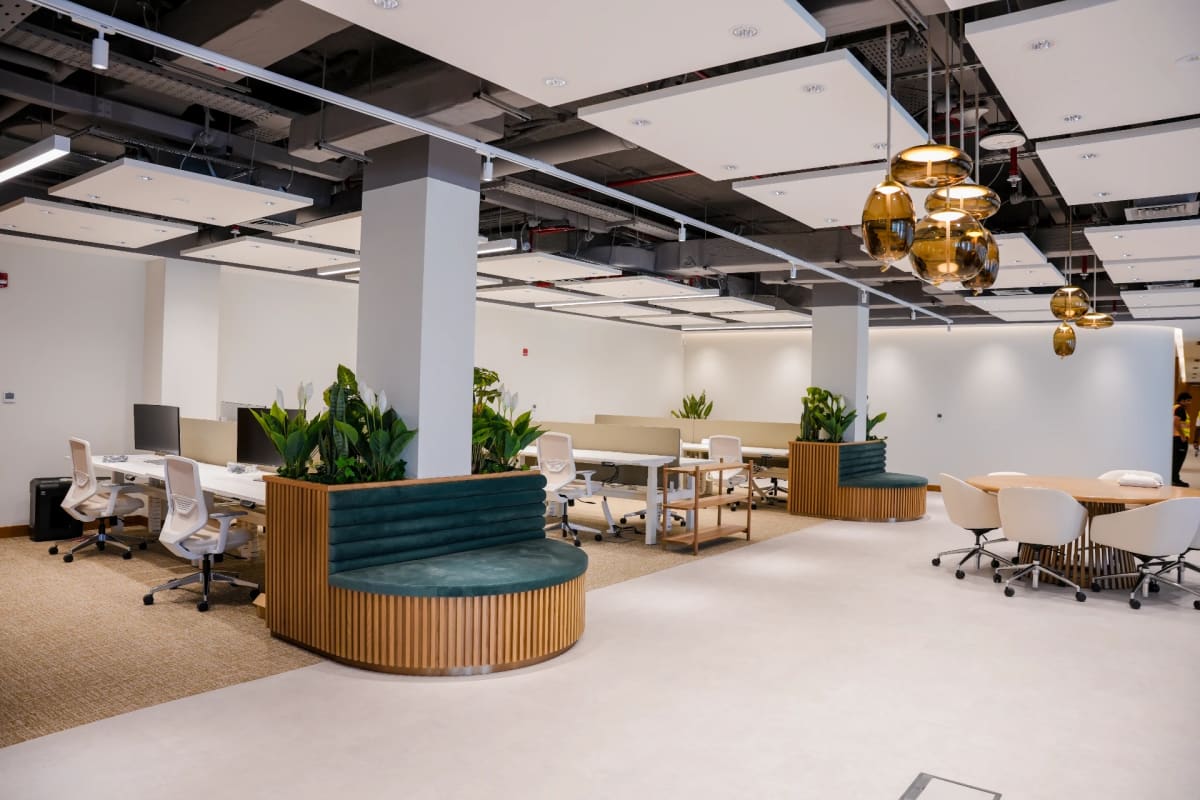
Modern offices are no longer designed around desks, meeting rooms, and basic infrastructure alone. Technology now influences how employees collaborate, communicate, access information, manage spaces, and interact with their workplace. For businesses planning an office transformation, Office Technology Integration Dubai has therefore become an important part of the design and fit-out process rather than an afterthought.
A successful technology-enabled workplace requires close coordination between interior design, architectural planning, electrical systems, IT infrastructure, audiovisual equipment, security, and workplace operations. In Dubai’s competitive commercial environment, this integrated approach can help businesses create offices that are functional, adaptable, and aligned with changing workplace expectations.
What Is Workplace Technology Integration?
Workplace technology integration is the process of incorporating digital and connected systems into an office environment as part of the overall design and fit-out strategy.
Rather than installing technology after construction is complete, the technology requirements are considered during spatial planning and technical design.
This can include:
- Structured IT and data infrastructure
- Video conferencing and audiovisual systems
- Smart lighting and environmental controls
- Access control and workplace security
- Room-booking and occupancy systems
- Wireless connectivity
- Digital collaboration tools
- Integrated meeting-room technology
- Building and workplace management systems
The objective is not simply to add more technology. It is to ensure that technology supports the way people actually use the workplace.
Why Technology Matters in Modern Office Fit-Outs?
Technology Should Be Planned With the Space
An office’s technology requirements can directly affect room layouts, ceiling coordination, furniture selection, power distribution, acoustic treatment, and circulation.
For example, a hybrid meeting room may require carefully positioned displays, cameras, microphones, speakers, power outlets, data points, and appropriate lighting. If these requirements are considered only after the interior has been completed, modifications can become disruptive and visually inconsistent.
This is why technology integration in office design should begin during the early planning stages.
Supporting Flexible Workplaces
Modern businesses may use a combination of private offices, collaboration areas, meeting rooms, shared workstations, breakout zones, and multipurpose spaces.
Technology can help these environments operate more efficiently. Wireless connectivity, room-booking systems, integrated displays, and video conferencing can support different working styles without requiring every space to have a fixed purpose.
For businesses developing a modern office design strategy, technology should therefore be considered alongside workplace planning rather than separately.
A Practical Framework for Office Technology Integration
1. Understand Business and Workplace Requirements
The first step is to understand how the organisation operates.
Key questions include:
- How many employees use the workplace?
- How frequently are meeting and collaboration spaces used?
- How important is hybrid communication?
- Which areas require enhanced security?
- What systems need to communicate with one another?
- How might workplace requirements change in the future?
The answers establish the foundation for the technology brief.
2. Map Technology to Each Space
Different areas require different solutions.
A meeting room may need audiovisual and conferencing infrastructure, while reception may require visitor management and access-control systems. Open-plan areas may prioritise connectivity, power access, and collaborative technology.
This space-by-space approach prevents unnecessary technology from being installed where it provides little practical value.
3. Coordinate With the Fit-Out Design
Technology infrastructure must be coordinated with the physical workplace.
Design teams should consider:
- Ceiling and lighting layouts
- Furniture positioning
- Power and data locations
- Equipment storage
- Acoustic requirements
- Display visibility
- Cable management
- Maintenance access
This coordination is particularly important for a Smart office fit-out Dubai project, where multiple systems may need to operate together within a carefully designed interior.
A coordinated design and fit-out service can bring workplace planning, interior design, and technology requirements together from the early stages of a project.
4. Design for Scalability
A technology strategy should not be designed only for today’s requirements.
Businesses may expand teams, change working patterns, introduce new collaboration platforms, or modify their office layouts. Allowing for accessible infrastructure and adaptable spaces can make future changes easier.
Scalable design is one of the defining characteristics of Smart workplace design UAE businesses increasingly need to consider.
Key Workplace Technology Solutions
Audiovisual and Collaboration Systems
Modern meeting environments often depend on integrated displays, cameras, microphones, speakers, and conferencing platforms.
The design objective should be seamless operation. Users should be able to enter a meeting room and use the technology without unnecessary complexity.
Smart Lighting and Environmental Controls
Connected lighting and environmental systems can provide greater control over workplace conditions. Depending on the project, these systems may be integrated with occupancy sensors, scheduling controls, or central management platforms.
Access and Security Technology
Technology can also form part of the workplace security strategy through access control, visitor management, surveillance infrastructure, and other systems.
These requirements should be incorporated into the design without compromising the appearance or usability of the office.
Workplace Management Technology
Room-booking, occupancy, and workplace management systems can help organisations understand and manage how different areas are used.
When properly integrated, these systems can support more responsive workplace planning.
Common Challenges and Professional Solutions
Retrofitting Technology Too Late
One of the most common challenges is introducing technology after the interior design has already been finalised.
Solution: Establish the technology brief during concept and technical-design stages and coordinate it with architectural, electrical, and interior requirements.
Poor Cable Management
Visible or inaccessible cabling can affect aesthetics, maintenance, and functionality.
Solution: Coordinate cable pathways, floor boxes, ceiling routes, equipment locations, and access points before installation.
Overcomplicating the User Experience
More technology does not necessarily create a better workplace. Complex systems may discourage employees from using them.
Solution: Prioritise intuitive interfaces and select technology according to actual operational requirements.
Limited Future Flexibility
A workplace that works today may become restrictive as the organisation evolves.
Solution: Build flexibility into infrastructure, power, data connectivity, room configurations, and equipment provisions.
How Dubai Businesses Can Approach Technology-Led Fit-Outs
For businesses planning a Modern office fit-out Dubai project, technology should be treated as part of the workplace architecture.
A coordinated project team can align the technology strategy with:
- Business objectives
- Workplace planning
- Interior design
- Electrical and mechanical coordination
- IT infrastructure
- Security requirements
- Installation and testing
- User experience
This integrated process helps reduce conflicts between technology and interior elements while creating a workplace that feels cohesive rather than technically overloaded.
It also reflects a broader shift in how Dubai businesses approach office environments. The idea is not to dubai-it by adding technology simply because it is fashionable, but to select and integrate systems that solve genuine workplace requirements.
A well-planned interior design project demonstrates how thoughtful spatial planning, technology, and design can work together to create a functional and adaptable environment.
For businesses seeking to develop a technology-enabled environment, commercial office fit-out services in Dubai can provide the design and coordination framework needed to bring these elements together.
Best Practices for Successful Integration
A strong workplace technology strategy should:
- Begin during early design development
- Prioritise employee and business needs
- Coordinate technology with interior architecture
- Allow for future upgrades
- Protect accessibility and maintainability
- Consider acoustics and visual comfort
- Keep user interfaces simple
- Coordinate IT, AV, security, and building systems
- Test integrated systems before handover
- Document infrastructure for future maintenance
Businesses can also benefit from reviewing smart office design trends in Dubai before finalising their workplace brief, particularly when evaluating which emerging technologies have practical relevance.
Exploring practical office design ideas can help businesses identify effective ways to improve collaboration, flexibility, and the overall workplace experience.
FAQ
What is office technology integration?
It is the coordinated incorporation of IT, audiovisual, security, smart-building, and workplace-management systems into the physical office design and fit-out.
Why should technology be planned during the fit-out?
Early planning allows infrastructure, power, data, equipment, furniture, lighting, and spatial requirements to be coordinated before installation, reducing design conflicts.
What technology is commonly integrated into modern offices?
Common examples include video conferencing, audiovisual systems, structured cabling, wireless networks, smart lighting, access control, room booking, and workplace management systems.
Is workplace technology only relevant to large offices?
No. Technology integration can be scaled according to the size, operational requirements, and workplace strategy of an organisation.
How can an office be designed for future technology changes?
Flexible infrastructure, accessible cable pathways, adaptable layouts, sufficient power and data provisions, and scalable systems can make future upgrades easier.
Who should coordinate technology during an office fit-out?
Technology requirements should be coordinated among the client, workplace and interior design teams, IT specialists, MEP consultants, audiovisual specialists, security professionals, and the fit-out contractor where appropriate.
Technology is now an integral consideration in modern workplace planning. Effective Office Technology Integration Dubai projects connect digital systems with the physical environment so that technology supports productivity, collaboration, security, flexibility, and user experience.
The strongest approach is to plan technology early, coordinate it with interior and technical design, and select solutions based on genuine operational requirements. For organisations considering their next workplace transformation, exploring integrated office design and build services can be a useful next step toward developing a coordinated, future-ready working environment.