
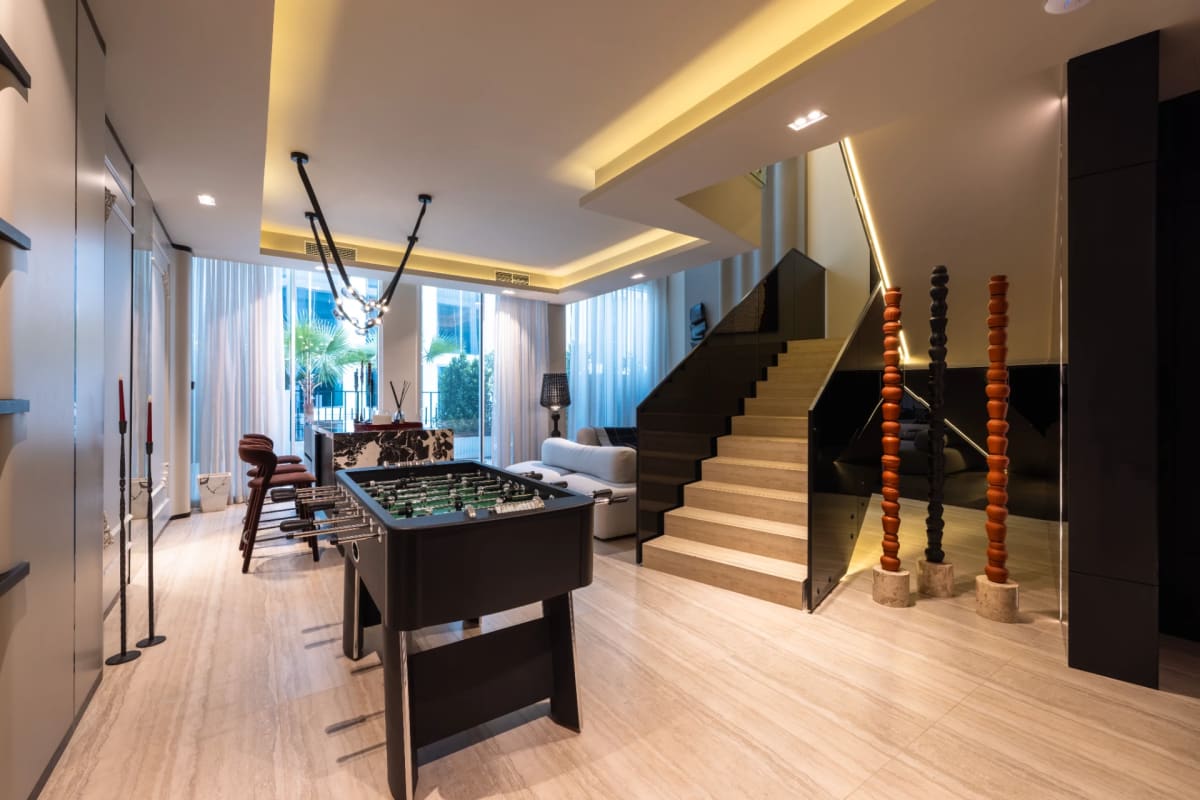
The selection of office interior finishes UAE plays a defining role in shaping how modern workplaces function, feel, and perform. In a competitive business environment like Dubai and Abu Dhabi, office interiors must go beyond aesthetics—they need to reflect brand identity, support employee productivity, and withstand the region’s environmental conditions.
This guide explores how to approach material selection and combinations strategically, ensuring a balance between design, durability, and long-term value.
Understanding Office Interior Finishes in the UAE Context
Office interiors in the UAE are influenced by a unique combination of factors:
- High temperatures and humidity
- Strong emphasis on premium, corporate aesthetics
- Rapidly evolving workplace design trends
- Demand for sustainability and efficiency
As a result, workplace interior design materials UAE must be carefully selected to meet both functional and visual requirements.
Key Categories of Office Interior Finishes
1. Wall Finishes
Walls define the visual character of office spaces and often serve as branding elements.
Common office wall and flooring finishes UAE for walls include:
- High-quality paint systems (matte, satin, textured)
- Decorative wall panels (wood veneer, laminate, fabric)
- Glass partitions for transparency and openness
- Stone or porcelain cladding in reception areas
These finishes are often combined to create focal points and enhance spatial hierarchy.
2. Flooring Materials
Flooring must balance durability, acoustics, and visual appeal.
Typical office fit-out materials UAE for flooring:
- Carpet tiles for workstations (acoustic and flexible)
- Luxury vinyl tiles (LVT) for high-traffic areas
- Porcelain tiles for lobbies and common spaces
- Engineered wood for executive offices
For deeper insight, consider linking to office flooring material selection guide.
3. Ceiling Finishes
Ceilings contribute to both aesthetics and building performance.
Popular options include:
- Suspended acoustic ceilings
- Exposed industrial ceilings with painted finishes
- Metal or timber baffle systems for design impact
These solutions also support lighting integration and HVAC efficiency.
4. Joinery and Custom Elements
Custom joinery enhances both functionality and design consistency.
Examples include:
- Reception desks and feature walls
- Storage units and cabinetry
- Integrated workstations
In commercial interior finishes Dubai offices, bespoke joinery is often used to reinforce brand identity and create a cohesive look.
Modern Material Combinations for Offices
Combining materials effectively is key to achieving a sophisticated and balanced workspace.
1. Wood + Metal + Glass
A widely used combination in modern office material combinations UAE, this mix creates a contemporary and professional aesthetic:
- Wood adds warmth
- Metal introduces structure and contrast
- Glass enhances openness and light flow
2. Stone + Neutral Fabrics
Ideal for executive and reception areas:
- Stone surfaces convey luxury and permanence
- Soft fabrics improve acoustics and comfort
3. Concrete + Textured Finishes
Popular in creative and tech offices:
- Polished concrete floors or walls
- Textured wall finishes or panels
- Industrial-style ceilings
4. Sustainable Material Blends
Increasingly important across UAE projects:
- Recycled materials
- FSC-certified wood
- Low-VOC paints and adhesives
For further reading, link to sustainable materials for office interiors.
Step-by-Step Framework for Material Selection
A structured approach ensures consistency and performance across all office spaces.
Step 1: Define Design Objectives
- Align finishes with brand identity
- Consider the type of workspace (corporate, creative, hybrid)
- Establish a clear visual direction
Step 2: Evaluate Functional Requirements
- Durability for high-traffic areas
- Acoustic performance in open offices
- Maintenance and cleaning considerations
Step 3: Select Core Material Palette
- Limit the number of primary materials
- Ensure compatibility across finishes
- Maintain visual consistency
Step 4: Integrate MEP and Technical Systems
- Coordinate finishes with lighting and HVAC
- Ensure accessibility for maintenance
- Avoid conflicts during installation
Step 5: Prototype and Sample Review
- Test materials in real conditions
- Review color, texture, and performance
- Finalize combinations before execution
For a broader perspective, consider linking to office fit-out material selection guide.
Best Practices for Office Interior Finishes
To achieve high-quality results in commercial interior finishes Dubai offices, follow these best practices:
- Prioritize durability: Select materials suited for heavy daily use
- Balance aesthetics and function: Avoid purely decorative choices
- Use layering: Combine materials to create depth and interest
- Ensure consistency: Maintain a unified design language
- Plan for maintenance: Choose finishes that are easy to clean and maintain
Common Challenges and Professional Solutions
Challenge 1: Material Mismatch
Solution: Develop a cohesive palette early and test combinations before implementation.
Challenge 2: Poor Acoustic Performance
Solution: Incorporate acoustic panels, carpets, and soft finishes strategically.
Challenge 3: Wear and Tear in High-Traffic Areas
Solution: Use high-performance materials like LVT and porcelain tiles in circulation zones.
Challenge 4: Overcomplicated Design
Solution: Simplify material selections and focus on quality over quantity.
Challenge 5: Coordination Issues During Fit-Out
Solution: Adopt an integrated approach by linking to commercial interior fit-out services.
FAQ: Office Interior Finishes and Materials
1. What are the most durable office flooring options in the UAE? Carpet tiles, LVT, and porcelain tiles are widely used due to their durability and ease of maintenance.
2. How do I choose the right wall finishes for an office? Consider branding, maintenance, and the function of each space when selecting wall materials.
3. Are sustainable materials practical for office interiors? Yes, many sustainable options offer high performance while supporting environmental goals.
4. How many materials should be used in one office design? A controlled palette of 3–5 core materials is recommended for consistency and clarity.
5. What is the role of ceilings in office design? Ceilings impact acoustics, lighting integration, and overall spatial perception.
6. Why is material combination important in modern offices? It creates visual balance, enhances functionality, and reinforces brand identity.